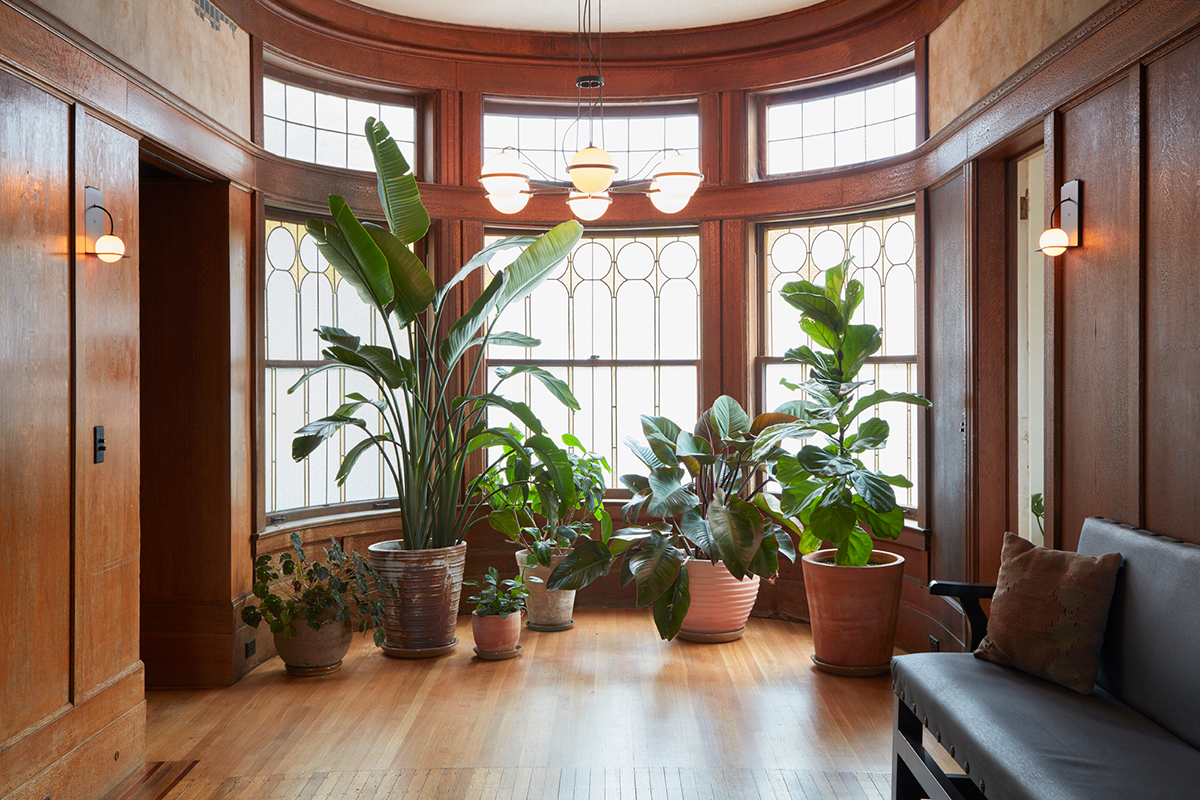
Bird of Paradise Plant Care Indoors

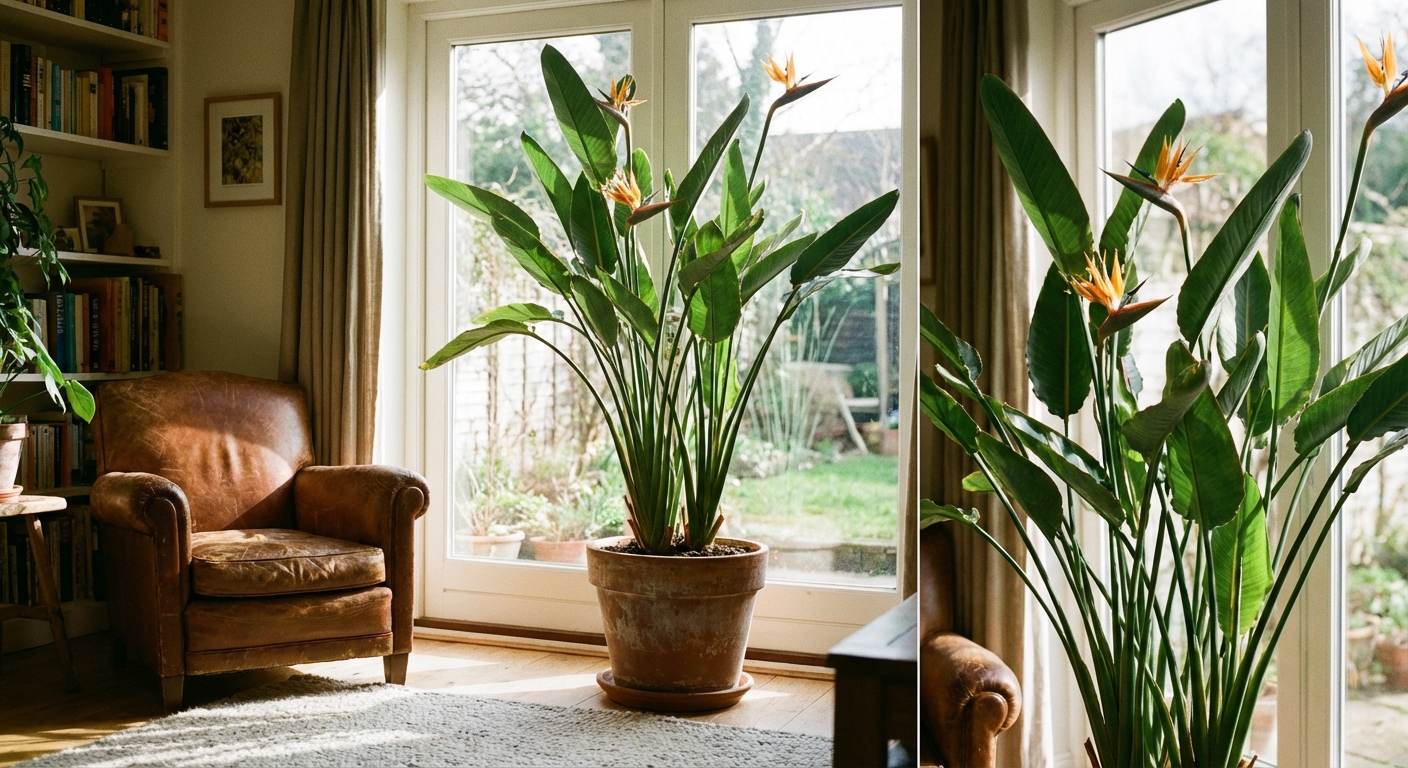
Bird of Paradise is the houseplant equivalent of a sunny vacation. Big, banana-like leaves. Bold, architectural shape. And if you ever get it to bloom indoors, you will feel like you just won a tiny gardening trophy.
Indoors, most of our plants are grown for those dramatic leaves, not for flowers. The good news is that Bird of Paradise is surprisingly doable. It just has a few non-negotiables: lots of light, a pot that drains, and a watering routine that follows the soil rather than the calendar.
Know your Bird of Paradise
Most commonly, indoor Bird of Paradise plants fall into two species. Their care is similar, but their size and bloom expectations are different. (You may also see less common types like Strelitzia juncea, but the basics below still apply.)
Strelitzia reginae
- Common name: Orange Bird of Paradise
- Indoor size: Often 4 to 6 feet with time
- Bloom: Produces the classic orange and blue “bird” flower, but usually only when mature and given very strong light
Strelitzia nicolai
- Common name: White Bird of Paradise
- Indoor size: Can reach 6 to 10 feet or more indoors in the right conditions
- Bloom: White and blue flowers are rare indoors, and this species tends to be grown mainly for foliage
Quick reality check: Many plants sold as “Bird of Paradise” are young and not ready to bloom for years. That is normal, not a failure on your part.
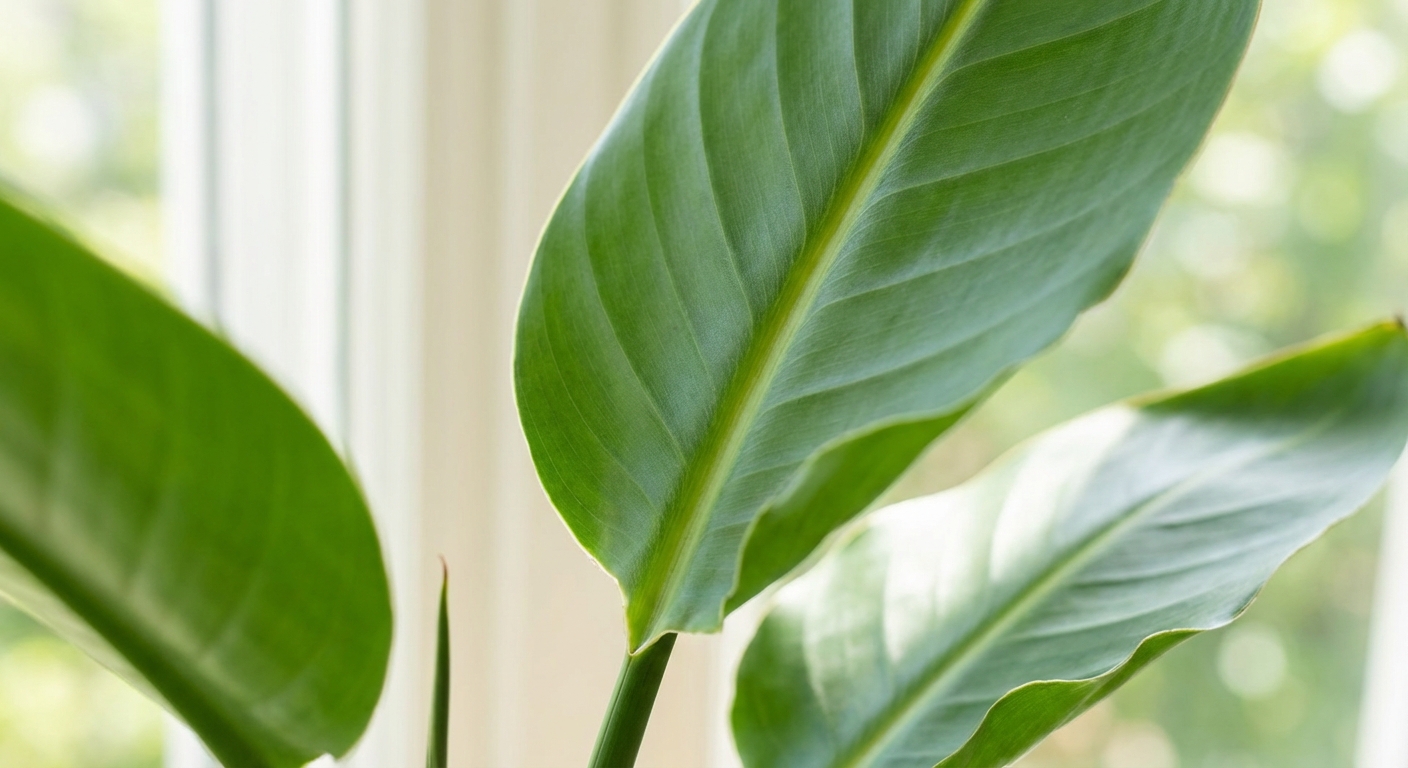
Light: the make-or-break factor
If I could only give you one tip, it would be this: Bird of Paradise wants brighter light than most people expect.
Best placement indoors
- Bright, direct sun is ideal. A south-facing window is the usual sweet spot in the Northern Hemisphere.
- East or west windows can work if the plant gets several hours of sun.
- North-facing windows are usually too dim unless you add a grow light.
How much light are we talking?
Aim for 4 to 6 hours of direct sun when possible, plus bright ambient light the rest of the day. If your plant is stretching, leaning, or making smaller leaves, it is politely asking for more light.
Acclimation note: If your plant has been living in medium light, ease it into direct sun over 7 to 10 days. Sun through glass can still scorch leaves when the plant is not used to it.
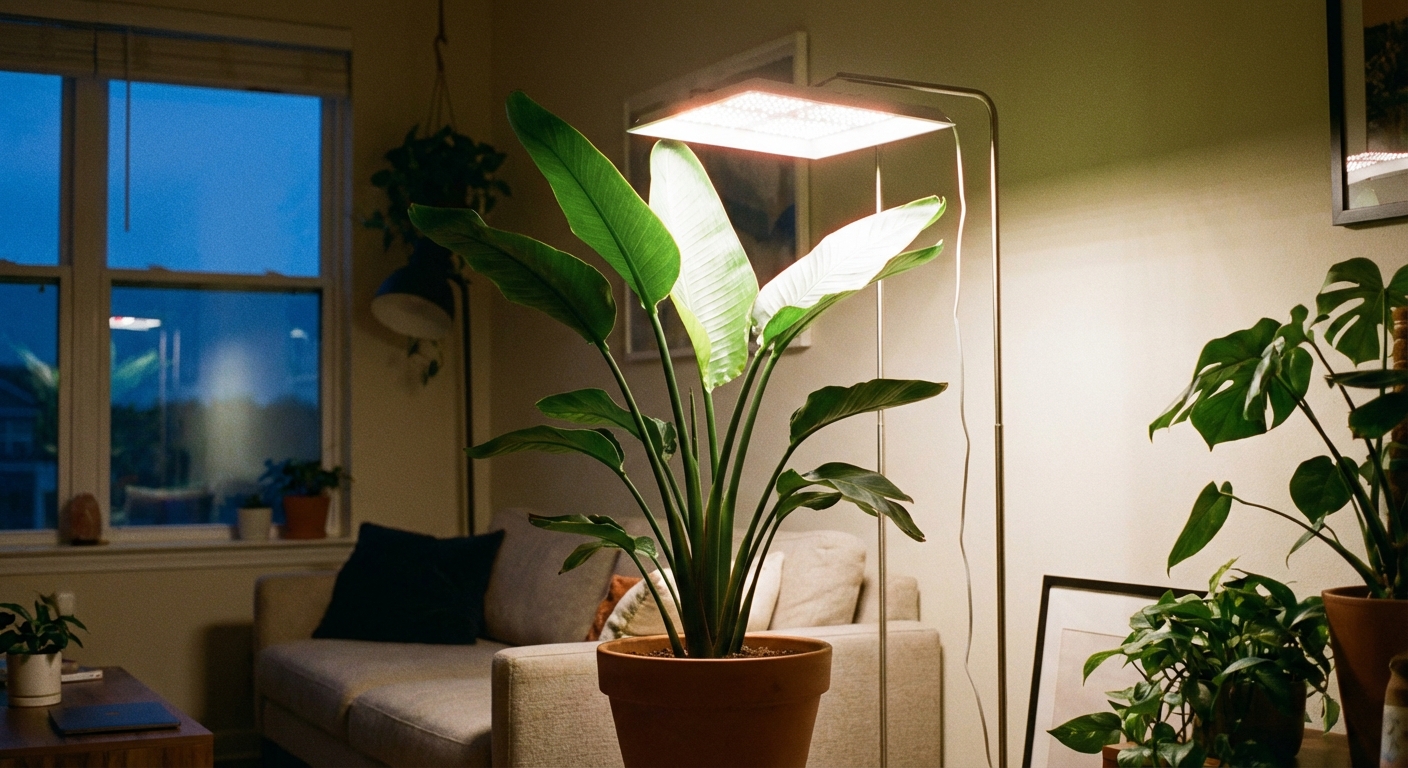
Using a grow light
Grow lights can be a game changer in winter or in dim rooms. Place the light above the plant and run it 10 to 14 hours per day, adjusting distance based on the fixture’s guidance. You want strong light without heat stress.
Rotation tip: Turn the pot a quarter turn every week or two so the plant grows evenly rather than reaching toward the window.
Watering: soak, drain, then wait
Bird of Paradise likes an even rhythm: thorough watering, excellent drainage, and a short drying period. The fastest way to upset it is constant soggy soil.
When to water
- Water when the top 2 to 3 inches of soil feels dry.
- If the pot is large, use a wooden chopstick or moisture meter as a second opinion.
- In brighter, warmer months this might be weekly. In winter it may be every 2 to 3 weeks.
How to water correctly
- Water slowly until it runs out the drainage holes.
- Let it drain fully.
- Empty the saucer or cachepot so the roots never sit in water. If your plant is in a nursery pot inside a decorative pot, lift it out to drain for a few minutes before putting it back.
Signs you are watering too much
- Lower leaves yellowing quickly
- A sour smell from the pot
- Persistent wet soil and fungus gnats
Signs you are watering too little
- Leaves curling inward like tacos
- Dry, crispy edges
- Soil pulling away from the pot edge
My favorite “feel” test: Lift the pot after watering, then lift it again when you think it is time. Your hands learn the weight difference fast.
Humidity and airflow
Bird of Paradise is tougher than it looks, but it does appreciate a little humidity. Typical homes are fine, but very dry air can worsen leaf curling and crispy edges.
Best range
Aim for 40 to 60 percent humidity. Higher is welcome if you also have good airflow.
Easy ways to help
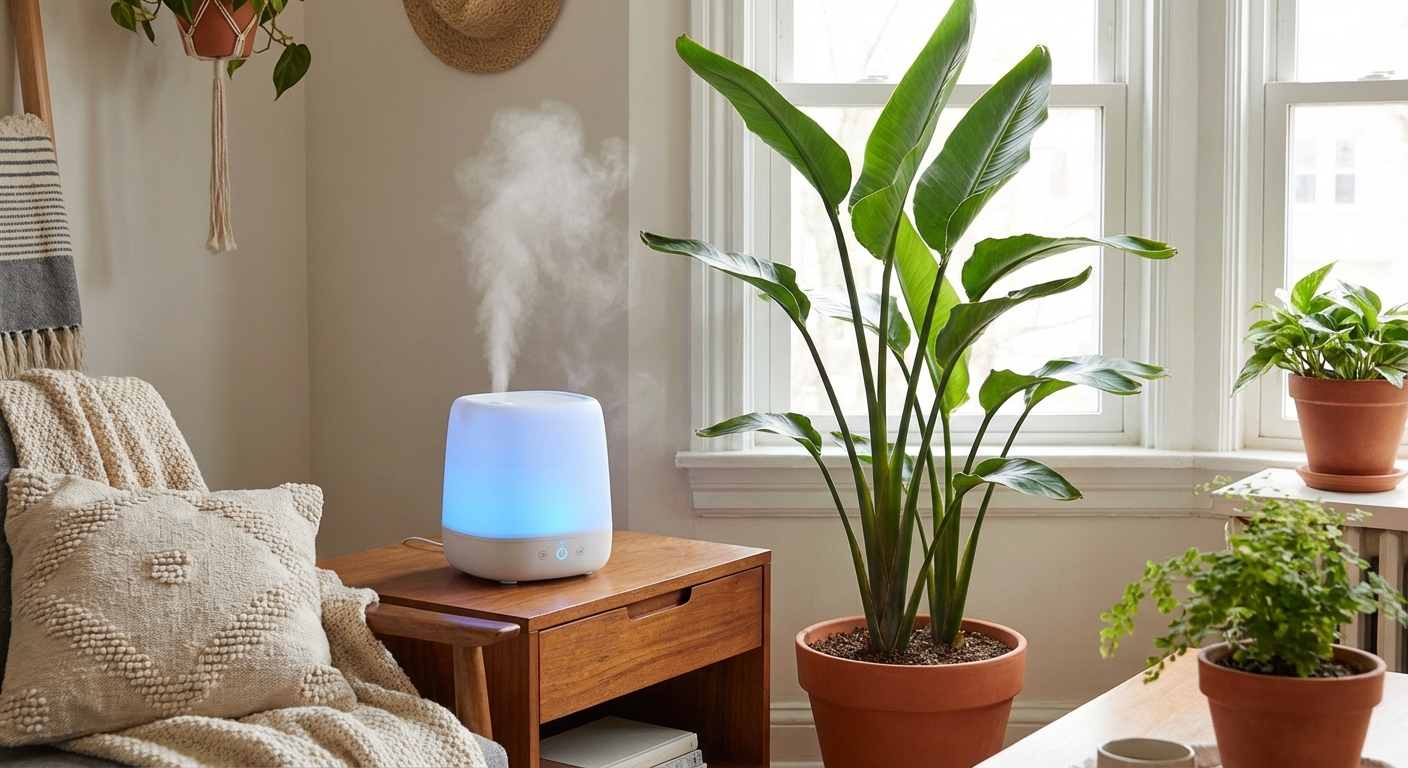
- Humidifier: Most reliable, especially in winter heating season.
- Grouping plants: Creates a slightly more humid microclimate.
- Rinse the leaves: A gentle shower in the tub also removes dust, which helps the plant photosynthesize better.
Avoid: blasting it with a heating vent or AC draft. Steady conditions beat perfect conditions.
Soil and pot choice
Think “rich but fast-draining.” Indoors, roots need oxygen just as much as they need water.
Best soil mix
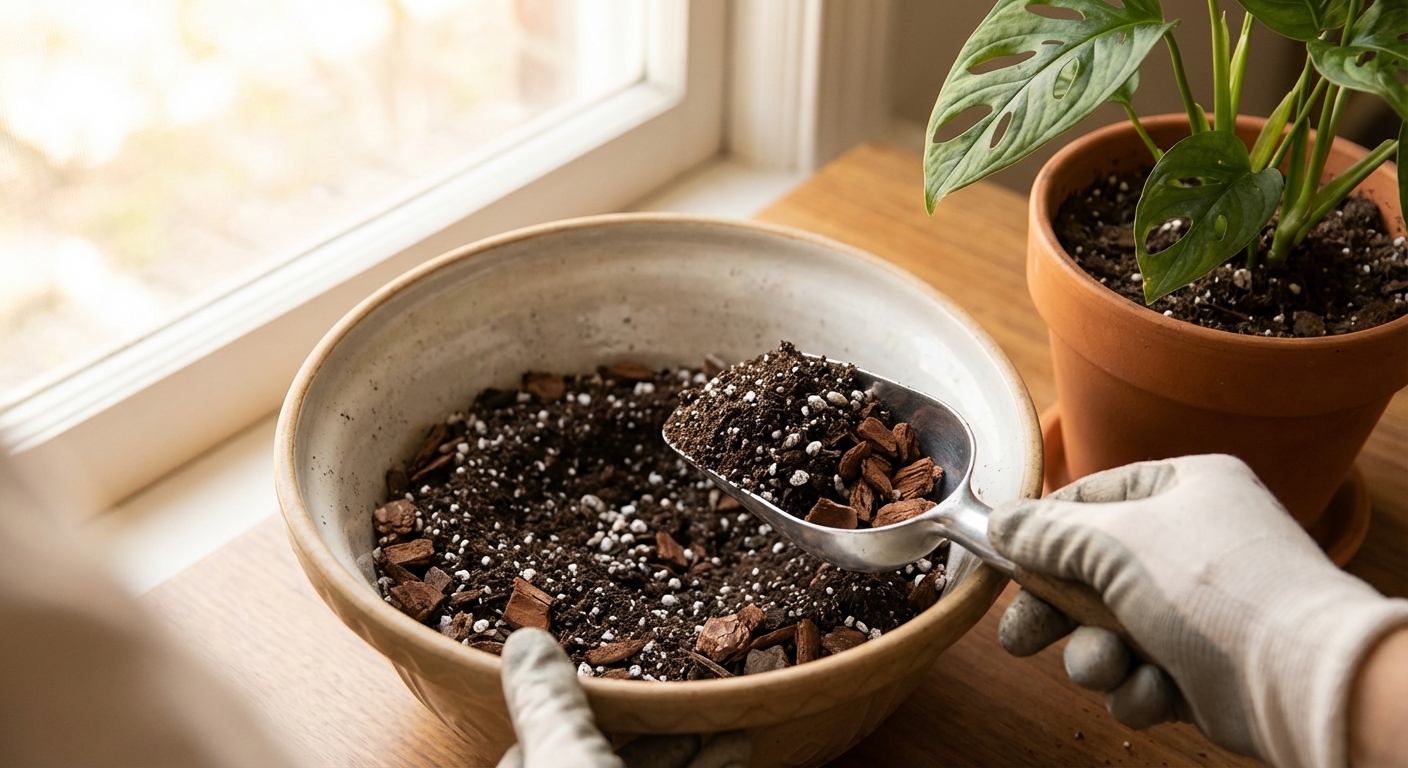
Use a high-quality potting mix and add drainage helpers. A simple blend:
- 2 parts indoor potting mix
- 1 part perlite or pumice
- 1 part orchid bark or coco chips
This mix holds moisture evenly but still drains quickly and resists compaction.
Pot type matters
- Drainage holes are mandatory.
- Heavy pots (ceramic or terracotta) help prevent toppling as the plant gets tall.
- Size: Pot up only 1 to 2 inches wider than the current pot. Oversized pots stay wet too long.
Fertilizing for big, sturdy leaves
Bird of Paradise is a hungry grower in spring and summer. Feeding helps it push larger leaves and thicker stems.
When to fertilize
- Spring through early fall: fertilize every 2 to 4 weeks
- Late fall and winter: pause or reduce to once every 6 to 8 weeks if the plant is still actively growing under strong light
What fertilizer to use
- A balanced houseplant fertilizer (like 10-10-10 or 20-20-20) diluted to half strength works well.
- Organic options like fish emulsion or seaweed blends are fine, just expect a gentler, slower feed.
Tip for salt buildup: Every month or two, flush the pot with plenty of water to rinse out excess fertilizer salts, especially if you use synthetic fertilizer.
Pet safety
Worth knowing: Bird of Paradise (Strelitzia) is considered toxic to cats and dogs if ingested and can cause gastrointestinal irritation like drooling, vomiting, or upset stomach. If you have curious pets, place the plant out of reach and call your vet if you suspect chewing.
Why indoor Bird of Paradise rarely blooms
Those iconic flowers are the dream, but indoors they are the exception. Blooming requires a combination of maturity, intense light, and consistent care.
The main reasons it does not bloom
- Not enough light: This is number one. Leaves can survive in medium light, but flowers need sun-level intensity.
- Plant is too young: Indoors, it often takes 5+ years to reach flowering maturity, and it can take much longer.
- Not enough root mass: Slightly root-bound plants often bloom better than freshly potted ones.
- Winters are too dim and short: Indoor light intensity and day length are usually lower than outdoors, which slows growth and makes blooming less likely.
How to improve your chances
- Give it the sunniest window you have, plus a grow light in winter.
- Do not overpot. Let it fill the pot.
- Feed regularly during the growing season.
- Keep temperatures stable and warm, ideally 65 to 80°F.
If it never blooms, you still have a gorgeous leafy sculpture. I consider that a perfectly successful Bird of Paradise.
Temperature and seasonal care
Bird of Paradise likes it warm and steady.
- Ideal range: 65 to 80°F
- Minimum: Try to keep it above 55°F
In winter, growth slows down as light drops. That is your cue to water less often and stop pushing fertilizer if the plant is not actively growing.
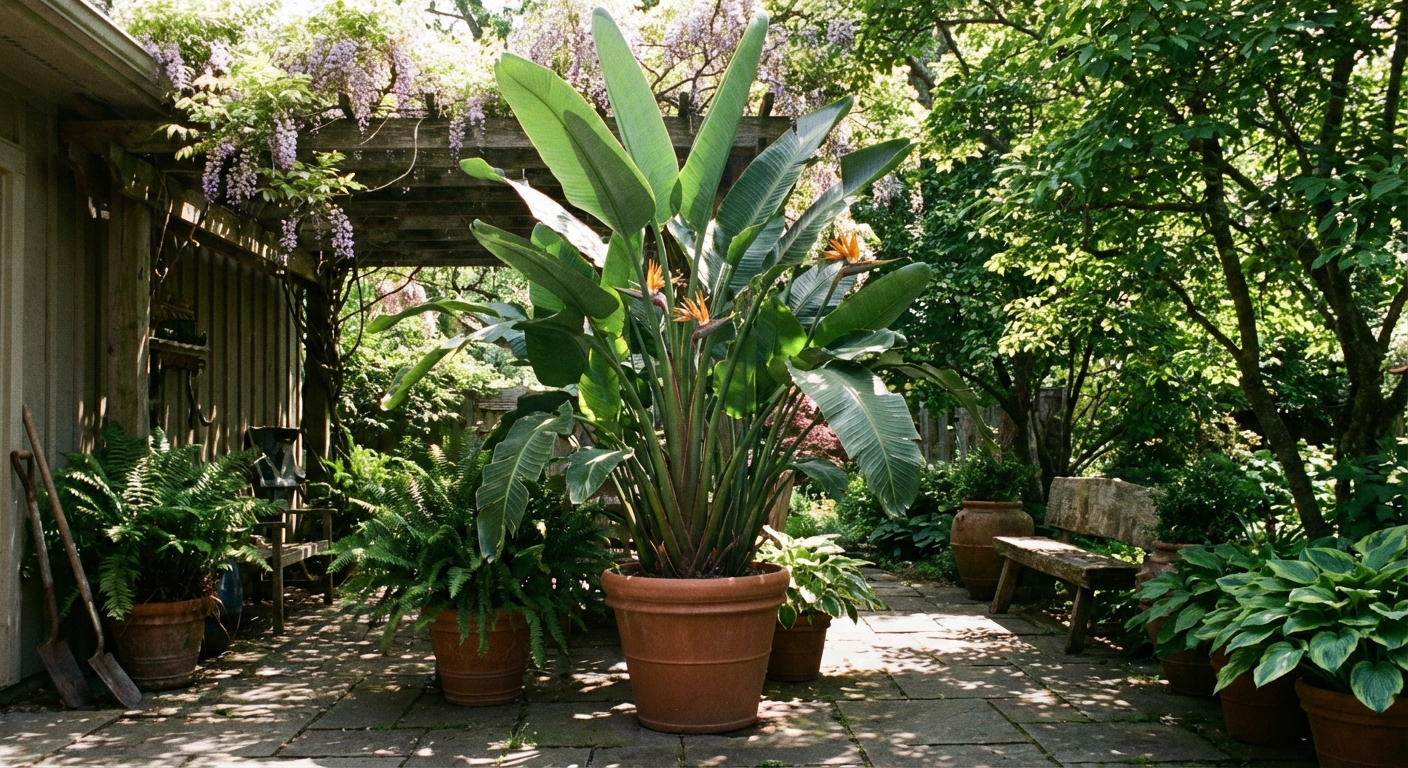
Summer option: If you have outdoor space, Bird of Paradise can love a summer vacation outside. Acclimate it gradually to sun for 7 to 10 days to prevent leaf scorch, and bring it in before nights get chilly.
Repotting and division
Bird of Paradise grows from thick, sturdy roots and rhizomes. Indoors, it typically needs repotting every 2 to 3 years.
When to repot
- Roots circling the pot or coming out drainage holes
- Soil drying out very quickly after watering
- The plant becoming top heavy and unstable
How to repot without drama
- Repot in spring or early summer if possible.
- Choose a pot 1 to 2 inches wider.
- Use fresh, chunky, well-draining mix.
- Water in thoroughly, then let the top few inches dry before watering again.
Can you divide it?
Yes, but it is not a casual Sunday project. Division can set the plant back and delays blooming. If you do divide, make sure each section has roots and at least one strong growing point, and expect a recovery period.
Pruning and cleaning
This plant does not need fancy pruning, but a little cleanup keeps it looking sharp and helps prevent pests.
- Remove old leaves: When a lower leaf is fully yellow or badly damaged, cut the stem close to the base using clean, sharp pruners.
- Wipe the leaves: Dust acts like a tiny shade cloth. A damp cloth or a quick rinse in the shower goes a long way.
- Skip leaf shine: Shiny products can clog pores and attract more dust.
Leaf splitting is normal (mostly)
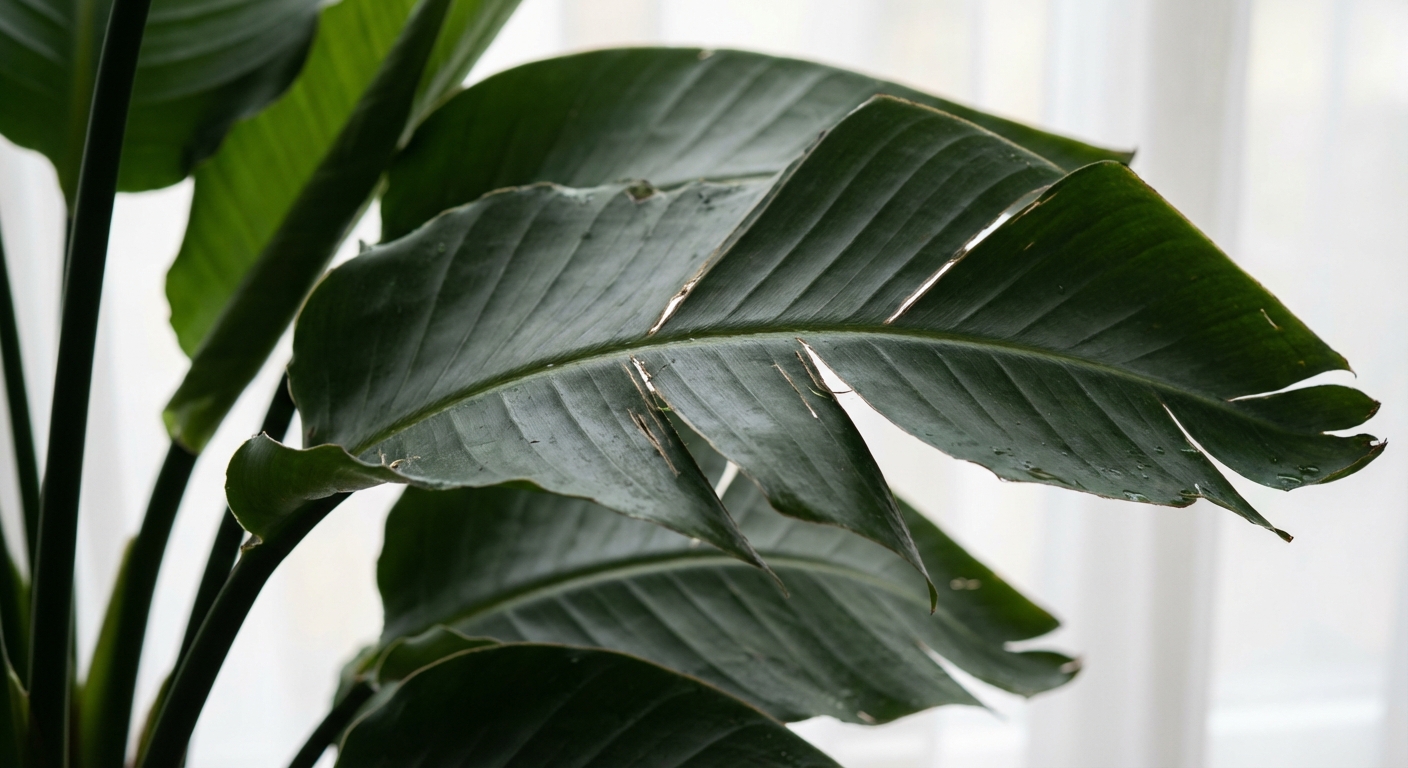
Those beautiful leaves often split along the veins. People worry it is a problem, but it is usually just a Bird of Paradise being itself.
Why leaves split
- Natural adaptation: In windy habitats, splitting reduces resistance and tearing.
- Mechanical damage: Leaves can crack while unfurling if they rub on walls, furniture, or other leaves.
- Dry air: It usually does not cause splitting on its own, but it can worsen tearing during unfurling and make edges crispier.
What to do
- Give it space so new leaves can open freely.
- Increase humidity modestly if your home is very dry.
- Dust and rinse leaves so they stay flexible and healthy.
Should you cut split leaves off? Not unless they are badly damaged. A split leaf still photosynthesizes just fine.
Troubleshooting common problems
Leaves curling
Most common causes: underwatering, very low humidity, or heat from a vent.
- Check soil moisture 2 to 3 inches down and water deeply if dry.
- Move the plant away from vents and drafts.
- Raise humidity into the 40 to 60 percent range.
Brown tips or crispy edges
Common causes: dry air, inconsistent watering, or fertilizer salt buildup.
- Water more consistently, following the soil dryness rule.
- Flush the pot with water every month or two.
- Consider using filtered water if your tap water is very hard.
Yellowing leaves
Common causes: too much water, not enough light, or normal aging of the oldest leaf.
- If only one lower leaf yellows occasionally, that can be normal.
- If multiple leaves yellow fast, check for soggy soil and improve drainage and light.
New leaves stuck or tearing while unfurling
Common causes: low humidity, cramped placement, or inconsistent watering.
- Increase humidity and keep watering steady.
- Give the plant space so leaves are not scraping a wall.
- Do not force a leaf open. If it is truly stuck, a gentle warm shower can help loosen it.
Drooping or leaning
Common causes: not enough light, uneven light, or the plant is simply top heavy.
- Move closer to a brighter window and rotate weekly.
- Use a heavier pot, and stake only if necessary.
Pests (spider mites, scale, mealybugs)
Big leaves can hide pests, especially in dry indoor air.
- What to look for: fine webbing and speckling (spider mites), brown bumps along stems and leaf veins (scale), or cottony clusters in crevices (mealybugs).
- Wipe leaves and stems with a damp cloth.
- Treat with insecticidal soap or horticultural oil, repeating weekly for a few rounds.
- Quarantine the plant if you have other houseplants nearby.
A simple care checklist
- Light: as much sun as you can give, ideally several hours of direct light (acclimate gradually)
- Water: when top 2 to 3 inches are dry, then soak and drain
- Soil: rich, chunky, fast-draining mix
- Humidity: 40 to 60 percent is a happy target
- Feed: every 2 to 4 weeks in spring and summer
- Repot: every 2 to 3 years, only 1 to 2 inches up in pot size
- Pet safety: keep out of reach of cats and dogs
If you take nothing else from this page, let it be this: Bird of Paradise forgives a lot, but it does not negotiate with low light. Give it sunshine, and it will reward you with those glorious, tropical leaves that make your whole room feel more alive.