Best Plants for a Shade Garden

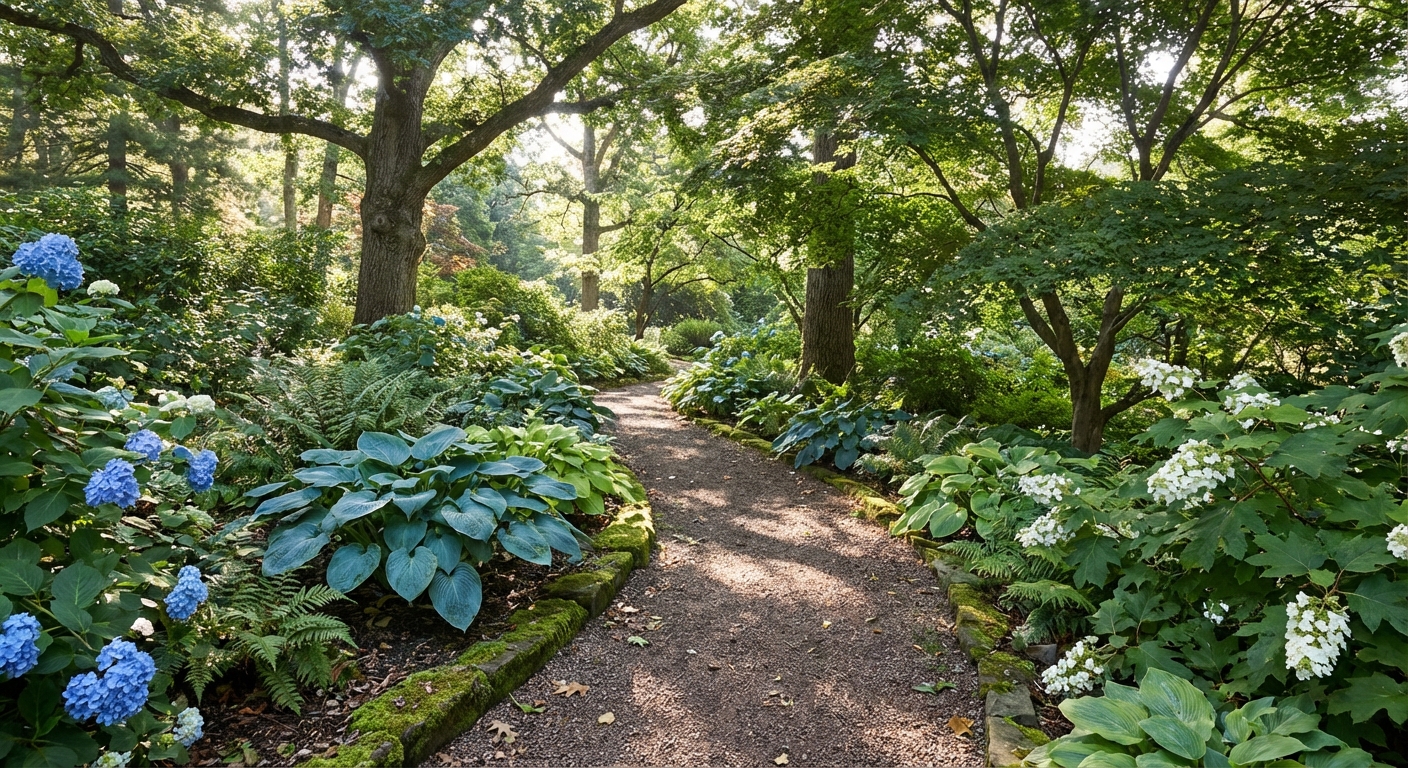
Shade gets a bad reputation, but I have a soft spot for it. The quiet, cool corners under trees and along the north side of a house are where foliage looks extra lush, flowers last longer, and the garden feels like a little retreat. The trick is choosing plants that genuinely want lower light, then designing with texture and layers so your garden still feels full and intentional.
This page rounds up my favorite shade performers, organized by perennials, shrubs, and ground covers, with simple design tips you can use right away. (Quick note: availability and performance can vary by USDA zone, so always double-check the tag for your region.)
Know your shade first
Before you shop, take a quick light inventory. Shade is not one-size-fits-all, and the right plant in the wrong shade type is the fastest way to feel like you have a black thumb.
- Partial shade: About 3 to 6 hours of sun, often morning sun and afternoon shade. Many flowering shade plants prefer this.
- Dappled shade: Shifting light filtered through tree branches. Fantastic for woodland plants.
- Full shade: Roughly 0 to 3 hours of direct sun (definitions vary). Expect more foliage than flowers, and choose plants known for deep shade tolerance.
- Dry shade: The hardest situation, usually under mature trees where roots steal moisture. You will need extra compost, deep watering while plants establish, and tougher plant picks.
- Wet shade: Low spots, clay soil, or areas that stay damp. Choose plants that enjoy consistent moisture, and avoid anything that hates “wet feet.”
Clara tip: In shade gardens, soil is the real engine. Mix in compost each season, keep a 2 to 3 inch leaf mulch layer, and water deeply but less often to encourage roots to chase moisture.
Best shade perennials
Perennials give shade gardens their backbone. I lean heavily on foliage, then sprinkle in flowers for pops of color and seasonal rhythm.
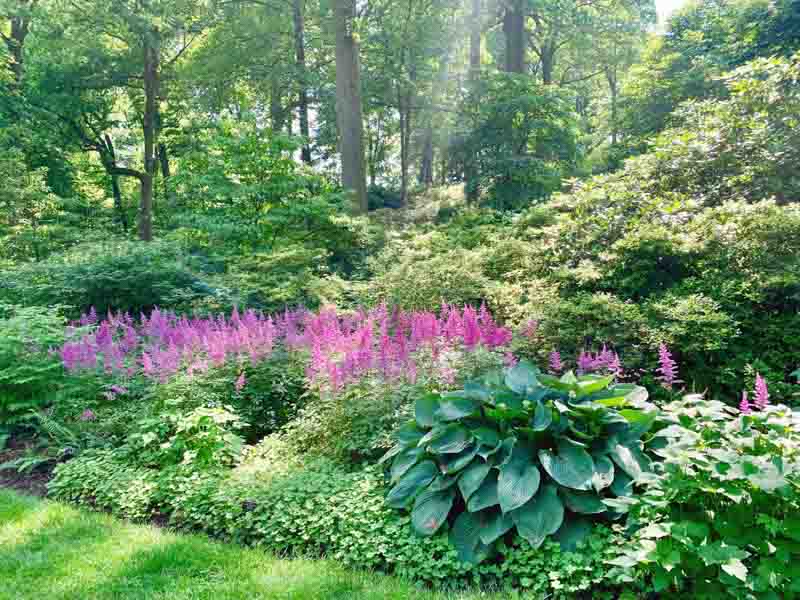
Hosta (Hosta spp.)
If shade gardening had a mascot, it would be a hosta. They are easy, long-lived, and come in a ridiculous range of sizes and leaf colors.
- Best for: Partial to full shade, rich soil
- Why I love it: Big texture, reliable clumps, blooms that can attract bees (and sometimes hummingbirds) depending on the cultivar
- Watch for: Slugs and deer. In slug-prone areas, use iron phosphate bait and keep mulch pulled slightly back from crowns.
Astilbe (Astilbe spp.)
Astilbe brings feathery flower plumes and fern-like leaves that look right at home in woodland shade.
- Best for: Partial shade, consistently moist soil
- Why I love it: Flowers brighten shade without needing hot sun
- Watch for: Dry soil. Astilbe sulks fast if it dries out.
Ferns (Dryopteris, Athyrium, Matteuccia, and more)
Ferns are my go-to for full shade structure. I also talk to mine. They do not answer, but I still swear it helps.
- Best for: Dappled shade to full shade, with consistent moisture for most types
- Great picks: Japanese painted fern (often best in partial shade with even moisture), lady fern (adaptable), ostrich fern (tall and bold, happiest in moist soil)
- Design note: Use ferns as a repeating “green rhythm” throughout the bed.
Heuchera (Coral bells)
For color without flowers, heuchera is a shade garden secret weapon. Leaves can be caramel, burgundy, lime, or smoky purple depending on the variety.
- Best for: Partial shade, well-drained soil with organic matter
- Why I love it: Long-season foliage interest, especially in milder climates
- Watch for: Cultivar differences. Some handle more sun, while some look best in brighter shade. Also watch for crown heaving in freeze-thaw winters. A light winter mulch helps.
Brunnera (Brunnera macrophylla)
Heart-shaped leaves, often splashed with silver, and tiny sky-blue flowers in spring. Brunnera makes shade look brighter.
- Best for: Partial shade, morning sun is fine
- Why I love it: The silver foliage glows in low light
- Watch for: Hot afternoon sun, which can scorch leaves.
Hellebore (Helleborus spp.)
Hellebores bloom when the garden is still half-asleep, often late winter into early spring. Their nodding flowers feel like a little miracle.
- Best for: Dappled shade to partial shade
- Why I love it: Early blooms, semi-evergreen foliage in many climates
- Watch for: Planting too deep. Keep the crown at soil level. Also note that hellebores are toxic if ingested, so place thoughtfully around kids and pets.
Bleeding heart (Dicentra spp.)
Classic charm with arching stems and heart-shaped flowers. It is especially lovely paired with ferns and hostas.
- Best for: Partial shade, spring moisture
- Why I love it: Romantic spring display
- Watch for: Some types go dormant in summer heat. Plant around it with hostas or ferns to fill the gap.
Wet shade favorites (Ligularia, Primula, Iris)
If you have a spot that stays damp, lean into it. Wet shade can be incredibly lush when you match plants to the moisture.
- Great picks: Ligularia (big leaves, bold presence), primrose (Primula, cheerful spring color), blue flag iris (Iris versicolor in many regions)
- Watch for: Drainage that is slow but not stagnant. If water sits for days, consider improving drainage or using plants that truly tolerate boggy soil.
Best shrubs for shade
Shrubs anchor the space and give you height, structure, and seasonal blooms. In shade, I focus on shrubs that flower well with morning sun or dappled light, then add foliage shrubs for steadiness.
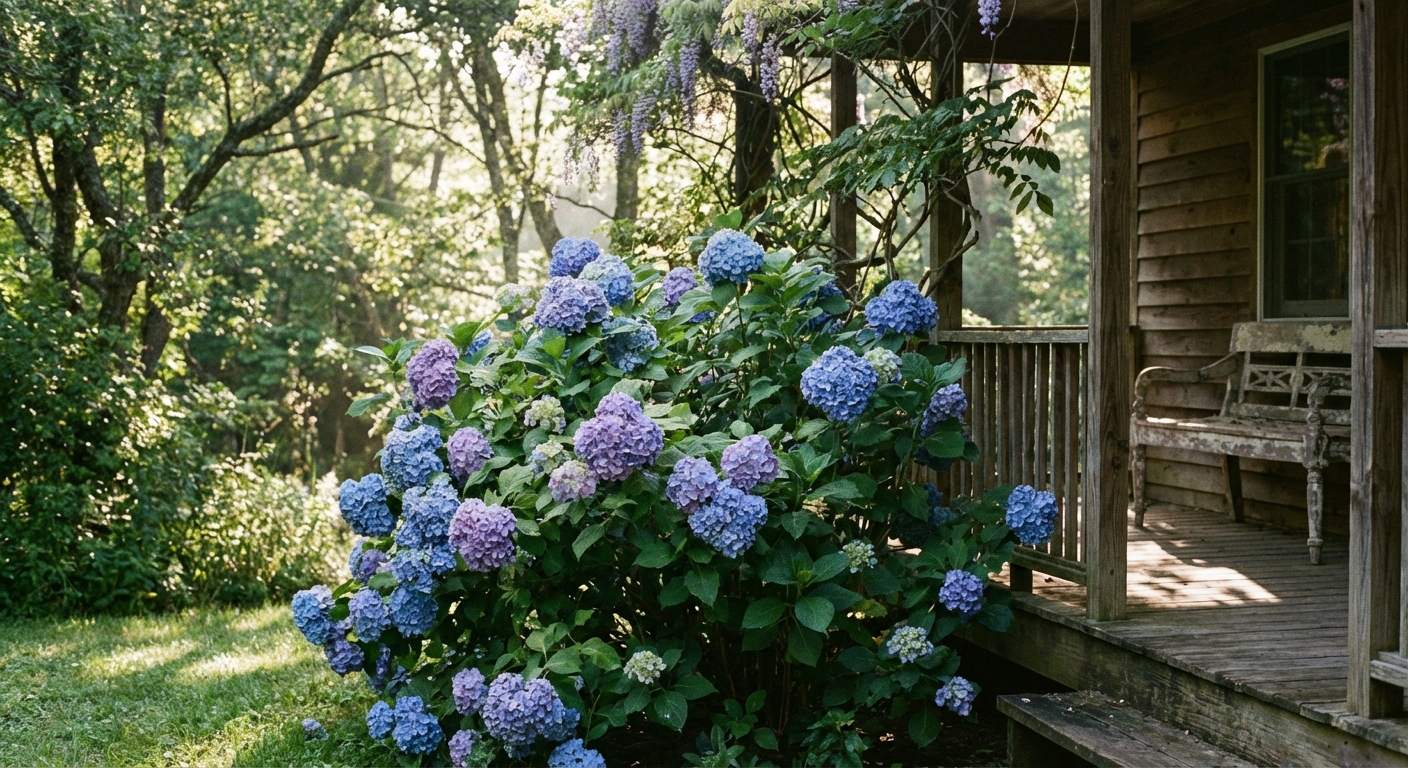
Hydrangea (Hydrangea macrophylla, H. arborescens, H. quercifolia)
Hydrangeas are shade garden royalty in bright shade and partial shade, especially with morning sun. Choose the type that fits your climate and pruning comfort.
- Best for: Partial shade, moisture-retentive soil
- Great options: Oakleaf hydrangea for texture and fall color, smooth hydrangea for reliability, bigleaf for classic blooms where winters are mild enough
- Watch for: Deep shade (fewer blooms) and afternoon sun in hot climates, which can wilt and scorch.
Azalea and rhododendron (Rhododendron spp.)
When people tell me shade is boring, I point them to a blooming azalea. These shrubs thrive in woodland conditions with acidic, organic soil.
- Best for: Dappled shade, acidic soil, consistent moisture
- Why I love it: Big spring color, evergreen structure in many varieties
- Watch for: Alkaline soil. If your soil is high pH, consider testing first and amending thoughtfully.
Boxwood (Buxus spp.) or inkberry holly (Ilex glabra)
Not every shade garden needs to be wild and woodsy. A little evergreen structure makes everything look more “designed.”
- Best for: Partial shade
- Why I love it: Year-round form, great for edging or repeating mounds
- Watch for: Airflow. Avoid overcrowding to reduce disease issues.
Camellia (Camellia japonica, C. sasanqua)
If you garden in a region where camellias thrive, you get glossy evergreen leaves and lush blooms in cooler seasons.
- Best for: Partial shade, protection from harsh afternoon sun
- Why I love it: Flowers when many shrubs are finished
- Watch for: Cold exposure and zone limits. Site in a sheltered spot if winters are borderline.
Japanese maple (Acer palmatum)
Not a shrub, exactly, but a small tree that behaves like living sculpture. Japanese maples are stunning in dappled shade.
- Best for: Dappled shade, sheltered from wind
- Why I love it: Leaf texture and color, elegant form
- Watch for: Hot afternoon sun and dry soil, which can crisp leaf edges.
Best ground covers for shade
Ground covers are your secret for a shade garden that looks finished. They knit bare soil together, keep roots cooler, reduce weeds, and make your taller plants look intentional instead of isolated.
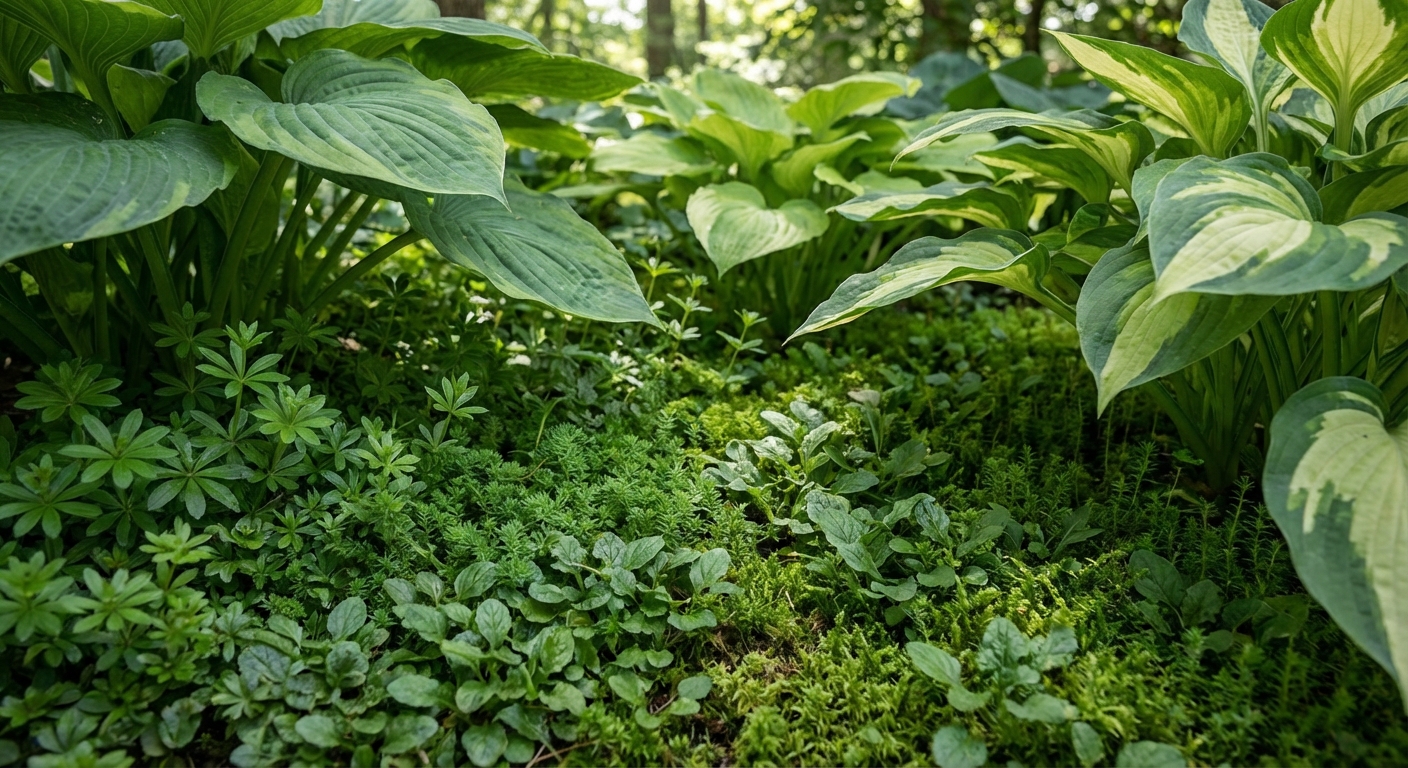
Creeping Jenny (Lysimachia nummularia)
Creeping Jenny is bright chartreuse and spills beautifully over rocks and edges. In shade it stays softer green, still luminous.
- Best for: Partial shade, moist areas
- Why I love it: Fast fill and great trailing habit
- Watch for: It can spread aggressively and is considered invasive in some areas. Check local guidance and use it where you can contain it, like along a path edge or in a controlled bed.
Sweet woodruff (Galium odoratum)
Sweet woodruff is a classic woodland ground cover with starry white flowers in spring and fragrant foliage when bruised.
- Best for: Dappled shade to full shade, evenly moist soil
- Why I love it: Soft, natural look under trees
- Watch for: It spreads and may be considered invasive in some regions. Lovely in drifts, less lovely if you want strict boundaries.
Wild ginger (Asarum canadense and others)
Wild ginger forms handsome, heart-shaped leaves and thrives where many plants struggle, especially in true shade.
- Best for: Full shade to dappled shade
- Why I love it: Dense cover, very woodland-appropriate
- Watch for: Slow establishment. Once it settles in, it is wonderfully steady.
Ajuga (Ajuga reptans)
Ajuga offers glossy foliage, often purple-toned, plus blue flower spikes in spring. It is a great “color echo” plant.
- Best for: Partial shade
- Why I love it: Fast, colorful coverage
- Watch for: Crown rot in overly wet, poorly drained spots, plus enthusiastic spreading. It can be invasive in some areas, so check local recommendations.
Epimedium (Epimedium spp.)
Epimedium, sometimes called barrenwort, is one of the best plants for dry shade once established. The spring flowers are delicate and surprising up close.
- Best for: Dry shade to partial shade
- Why I love it: Tough, graceful, excellent under trees
- Watch for: It is not instant. Give it a season or two to bulk up.
Pachysandra (Pachysandra terminalis)
Pachysandra is a traditional evergreen ground cover for deep shade that creates a tidy, uniform carpet.
- Best for: Full shade
- Why I love it: Reliable coverage where grass fails
- Watch for: Monocultures can be vulnerable to disease like volutella blight and leaf blight. Mix with other plants where possible, and keep leaf litter from matting too thickly. Also note it can be invasive in some areas, so check local guidance.
Design tips for shade
In low light, texture reads louder than color. Think of your shade garden like a lasagna, built in layers, with repeating shapes that pull the eye along.
1) Layer by height
- Back layer: Shrubs and tall perennials like hydrangea, oakleaf hydrangea, ostrich fern (where soil stays moist).
- Middle layer: Hostas, brunnera, heuchera, hellebores, astilbe.
- Front layer: Ground covers like epimedium, sweet woodruff, ajuga, wild ginger.
2) Mix leaf sizes
Pair big leaves with fine leaves for instant sophistication.
- Hosta (bold) + Japanese painted fern (fine)
- Brunnera (medium, heart-shaped) + astilbe (lacy)
- Oakleaf hydrangea (large, lobed) + epimedium (airy)
3) Use light colors
White, pale pink, lavender, and silver foliage show up better in shade. Brunnera, variegated hostas, and light hydrangea blooms can make a dim corner feel intentionally bright.
4) Repeat plants
A common shade garden mistake is planting one of everything. Choose 5 to 7 main plants and repeat them in drifts. It looks cohesive, and it is easier to maintain.
Clara tip: If you are stuck, repeat one “calm” plant (like a simple green fern) and one “sparkle” plant (like brunnera or a variegated hosta). That duo alone can carry a whole bed.
5) Add edging
Shade can feel mushy without clear lines. A simple mulch path, stone edging, or a row of low evergreens gives the bed structure, even when flowers are between seasons.
Quick planting and care
- Planting time: Spring or early fall is ideal for most shade plants, when stress is lower and roots establish faster.
- Watering: Shade still needs water, especially under trees. Water deeply at the base to encourage strong roots.
- Mulch: Leaf mulch is my favorite for shade beds. It mimics woodland soil and feeds earthworms as it breaks down.
- Fertilizer: Compost first. If you use fertilizer, go gentle. Too much nitrogen gives you big leaves but weaker plants.
- Drainage: Shade is not always dry. If soil stays soggy, choose wet-shade plants or improve drainage before planting.
- Patience: Shade gardens often look better in year two and year three. Many woodland plants take a little time to settle in and then they just glow.
Plant combos
If you want a ready-made starting point, here are a few combinations that play nicely together in many climates. Adjust based on your zone and the type of shade you have.
Classic woodland
- Oakleaf hydrangea (back)
- Japanese painted fern + hellebores (middle)
- Wild ginger (front)
Foliage focus
- Hydrangea (back)
- Heuchera + variegated hostas (middle)
- Ajuga (front)
Dry shade
- Inkberry holly or a shade-tolerant evergreen (back)
- Epimedium + ferns suited to your conditions (middle)
- Sweet woodruff (front, where moisture allows)
Wet shade
- Hydrangea arborescens (back, where hardy)
- Ligularia + astilbe (middle)
- Primrose (front)
Clara tip: For dry shade, water deeply for the first growing season, even if the plants are labeled “drought tolerant.” Drought tolerant usually means after they have roots.
When shade plants struggle
If your shade bed is looking sad, it is usually one of these issues.
- Leggy growth: Too little light for that plant. Swap to true shade lovers like ferns, hellebores, wild ginger, or pachysandra.
- Scorched edges: Too much afternoon sun or not enough consistent moisture. Add mulch, adjust watering, or move the plant.
- Slow growth: Soil is too compacted or too root-competitive. Top-dress with compost, aerate gently with a garden fork, and choose tougher plants like epimedium.
- No flowers on hydrangea: Could be pruning timing, winter bud damage, or too much shade. Consider smooth hydrangea types for more reliable bloom, or give morning sun if possible.
- Mystery munching: Shade gardens are often a deer and rabbit buffet. If browsing is common, consider tougher choices like ferns, hellebores, brunnera, or inkberry, and protect new plants while they establish.
Shade can be lush
A thriving shade garden is less about fighting conditions and more about partnering with them. Start with great soil, choose plants that match your type of shade, and design with layers and texture so everything feels intentional. Then give it a season to settle in. Shade gardens have a slow-burn kind of beauty, and once they hit their stride, they are downright addictive.
If you tell me what zone you are in and whether your shade is dry, wet, or somewhere in between, I can suggest a simple plant list tailored to your space.