Best Grow Lights for Indoor Plants

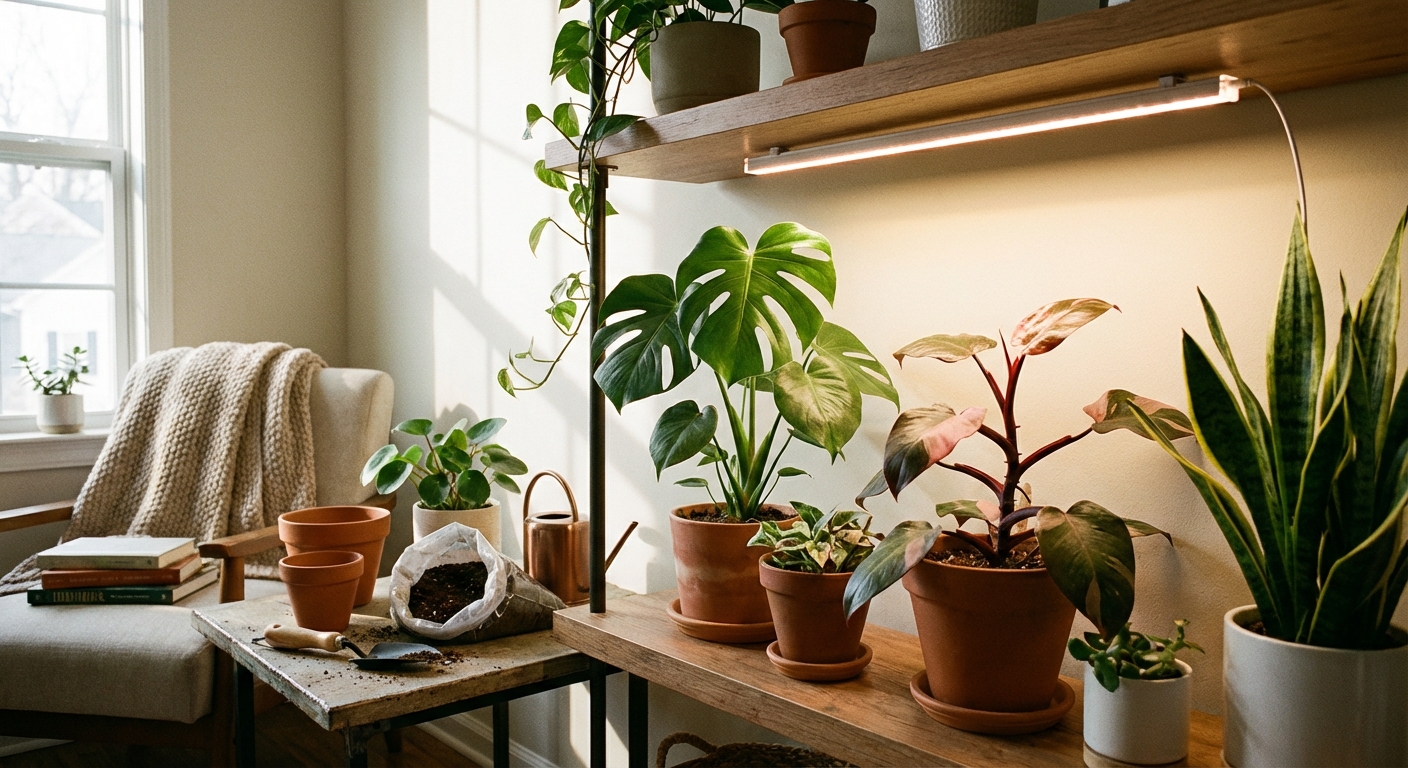
If your home has ever felt like it comes with a built-in winter cloud, you are not alone. Even bright windows can turn dim fast, especially in north-facing rooms, short winter days, or apartments shaded by nearby buildings. A good grow light is a reliable little sun substitute that shows up on time every day. And when you match the light to the plant, indoor gardening gets a whole lot easier and a lot more fun.
This guide walks you through the grow light basics, what features matter (and which ones are mostly marketing), plus beginner-friendly options for houseplants and seed starting.
Grow light basics
Plants do not “see” light the way we do. They use light as energy, and the best grow lights focus on the wavelengths plants can use for photosynthesis, plus enough overall brightness to make a difference.
Spectrum in plain English
- Full spectrum (white light): Looks like daylight to your eyes. Great for most houseplants and seedlings, and it is much easier to live with in a home. A high-quality full spectrum LED can grow everything from pothos to peppers.
- Red/blue “blurple” lights: Those purple-looking lights you may have seen online. They can work, but they are harsh in living spaces and not automatically “better.” They are common in older or cheaper fixtures.
- Red-heavy light: Often used to support flowering and fruiting, but it is not magic. Blooms still depend mostly on enough total light, plant maturity, and (for some plants) day length cues.
- Blue-heavy light: Can encourage tighter, leafier growth. For seedlings, it can help, but the biggest anti-stretch fix is usually more intensity and closer placement, not “more blue” alone.
If you are buying one light for a home, choose a full spectrum LED and focus on brightness and coverage. Spectrum matters, but intensity and distance matter more for most beginners.
PAR, PPFD, lumens, and watts
- PAR is the range of light plants can use (400 to 700 nm). It is a definition of the light range, not a measurement by itself.
- PPFD tells you how much PAR light is hitting a surface right now (think: intensity at plant level). This is the most useful spec when you are comparing lights or dialing in placement.
- DLI (Daily Light Integral) is PPFD over time (think: intensity plus hours). It is the bridge between “how close is the light?” and “how long should it run?”
- Lumens measure human-perceived brightness. Useful as a rough clue for white lights, but not plant-perfect.
- Watts tell you energy use. They do not guarantee plant-usable light, but actual watt draw (not “1000W equivalent”) can be a helpful comparison point when you are looking at similar-quality LEDs.
Many consumer lights do not list PPFD or DLI targets. That is okay. You can still make smart choices by picking a reputable brand, choosing enough coverage, and dialing in placement.
Types of grow lights
LED grow lights (best all-around)
LEDs are my go-to recommendation for most Leafy Zen readers because they are efficient, long-lasting, and available in shapes that fit real homes.
- Pros: Low electricity use, low heat, long lifespan, lots of sizes and mounting options.
- Cons: Upfront cost can be higher, and cheap LEDs can be disappointingly dim.
Fluorescent (T5/T8 shop lights)
Fluorescents are the old reliable workhorse for seedlings and shelves, especially if you already have a fixture. They still work great for leafy starts, but they are less efficient than LEDs and bulbs need replacing over time.
- Pros: Even coverage, great for seed starting, fixtures are widely available.
- Cons: More power use, bulbs fade with age, bulkier for small apartments.
Incandescent and halogen (skip them)
They run too hot and waste energy. They are more likely to scorch leaves than help growth.
Bar vs panel vs bulb
Shape matters because it determines coverage. The best grow light is the one that spreads light evenly across your plants, not just a bright hotspot in the middle.
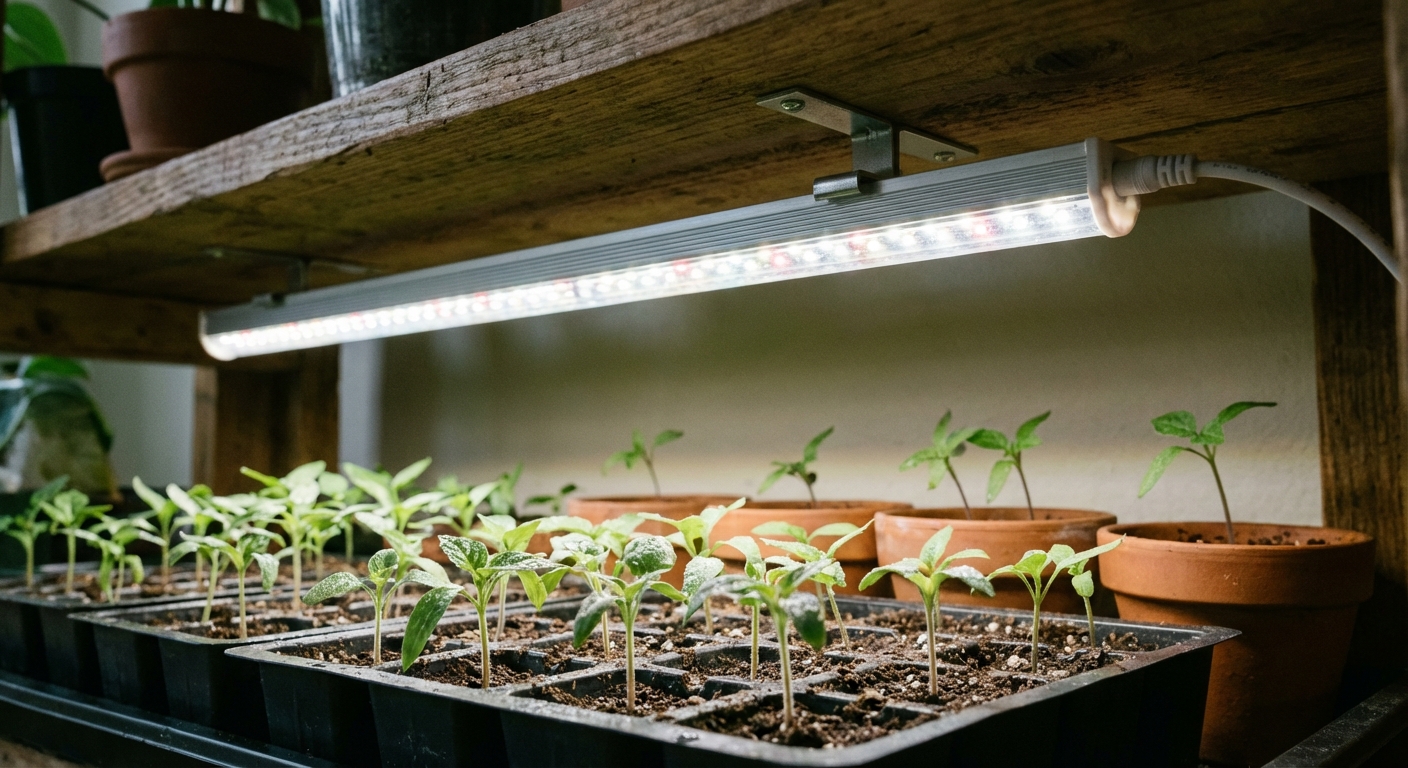
Bar lights
Perfect for shelves, plant racks, and seed-starting setups.
- Best for: rows of seedlings, multiple small pots, leafy greens
- Why I love them: even light, easy mounting, scalable
Panel lights
Great when you need stronger light from a single fixture, especially for larger plants or a small indoor garden corner.
- Best for: larger houseplants, flowering and fruiting plants (like peppers or tomatoes), stronger light needs
- Tip: make sure it has enough footprint coverage for your plant area
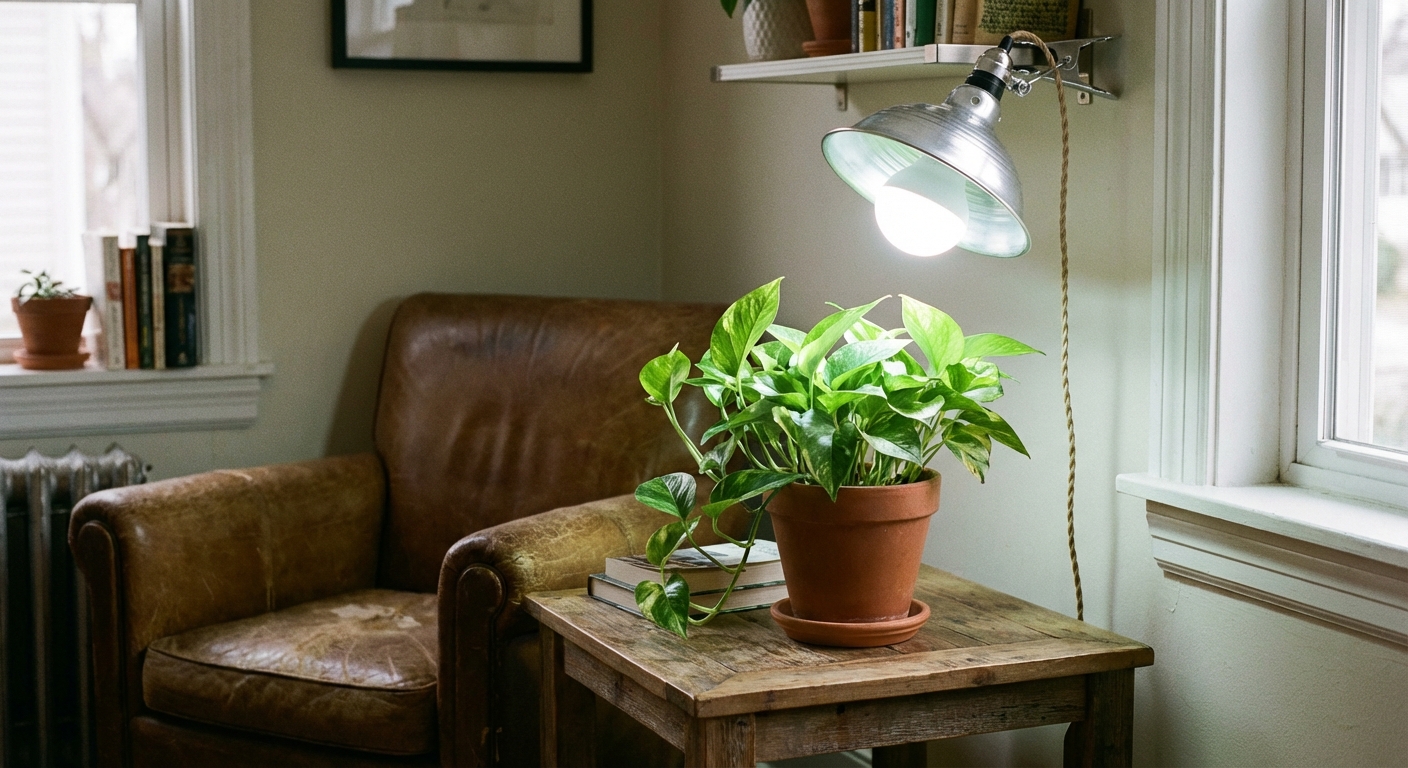
Screw-in bulbs (E26/E27)
Ideal if you want the simplest setup: a grow bulb in a clamp lamp or gooseneck lamp.
- Best for: one plant, a small cluster of pots, a dark corner
- Watch for: too-narrow beam angles that only light the plant’s “forehead”
How to choose a grow light
Step 1: Know your plant’s appetite
- Low light plants (snake plant, ZZ, some philodendrons): Grow lights help them stay healthier and steadier, but they do not need stadium lighting. Also worth remembering: “low light” usually means they tolerate it, not that they prefer it.
- Medium light plants (pothos, monsteras, many hoyas): They respond beautifully to a dependable daily light boost.
- High light plants (succulents, cacti, many herbs, citrus): They need intense light close to the plant, often more hours, and better fixtures.
- Seedlings: They need bright, close, consistent light to avoid stretching.
Step 2: Measure your growing area
Before you buy anything, measure the space you want to light. A “2-foot bar” is only helpful if your shelf is around 2 feet wide. For panels, check the recommended coverage at a specific hanging height.
Step 3: Pick helpful features
- Built-in timer or compatibility with a smart plug: consistency is everything.
- Dimming: helps you fine-tune intensity and prevent leaf bleaching.
- Adjustable height: seedlings and succulents want lights closer than tropical foliage plants.
- Solid mounting: under-shelf clips, zip ties, chains, or a stable stand.
Placement and distance
Distance is where most grow light setups succeed or fail. Too far and your plant stretches toward the light. Too close and you can bleach or stress leaves, even with LEDs.
Quick note: if your light includes a PPFD map or hanging-height chart, trust that over any generic distance range. Fixtures vary a lot.
Starting distances
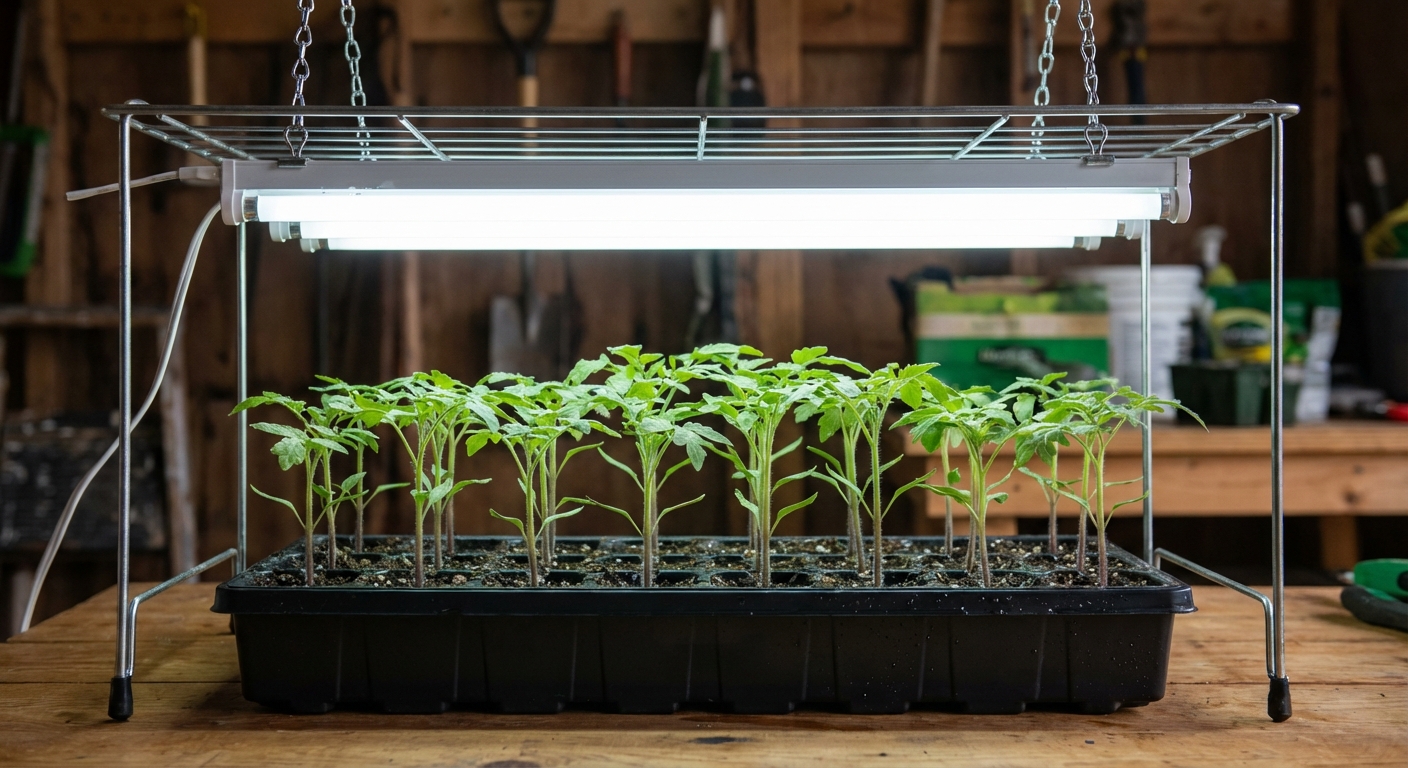
- Seedlings (LED bars or panels): start around 4 to 8 inches above the leaves, then adjust if they stretch.
- Houseplants (most full spectrum LEDs): start around 8 to 18 inches, depending on brightness and plant type.
- Succulents and cacti: often need 4 to 10 inches with a strong light for compact growth.
- Fluorescent T5: can be very close, often 2 to 6 inches, because intensity drops quickly with distance.
Read your plant’s feedback
- Stretching, leaning, long gaps between leaves: increase intensity by moving the light closer, improving coverage, or upgrading the fixture.
- Leaf bleaching, crispy patches, sudden pale look: move the light farther away, dim it, or reduce hours.
- Uneven growth: rotate pots weekly, or use a wider fixture.
My quirky little habit: I do a “shadow check.” If the plant casts a fairly defined shadow under the grow light, you are usually in a decent intensity range for growth. If there is barely a shadow, the light may be too weak or too far away.
Daily duration
Plants need a light period and a dark period. More is not always better. Think consistency over marathon sessions.
Where DLI fits in
If PPFD is “how bright,” DLI is “how much light the plant gets in a day.” You can raise DLI by increasing intensity (closer or stronger light), increasing hours, or both. That is why placement and schedule work as a team.
Simple schedules
- Most houseplants: 10 to 12 hours/day
- Seed starting: 14 to 16 hours/day
- Succulents and high-light plants: 12 to 14 hours/day, depending on brightness
If your plants also get window light, you can often reduce grow light hours. A timer is your best friend here. It removes the daily guesswork and gives plants a steady rhythm.
Signs your schedule needs tweaking
- Algae on soil, fungus gnats increasing: this usually points to soil staying too wet (especially consistently damp, organic mixes). Light is not the main cause, but long light periods can keep the top layer more inviting if watering is frequent. Let the soil dry a bit more between waterings, bottom-water when you can, and consider a thin layer of sand or mosquito bits if gnats are persistent.
- No growth for weeks: increase hours gradually or move the light closer, assuming watering and nutrition are on track.
Top picks by situation
Rather than tossing a random list of products at you, I want to match the light to the way you actually grow plants at home. These categories are what most indoor gardeners need. When shopping, look for reputable brands, clear wattage information, and realistic coverage claims.
Best for beginners: bulb + clamp lamp
- Why it works: inexpensive, flexible, zero installation
- Look for: full spectrum or “daylight” grow bulb, 9 to 15W range (or higher), wide beam angle, good heat management
- Brand trust signals: Sansi and GE grow bulbs are popular, widely reviewed options that tend to be more consistent than no-name multipacks.
- Best use: 1 to 3 small to medium plants
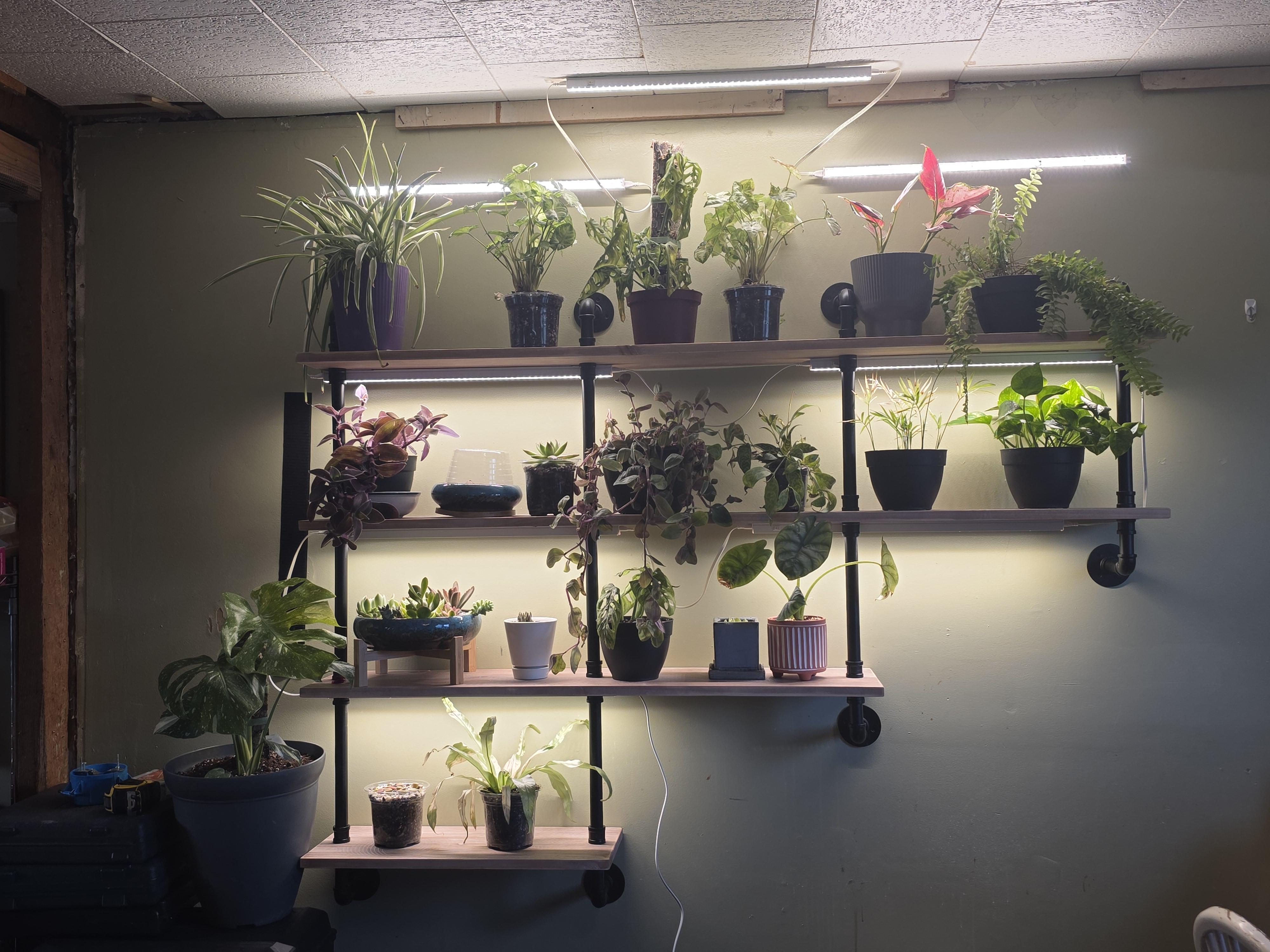
Best for shelves: LED bar lights with a timer
- Why it works: even coverage, clean look, easy to expand
- Look for: linkable bars, dimming, included clips or brackets, 4000K to 5000K white light
- Brand trust signals: Barrina is a common go-to for plant shelves and racks, especially for beginners who want simple, linkable bars.
- Best use: seedlings, herbs, plant shelves
Best for seed starting: LED shop light style fixture
- Why it works: excellent coverage over trays, easy height adjustment
- Look for: 2-foot or 4-foot fixtures that fit your rack, neutral to cool white, reliable hanging hardware
- Extra tip: prioritize even coverage across the whole tray over “insanely bright in the center.”
Best for high-light plants: stronger LED panel
- Why it works: higher intensity for succulents and serious indoor gardeners
- Look for: dimmer knob, good heat sink, honest coverage at specific hanging heights, PPFD map if available
If you want one simple rule: for houseplants, prioritize full spectrum plus coverage. For seedlings and succulents, prioritize brightness at close distance.
Budget-friendly setups
Under $30: one plant rescue station
- One full spectrum grow bulb
- One clamp lamp or gooseneck lamp
- One outlet timer or smart plug (optional but helpful)
Place the light 8 to 12 inches from a pothos, philodendron, or small fiddle leaf fig and run it 10 to 12 hours daily.
Under $60: a small seed-starting shelf
- One LED bar or shop light fixture sized to your shelf width
- Simple wire rack or sturdy shelf
- Timer
Hang the light 4 to 8 inches above the seedlings and raise it as they grow.
Under $100: a living room-friendly plant shelf
- Two linkable LED bars with dimming
- Timer
- Optional reflective backing (even a white board behind plants helps)
That last tip is surprisingly powerful. A light-colored wall or reflective surface bounces light back onto leaves, which can make a modest setup feel stronger.
Marketing traps to skip
This is the part where I save you from the “too good to be true” listings.
- “1000W equivalent”: look for actual watt draw instead.
- Wild coverage claims: if a tiny panel promises to cover an entire room, it is probably wishful thinking.
- “Full spectrum” as a magic label: it is not tightly regulated. Treat it as a starting point, then look for real-world reviews, PPFD charts, and a brand that stands behind specs.
- Lots of modes and colors you will never use: dimming, a timer, and good coverage beat a rainbow of buttons.
Common mistakes
- Mistake: Putting the light too far away. Fix: Move it closer in small steps over a few days and watch for stretching to stop.
- Mistake: Lighting only the top of tall plants. Fix: Use a taller light source, add a second light, or choose a panel with wider spread.
- Mistake: Forgetting the dark period. Fix: Use a timer and stick to a steady schedule.
- Mistake: Expecting grow lights to fix overwatering. Fix: Treat light and watering as a team. Brighter conditions often mean plants drink more, but soggy soil still causes root trouble.
- Mistake: Buying the cheapest “grow light strip” with no specs. Fix: Choose a product with clear wattage, real reviews with plant photos, and reasonable coverage claims.
Quick checklist
- Is it full spectrum (white) for a home-friendly glow?
- Does it cover your shelf or plant area without a tiny hotspot?
- Do you have a plan to mount it and adjust height?
- Does it have a timer or will you use a smart plug?
- Do you need extra intensity for seedlings or succulents?
If you want to tell me what you are growing and where, I am happy to help you pick a setup that fits your space. I promise your plants do not need perfection. They just need light that shows up consistently, like a dependable friend who always arrives with snacks and good gossip.