
Are Money Trees Toxic to Cats and Dogs?

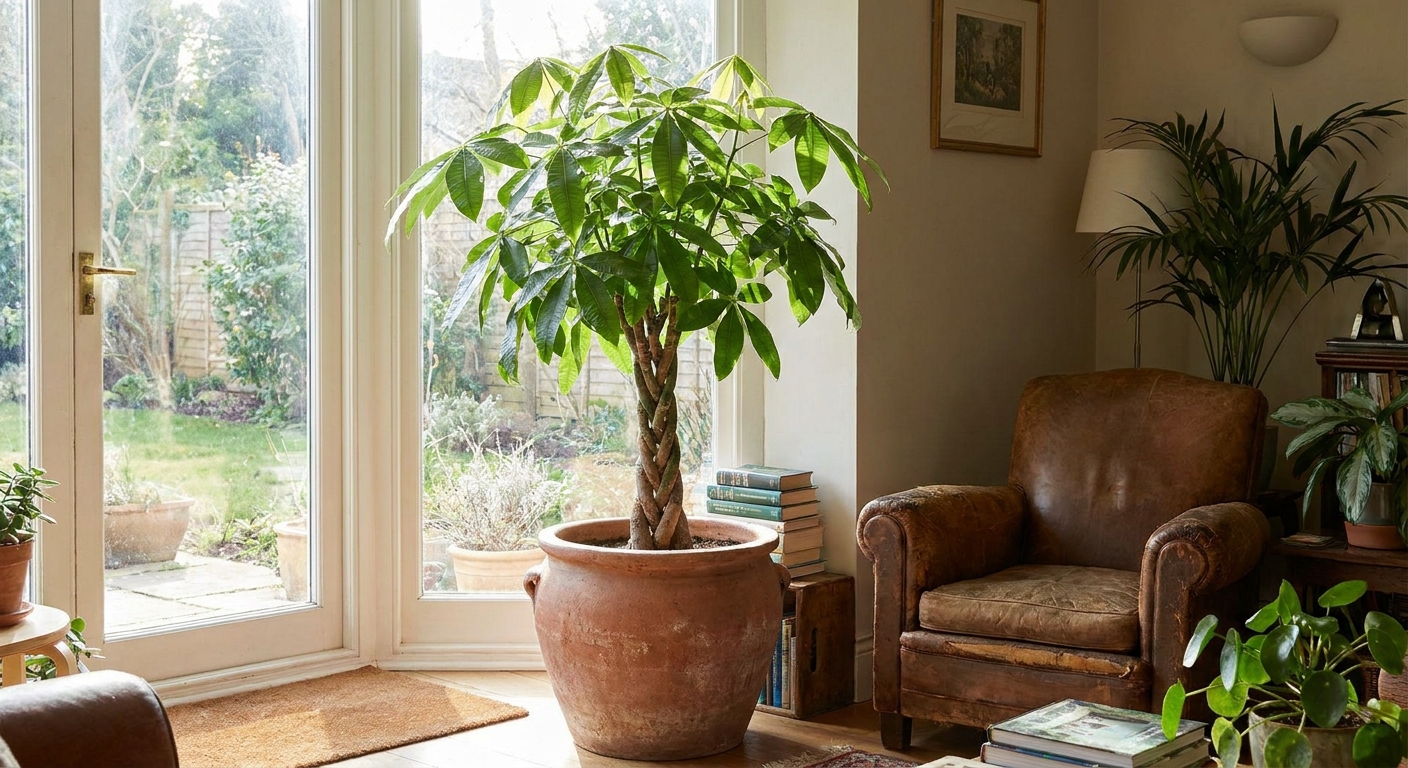
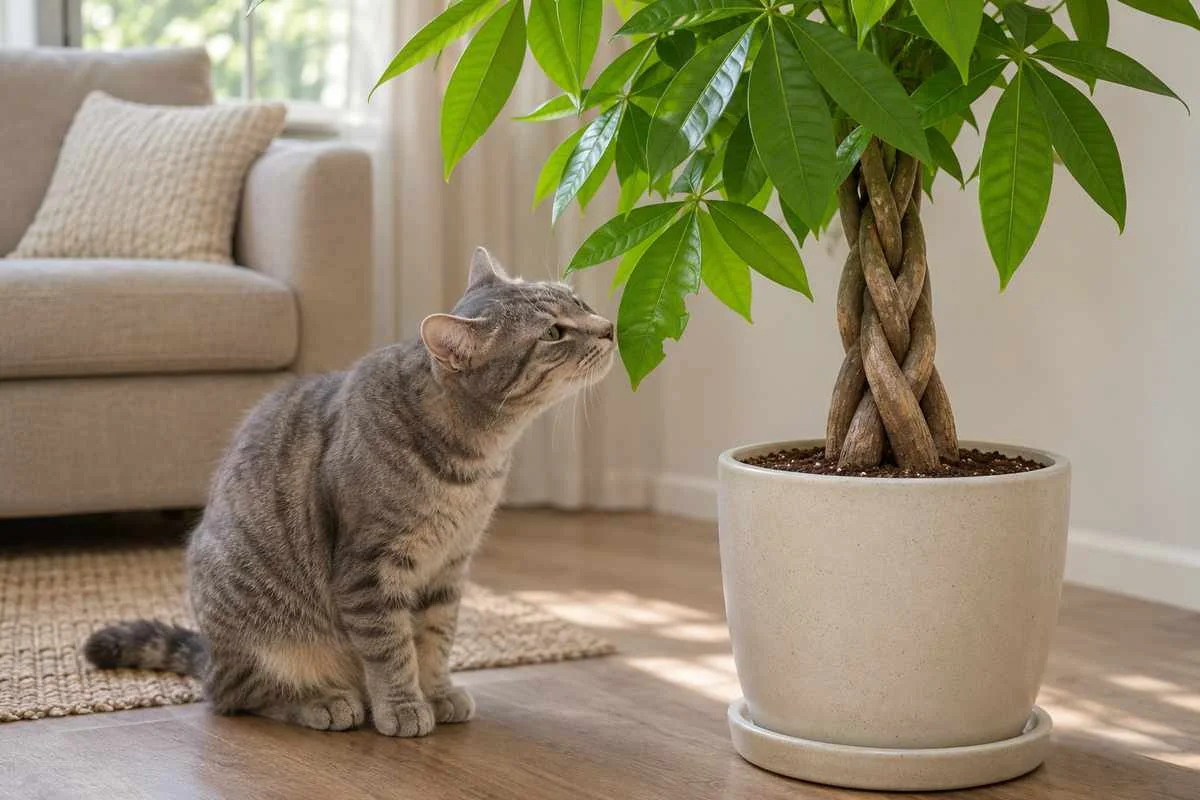
Years ago, in my tiniest apartment, I had a money tree perched by the brightest window like a little green lighthouse. It was also, unfortunately, exactly the height of a curious cat who believed every houseplant was a salad bar. If you are here because you just heard that unmistakable crunch, take a breath. Many money tree nibbles are more “tummy upset” than true emergency, but you still want to handle it calmly and quickly.
Is a money tree toxic to cats and dogs?
Money tree (Pachira aquatica) is widely regarded as non-toxic to cats and dogs. You will often see it listed as a non-toxic houseplant by veterinary and pet-safety references (including the ASPCA’s animal poison control resources). That said, “non-toxic” does not mean “edible.” Chewing on the leaves or stems can still cause mild gastrointestinal irritation in some pets, especially if they eat a larger amount or have a sensitive stomach.
A common source of confusion is that “money plant” can mean several different plants. This article is specifically about Pachira aquatica, the braided-trunk houseplant sold as a money tree.
Which parts matter most?
For Pachira aquatica, the parts pets usually get into are:
- Leaves: Most common target. Generally the main cause of drooling or an upset stomach if eaten.
- Soft green stems and new growth: Also commonly chewed. Similar risk profile to leaves.
- Woody trunk: Less often eaten, but gnawing can irritate the mouth. In rare cases, it can cause splinters if a pet goes full beaver on it.
Seeds and pods are not typically present on indoor money trees, so most household exposures involve leaves and tender stems. If your plant is outdoors or you somehow have pods or seeds, treat any ingestion as worth a call to your vet for individualized advice.
Symptoms to watch for
If your pet nibbles a money tree, the most likely outcome is no symptoms at all. If symptoms do show up, they are usually mild and related to the digestive system.
Common, usually mild symptoms
- Drooling or foamy saliva (especially right after chewing)
- Gagging or lip smacking
- Vomiting
- Loose stool or diarrhea
- Decreased appetite for a meal
Less common but more concerning signs
- Repeated vomiting, vomiting with blood, or severe diarrhea
- Marked lethargy or weakness
- Signs of abdominal pain (hunched posture, whining, refusing to move)
- Swelling around the mouth or trouble swallowing
- Any breathing difficulty (urgent)
Those more serious symptoms are not what we expect from a money tree itself, but they are exactly why it is smart to monitor closely. Sometimes the bigger issue is how much was eaten, a pre-existing condition, or something else your pet got into at the same time.
What to do right now
Here is my calm, practical checklist. You do not need fancy tools, just a clear head.
- Move the plant out of reach so the snacking does not continue.
- Check your pet’s mouth for stuck leaf bits. If your pet allows it safely, gently wipe away plant material with a damp cloth.
- Offer a few sips of water if your pet wants it. This can help rinse the mouth and settle mild irritation. Do not force it.
- Figure out the amount: a couple of bites versus a whole handful of leaves matters.
- Watch for symptoms for the next 8 to 24 hours, especially vomiting or diarrhea.
Do not induce vomiting unless a veterinarian specifically instructs you to. At-home vomiting methods can create additional risks.
When to call a vet
If your pet seems totally normal after a small nibble, you can often monitor at home. But I am very pro “better safe than sorry” when it comes to our furry garden assistants.
Go to an emergency vet now if your pet is choking, has trouble breathing, collapses, or you see severe facial swelling.
Call your veterinarian promptly if:
- Your pet ate a large amount of the plant
- Your pet is a very small dog/puppy, a kitten, or has a medical condition (like pancreatitis, kidney disease, diabetes, or chronic GI issues)
- Vomiting or diarrhea is persistent or worsening
- You see lethargy, pain, tremors, or anything that feels “off” for your pet
- You are not 100 percent sure the plant is Pachira aquatica (plant mix-ups are common)
When you call, it helps to share:
- The plant name: money tree, Pachira aquatica
- How much you think was eaten
- Your pet’s weight, age, and current symptoms
- Any fertilizers, pesticides, or leaf-shine products used on the plant recently
Important: products applied to the plant can be more irritating than the plant itself. For example, a systemic insecticide in the soil, a residual pest spray on leaves, or a shiny leaf product can turn a “probably fine” nibble into a vet call.
Plant care, quickly
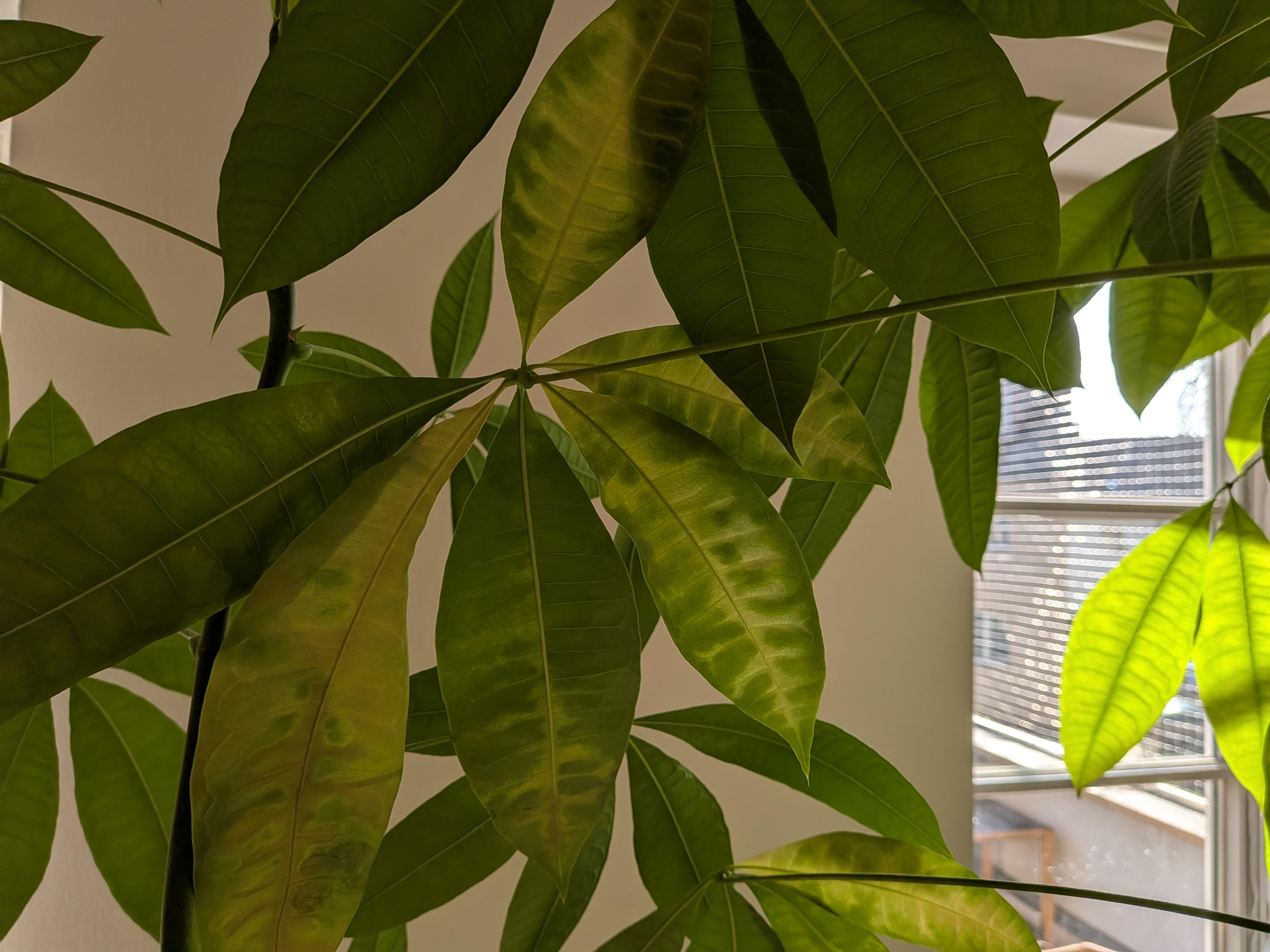
A stressed plant often drops leaves or puts out weak, floppy growth that pets love to bat at. If your money tree is looking a little tragic, you are not alone. The quick basics:
- Light: bright, indirect light is the sweet spot.
- Watering: let the top 1 to 2 inches of soil dry out before watering again (or roughly the top third of the pot for smaller containers). Soggy soil invites yellow leaves and leaf drop.
- Braiding: braids are mostly aesthetic, and tight ties can scar stems.
- Yellow leaves: most often from overwatering, low light, or a drafty spot.
If you want the full step-by-step, I put it all in our beginner guide: Money Tree Care for Beginners.
Keeping pets and plants peaceful
I talk to my ferns, and I also talk to my pets about boundaries. They do not always listen, but setting up the environment helps.
- Place the plant higher: a shelf, tall plant stand, or hanging planter (with safe hardware) is often the simplest fix.
- Offer an alternative: many cats love their own pot of cat grass to chew.
- Block access: decorative baskets, plant cabinets, or a baby gate for one “plant room” can be a sanity saver.
- Skip risky add-ons: avoid cocoa mulch and be cautious with pest products if you have chronic plant nibblers.
FAQ
My cat ate a money tree leaf. Will they be okay?
Most cats are okay after nibbling a leaf or two from a money tree (Pachira aquatica). Monitor for drooling, vomiting, or diarrhea, and call your vet if symptoms are persistent or severe.
My dog chewed the trunk. Is that dangerous?
The plant itself is not considered highly toxic, but chewing woody stems can irritate the mouth and stomach. Watch for gagging, drooling, or trouble eating, and contact your vet if your dog seems uncomfortable or swallowed a lot of plant material.
What if I am not sure it is a money tree?
If you cannot confirm the plant is Pachira aquatica, treat it as an unknown ingestion and call your veterinarian. Plant name mix-ups are incredibly common in the “money plant” world.
Could the soil be the problem instead of the plant?
Yes. Some pets get into the potting mix, which can cause vomiting or diarrhea, and fertilizers or pest control products in the soil can be more concerning. Tell your vet what is in the pot, not just the plant name.
The bottom line
Pachira aquatica money trees are generally considered non-toxic to cats and dogs, but chewing can still cause a cranky stomach. If your pet took a bite, remove access, offer water if they want it, and monitor closely. If they ate a lot, seem unwell, are having breathing trouble, or you used chemicals on the plant, call your veterinarian for tailored guidance.