
Alocasia Care Indoors

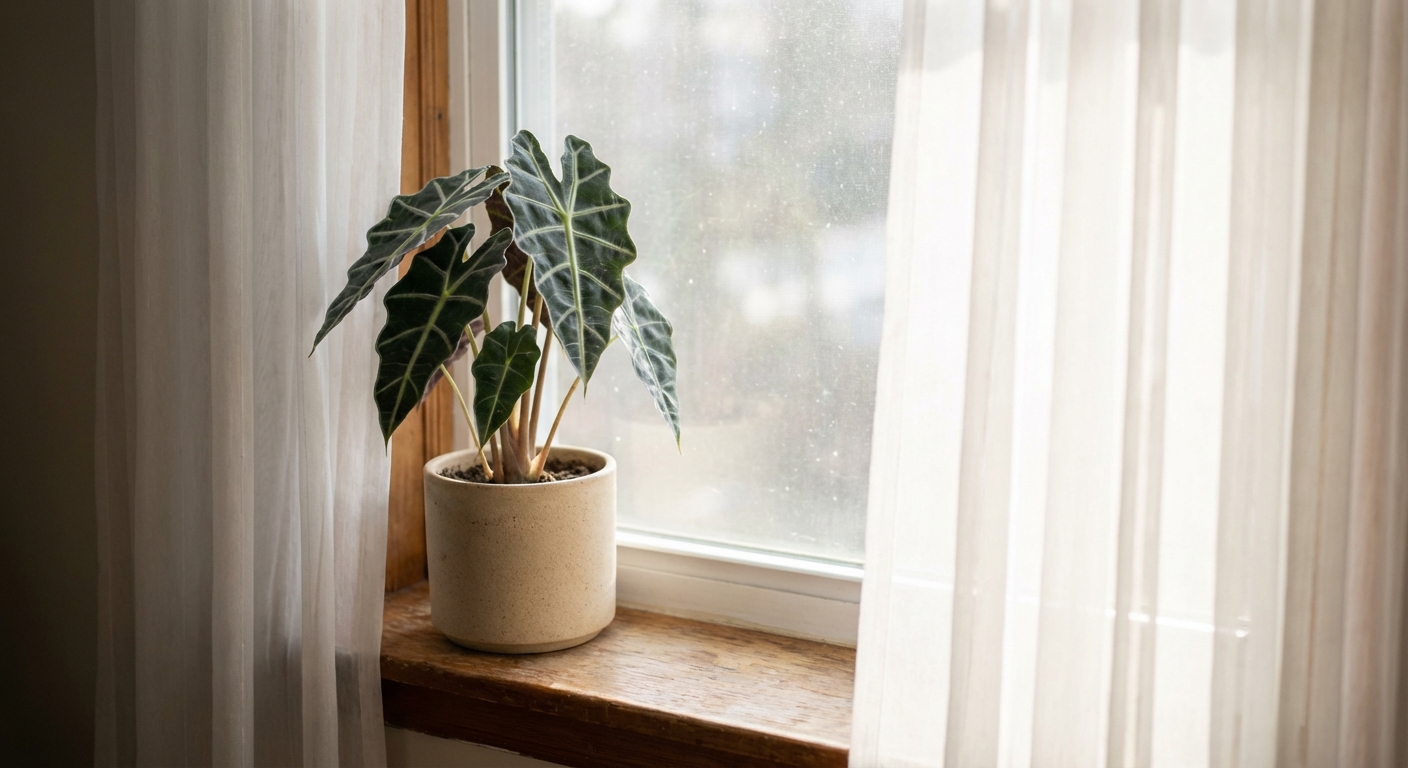
Alocasia, often called elephant ear, is one of those houseplants that looks like it belongs in a humid rainforest and, honestly, it kind of does. Quick note: “elephant ear” is also used for Colocasia and Xanthosoma, so if you’re shopping, check the plant tag to make sure you’re bringing home an Alocasia.
The good news is you do not need a greenhouse to grow one indoors. You just need to understand its rhythm: bright filtered light, consistent warmth, evenly moist soil (not soggy), and humidity that does not feel like a desert.
If you’ve ever watched an Alocasia dramatically droop after what you thought was “perfect care,” you’re not alone. They’re expressive plants. Once you learn what the leaves are telling you, they get much easier.
Meet Alocasia
Alocasias are aroids, relatives of philodendrons and monsteras, but they tend to be a bit more particular. Many are native to warm, humid parts of Southeast Asia and nearby regions, and they respond best when your indoor setup mimics that: steady moisture, gentle light, and lots of humidity.
Two important quirks to know up front:
- They grow in spurts. You might get a burst of new leaves, then a pause.
- They can go semi-dormant. In winter or after stress, they may slow down or drop leaves to conserve energy.
Best indoor light
Think “bright jungle shade.” Indoors, that usually means bright, indirect light for most Alocasia varieties.
Ideal placement
- East window: Often perfect. Gentle morning sun, then bright light.
- South or west window: Great if filtered with a sheer curtain or placed a few feet back.
- North window: Sometimes too dim, especially in winter. Expect slower growth and smaller leaves.
Signs your light is off
- Too little light: Long petioles (leaf stems), smaller new leaves, slow growth, and soil staying wet too long.
- Too much sun: Pale patches or crispy edges, especially where sun hits directly.
If you use a grow light, aim for 10 to 12 hours a day at a moderate intensity, with the light positioned above the plant like overhead canopy light.
Humidity and temperature
Humidity is where most indoor Alocasia success stories are made. Many homes hover around 30 to 40 percent, especially in winter. Alocasias usually look their best at 50 to 70 percent.
Easy ways to raise humidity
- Humidifier: The most reliable option. Higher humidity can help discourage spider mites, but it is not a guarantee on its own.
- Group plants together: A small “plant neighborhood” creates a gentler microclimate.
- Bathroom placement: If you have bright light and regular showers, this can be magic.
Temperature: Keep your Alocasia in the 65 to 80°F (18 to 27°C) range if possible. Avoid cold windows, drafty doors, and heating vents. A sudden chill is a very common trigger for leaf droop.
Watering indoors
Alocasias like evenly moist soil, but they hate sitting in water. The goal is a steady rhythm: water thoroughly, let excess drain, then water again when the top layer begins to dry. How fast that happens depends on pot size, your mix, and your home’s conditions, so use the soil as your guide, not the calendar.
My simple watering check
- Stick a finger into the pot. When the top 1 to 2 inches (2.5 to 5 cm) feel dry, it’s usually time. In very large pots, check a little deeper and make sure the root zone is not staying wet.
- Water until it runs from the drainage holes, then empty the saucer or cachepot.
- If the pot still feels heavy and cool, wait. “Just in case” watering is how Alocasias get into trouble.
Common watering mistakes
- Overwatering: Yellowing leaves, droop that does not perk up, mushy stems, sour soil smell.
- Underwatering: Leaf edges crisping, leaves curling inward, fast droop that improves after watering.
Water quality matters more than people think. If your tap water is hard or heavily treated, filtered water can help. Letting water sit overnight can reduce chlorine, but it does not remove chloramine (common in many cities). If you suspect chloramine or you keep getting crusty buildup, consider activated carbon filtration or RO water.
Soil and potting mix
In the wild, Alocasias often grow in rich organic debris with plenty of air pockets. Indoors, you want a mix that holds moisture but drains quickly.
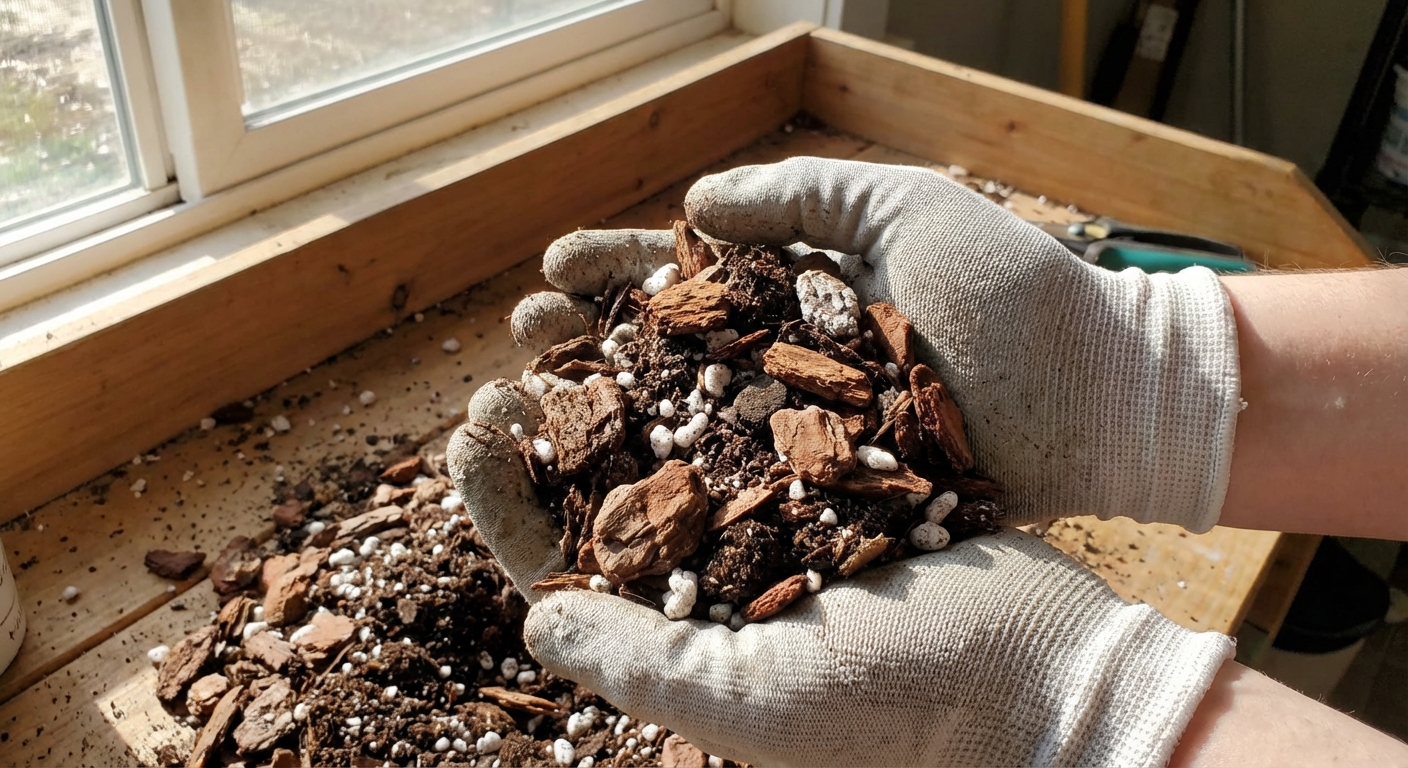
A dependable DIY mix
- 40% quality indoor potting soil
- 30% orchid bark (or fine bark chips)
- 20% perlite or pumice
- 10% worm castings (optional, but lovely)
Pot choice: Any pot is fine if it has drainage. If you tend to overwater, terracotta can help soil dry more evenly. If you live in a very dry home, plastic can reduce how fast moisture disappears.
Drainage setup tips
- If you use a decorative pot (cachepot), keep the Alocasia in a nursery pot inside it so you can water thoroughly and drain completely.
- Do not let the pot sit in leftover water. Empty saucers after watering.
- Avoid “drainage layers” of rocks. They do not improve drainage in potting soil, and they can keep the root zone wetter.
Fertilizing
Alocasias are moderate to heavier feeders during active growth. When they’re pushing new leaves, they appreciate consistent nutrition.
Simple feeding schedule
- Spring through early fall: Fertilize every 2 to 4 weeks at half strength with a balanced liquid fertilizer.
- Late fall and winter: Pause or reduce sharply, especially if growth slows.
If you see leaf tip burn shortly after feeding, dial back. It’s easier to add more later than to fix fertilizer stress.
Dormancy indoors
Alocasia dormancy indoors can be confusing because it’s rarely a full, tidy nap. It’s more like a plant deciding to conserve energy when light drops, temperatures dip, or roots get stressed.
Signs your Alocasia is slowing down
- It stops making new leaves
- Older leaves yellow and drop one by one
- The plant looks “stuck” even though you’re watering
What to do
- Do: Reduce watering. Let more of the pot dry between waterings.
- Do: Keep it warm and in bright indirect light, or add a grow light.
- Do: Stop fertilizing until you see active growth again.
- Do not: Panic and repot repeatedly. One careful check is fine, but constant disturbance slows recovery.
Even if your plant drops to one leaf, or even none, the corm can still be alive. I’ve seen “goners” come back when warmth and light return. If the corm is firm, there’s hope.
Popular indoor varieties
Alocasia ‘Polly’
Compact and dramatic with dark leaves and bright veins. It’s one of the most common indoor Alocasias and a great choice if you can provide humidity. It tends to be reactive to dry air, so crisp tips are common if humidity is low.
Alocasia zebrina
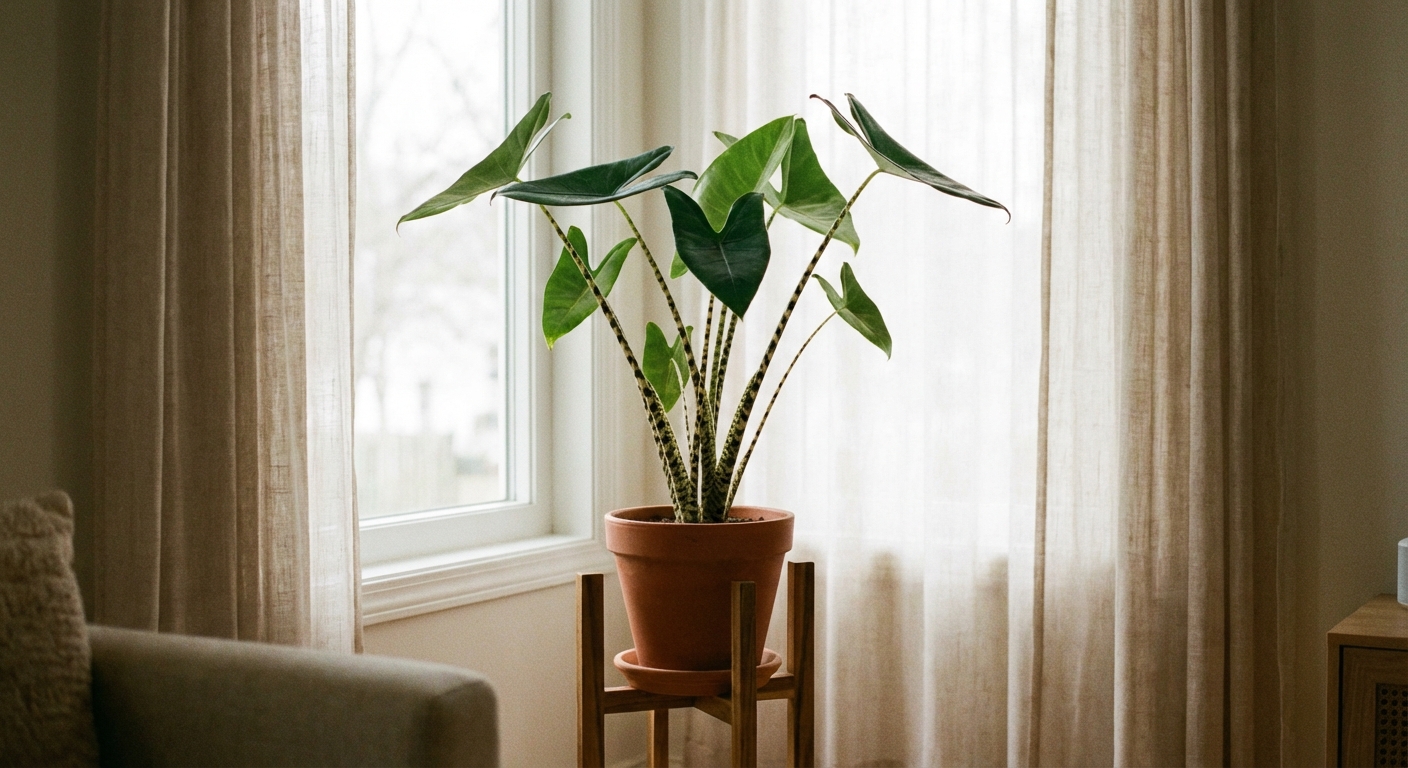
Known for its zebra-striped stems and large green leaves. It appreciates bright indirect light and steady watering, but it can droop quickly if it gets too dry. Give it a stable spot and try not to move it constantly.
Other favorites
- Alocasia ‘Frydek’: Velvety leaves with crisp white veining, loves humidity.
- Alocasia ‘Black Velvet’: Smaller, slower, velvety and gorgeous, can be sensitive to overwatering.
- Alocasia macrorrhizos: A true elephant ear look, gets big fast with enough light and space.
Why leaves droop
Drooping is Alocasia’s favorite way to communicate. The trick is to look at the whole situation: soil moisture, temperature, light, and pests.
1) Soil is too dry
- Clues: Pot feels light, soil pulls away from the pot edge, leaf edges crisp.
- Fix: Water thoroughly. If the mix is hydrophobic (water runs straight through), bottom-water for 20 to 30 minutes, then drain well.
2) Soil is too wet
- Clues: Persistent droop, yellow leaves, fungus gnats, soil stays wet for a week or more.
- Fix: Pause watering and improve airflow and light. Ensure drainage. If you suspect root rot, gently unpot and trim mushy roots, then repot in a chunkier mix.
3) Cold shock or drafts
- Clues: Droop after a cold night, near a window in winter, or near an AC vent.
- Fix: Move it to a warmer, stable spot. Keep it off cold windowsills.
4) Normal leaf turnover
- Clues: One oldest leaf droops and yellows while a new leaf is emerging.
- Fix: Nothing dramatic needed. Let the leaf yellow, then remove it with clean snips.
Spider mites
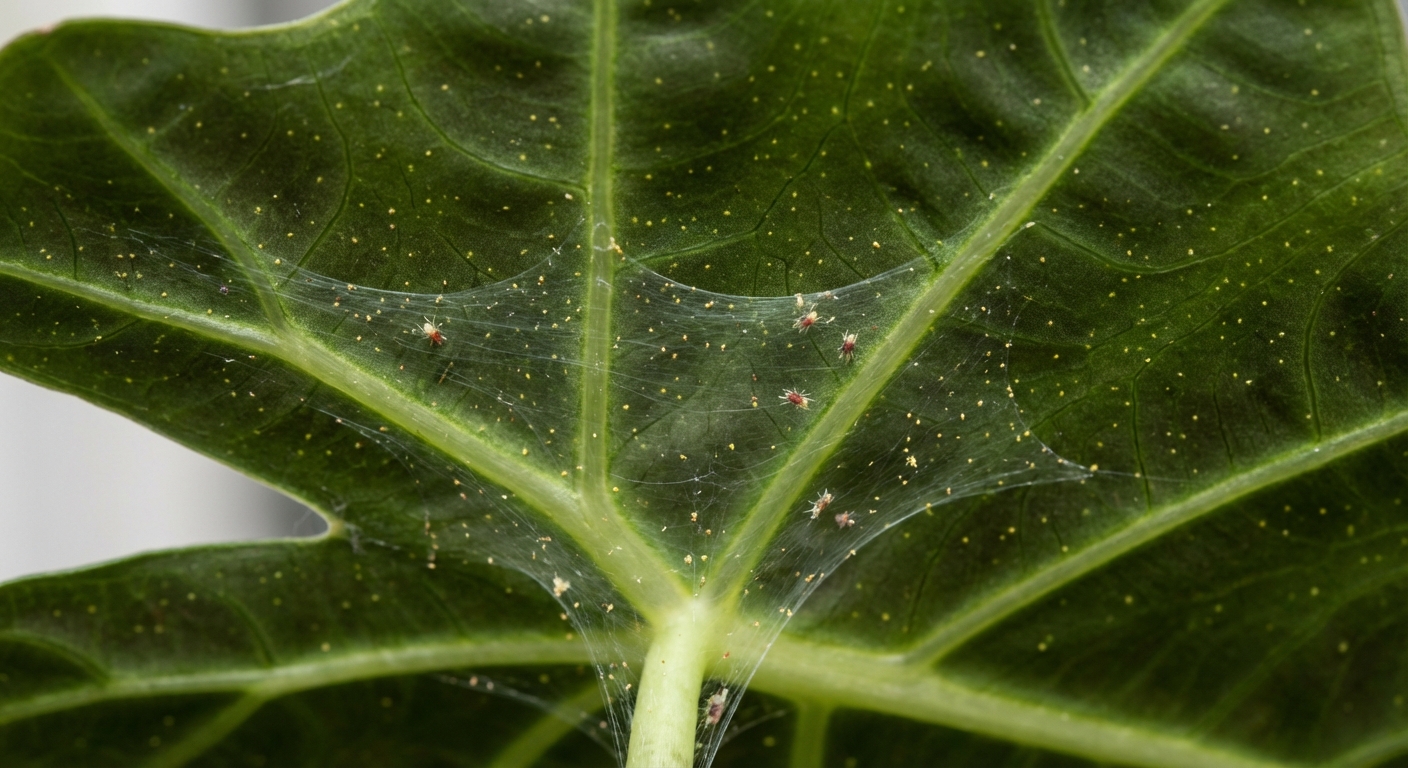
If Alocasia had a villain, it would be spider mites. They love warm, dry indoor air and tender leaves. Catch them early and you’ll save yourself weeks of frustration.
How to spot spider mites
- Fine webbing near leaf joints or undersides
- Speckled, dusty-looking leaves (tiny pale dots)
- Leaves that look tired and dull even with good care
What to do right away
- Isolate the plant from others.
- Rinse thoroughly in the shower, focusing on leaf undersides.
- Treat with insecticidal soap (often gentler and more predictable than DIY soaps). Follow the label. If you use a DIY option, keep it very dilute and test one leaf first since soaps can burn foliage.
- Repeat every 5 to 7 days for 3 to 4 rounds. Mites hatch in waves.
Spray safety notes
- Do not spray in hot sun or right under a strong grow light. Treat in the evening or move the plant to softer light until it dries.
- Always test on a single leaf first and wait 24 hours if you’re unsure.
Prevention that actually helps
- Keep humidity up and avoid letting the plant get bone-dry.
- Inspect leaf undersides weekly, especially in winter.
- Rinse foliage occasionally if your plant can handle it.
If infestations keep returning, consider a stronger approach like horticultural oil or a miticide labeled for indoor ornamentals, and always follow the label exactly.
Other pests to watch
Spider mites get the spotlight, but Alocasias can also attract other common houseplant pests.
- Thrips: Silvery streaks, tiny black dots, distorted new growth. Treat early, and check nearby plants.
- Mealybugs: White cottony clusters in leaf joints and along stems. Remove with alcohol on a cotton swab and follow up with an appropriate treatment.
Repotting and corms
Most Alocasias prefer being slightly snug in their pot, but they do appreciate fresh mix once roots circle heavily or water runs straight through.
When to repot
- Roots are coming out of drainage holes
- The plant dries out extremely fast
- The mix has broken down and stays wet too long
Repot in spring or early summer if you can. Go up only 1 to 2 inches (2.5 to 5 cm) in pot diameter to reduce the risk of soggy soil.
Corms
When you repot, you may find small, firm corms in the soil. These can be grown into new plants. Nestle them in lightly moist sphagnum moss or a very airy mix, keep warm, and give bright indirect light. Plant them pointy side up if you can tell. If not, lay the corm on its side and let it figure it out. Patience is required. They sprout on their own schedule.
Quick care checklist
- Light: Bright, indirect (filtered south or east window is ideal)
- Water: When top 1 to 2 inches (2.5 to 5 cm) are dry, soak and drain
- Humidity: Aim for 50 to 70%
- Temperature: 65 to 80°F (18 to 27°C), avoid drafts
- Soil: Chunky, airy, moisture-retentive but fast draining
- Feeding: Half-strength fertilizer during active growth
- Watch for: Spider mites, thrips, cold shock, and overwatering
FAQs
Is Alocasia toxic to pets?
Yes. Like many aroids, Alocasia contains calcium oxalate crystals that can irritate mouths and stomachs if chewed. Keep it out of reach of pets and children.
Why does my Alocasia only keep a few leaves at a time?
Many Alocasias cycle leaves, especially indoors. If light is borderline or the plant is young, it may drop an older leaf when producing a new one. Improving light, humidity, and nutrition during the growing season often helps it hold more leaves.
Should I mist my Alocasia?
Misting is not a reliable way to raise humidity for more than a few minutes. If you enjoy it, do it for leaf cleaning, but for real humidity support, a humidifier or plant grouping works better.
Should I rotate my Alocasia?
You can rotate it a little for even growth, but go slowly. If your Alocasia is the type that sulks when it’s moved, keep rotations small and infrequent, and avoid rotating while it’s pushing a new leaf.