
9 Trailing Houseplants for High Shelves and Hanging Baskets

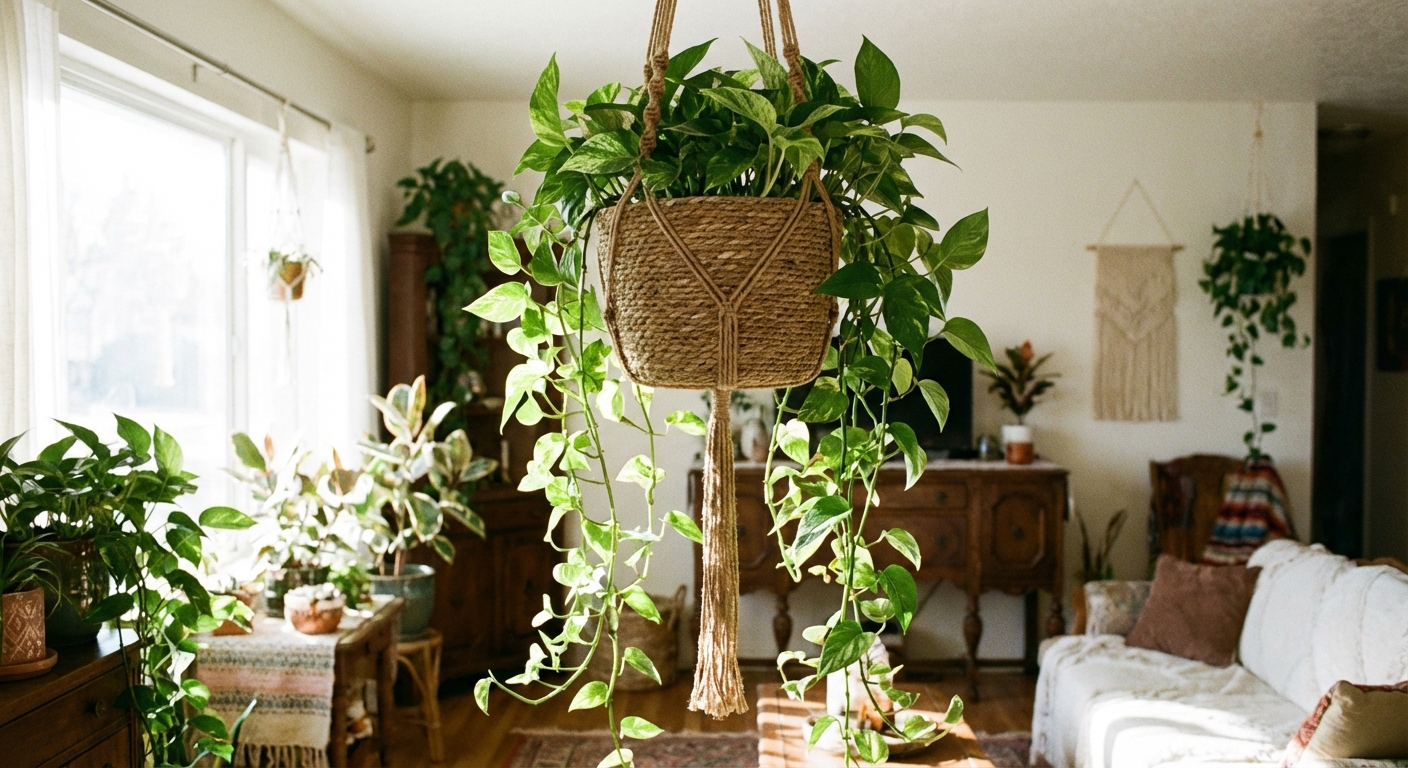
There is something magical about a plant that spills. A high shelf goes from “meh storage” to “secret jungle ledge,” and a hanging basket turns dead air space into living, swaying greenery. Trailing houseplants can also be wonderfully forgiving, which is my favorite kind of plant. (Some are tougher than others, and I will point out the divas.) They are the ones that quietly bounce back after you forget to water for a few days because, well, life.
This list is built for elevated spots: high shelves, tall plant stands, macramé hangers, and those planters you can only reach with a chair and a deep breath. I focused on fast growers, reliable trailers, and plants that look lush from below.
What makes a great plant for a high shelf?
- Trailing habit: stems naturally cascade instead of reaching upward.
- Fast growth: you get that full, waterfall look sooner.
- Forgiving watering needs: especially important when the pot is hard to check daily.
- Indoor light tolerance: high shelves often get bright indirect light, but some spots are surprisingly dim (or oddly sunny near skylights). Observe your exact shelf for a week before you commit.
- Easy pruning: because you will eventually need to tame the vines.
Before we pick plants, one quick note: hanging baskets often dry out faster. Warm air rises, yes, but so do airflow, HVAC vents, smaller soil volume, and extra light exposure. If you choose a thirsty plant, plan to water a little more often or use a self-watering setup.
Quick pet note: Several popular trailers are not pet-safe if chewed (including pothos, philodendron, English ivy, and often string-of plants). If you have curious pets or toddlers, place plants out of reach and consider truly pet-friendly options from your home and vet-approved list.
The 9 best trailing houseplants
1) Pothos (Epipremnum aureum)
If you want a plant that forgives mistakes and still looks like you have your life together, pothos is it. It grows quickly, trails beautifully, and can handle a range of indoor conditions. In low light it usually survives, but it will grow slower and get leggier, so set your expectations accordingly.
- Light: Low to bright indirect. Variegated types (like Golden or Marble Queen) keep their pattern best in brighter light.
- Water: Let the top 1 to 2 inches of soil dry, then water thoroughly. (Bigger pots dry slower, small hanging baskets dry faster.)
- Pruning tip: Trim just above a node (the little bump where leaves emerge) to encourage branching and a fuller cascade.
- Hard-to-reach hack: If your pothos is up high, use a moisture meter or lift the pot slightly to feel the weight before watering.
- Pet note: Not pet-safe if ingested.
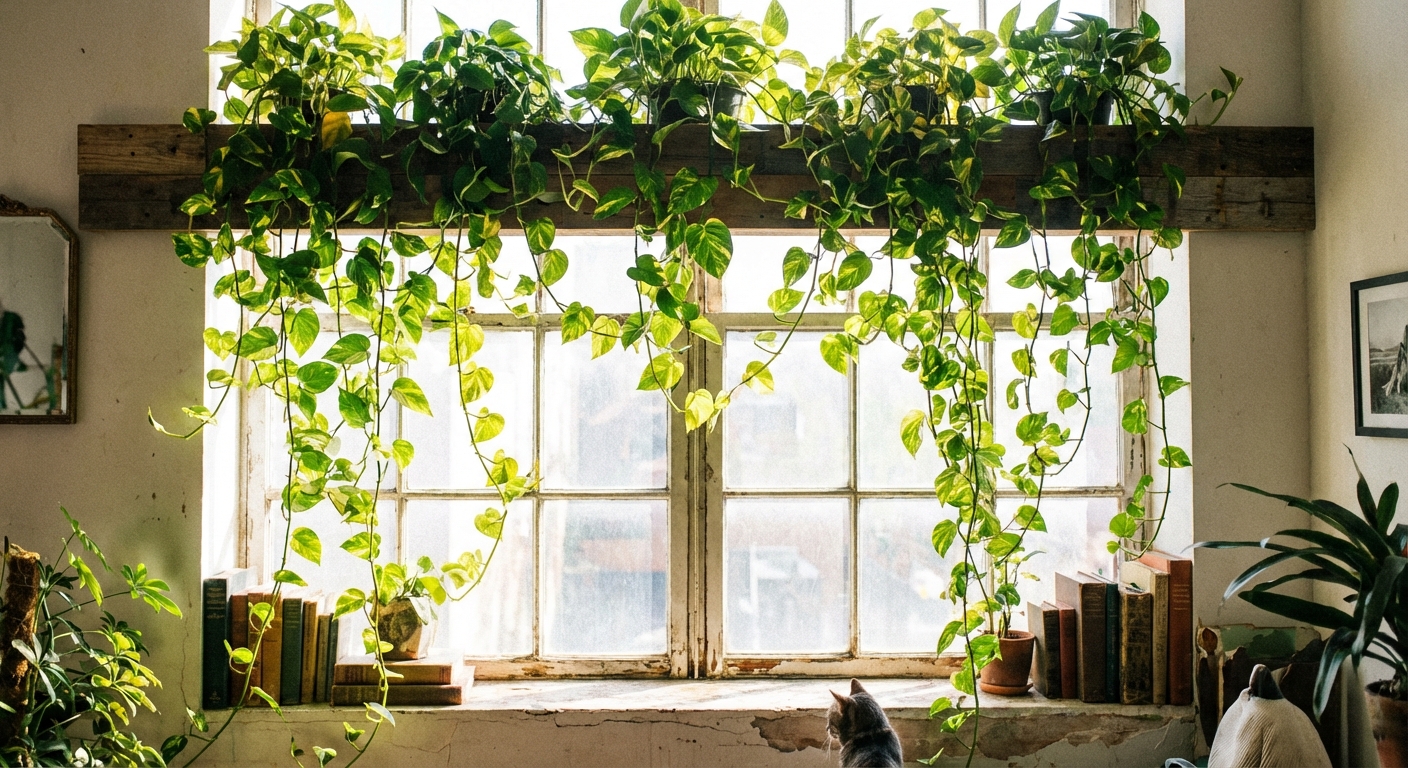
2) Heartleaf philodendron (Philodendron hederaceum)
Heartleaf philodendron has softer, more romantic leaves than pothos, and it drapes like a green curtain when it is happy. It is also wonderfully adaptable, which makes it perfect for elevated planters. Like pothos, it can tolerate low light, but you will see slower growth and longer gaps between leaves.
- Light: Medium to bright indirect, tolerates lower light (growth slows).
- Water: Water when the top inch dries. It does not love soggy soil.
- Pruning tip: Pinch the growing tips every few weeks to prevent long bare stretches and keep it bushy near the pot.
- Extra care: If stems get leggy, cut them back and root the cuttings in water to thicken the basket.
- Pet note: Not pet-safe if ingested.
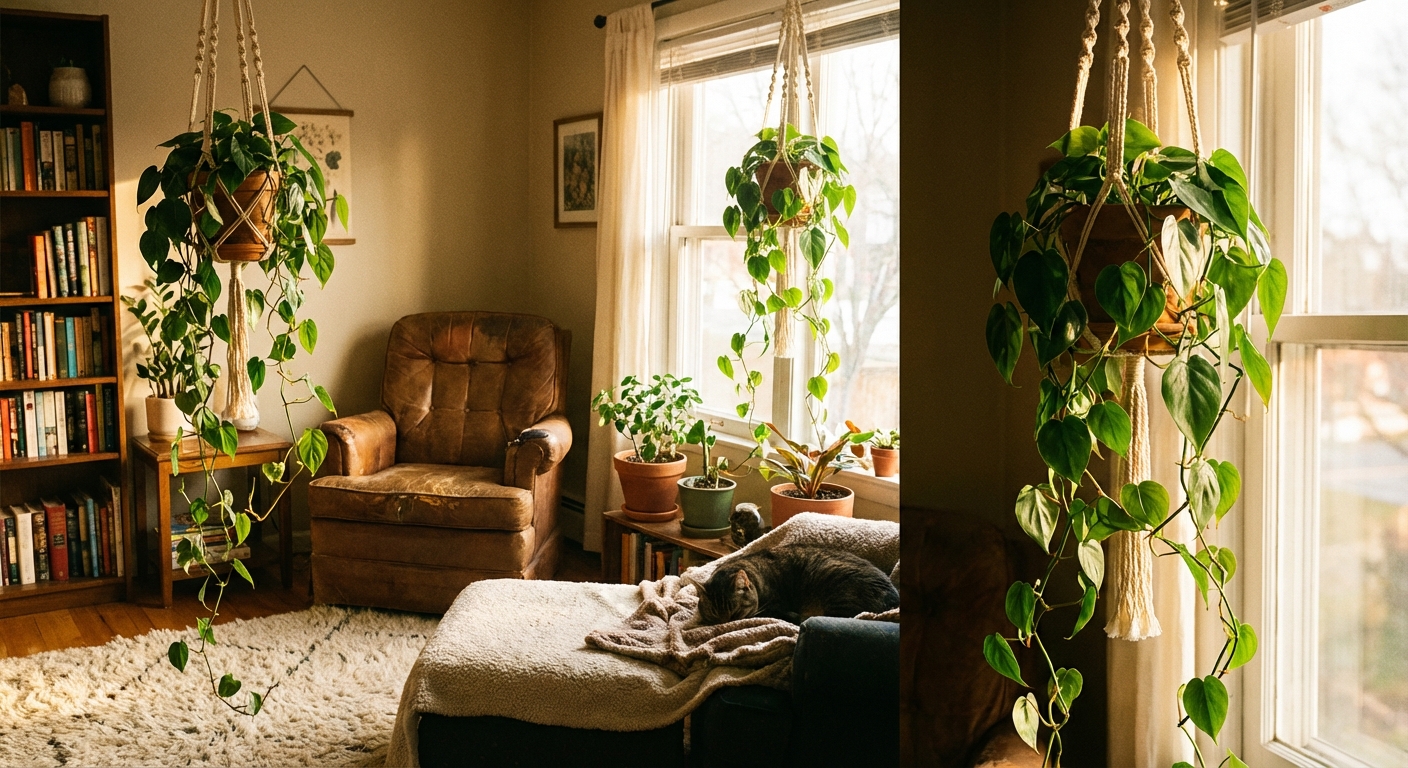
3) Satin pothos (Scindapsus pictus)
Technically not a true pothos, but it earns the nickname with its easy care and trailing habit. The leaves look like they have been dusted with silver paint, especially in bright indirect light.
- Light: Bright indirect for best color, tolerates medium.
- Water: Let the top 2 inches dry. It is more sensitive to overwatering than regular pothos.
- Pruning tip: Cut back long vines to encourage branching. Rotate the pot occasionally so one side does not hog all the light.
- Pet note: Generally considered not pet-safe if ingested.
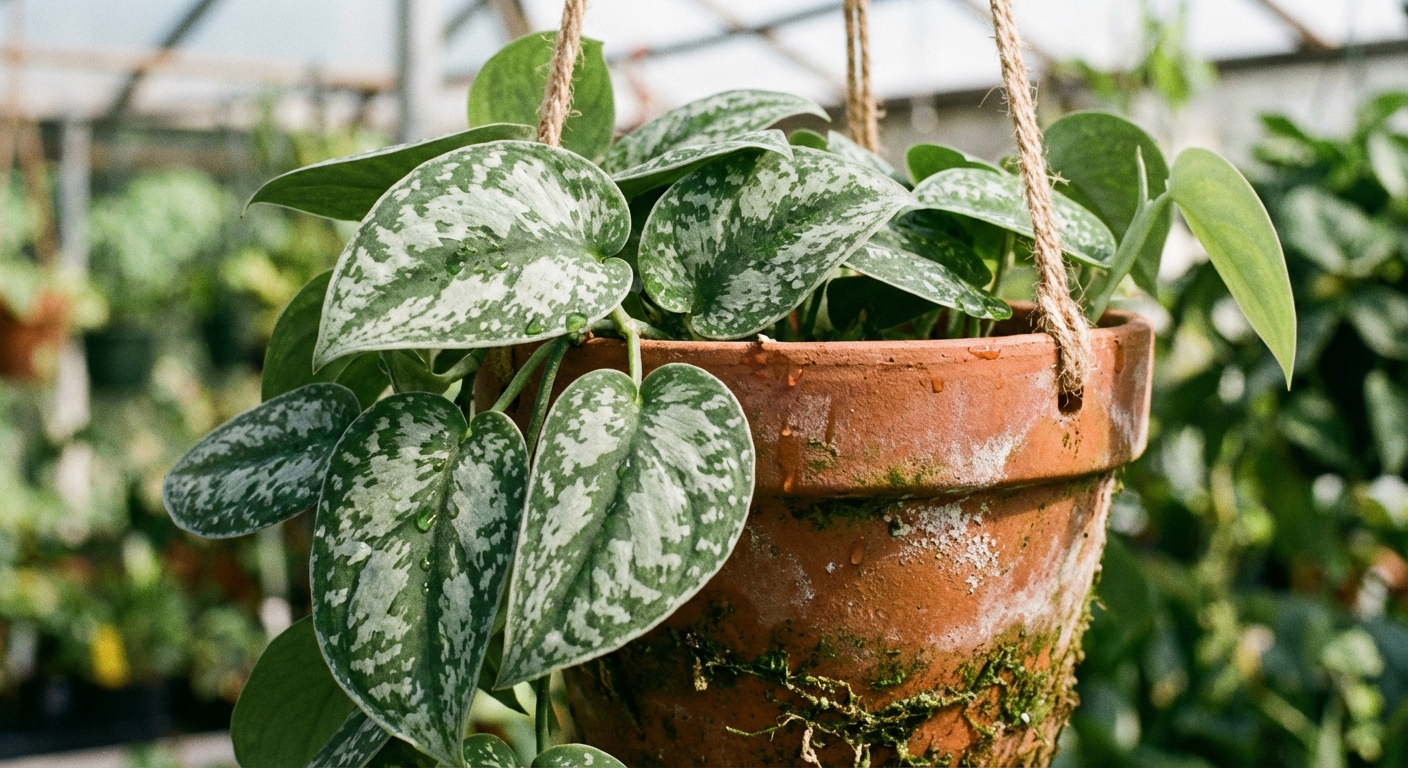
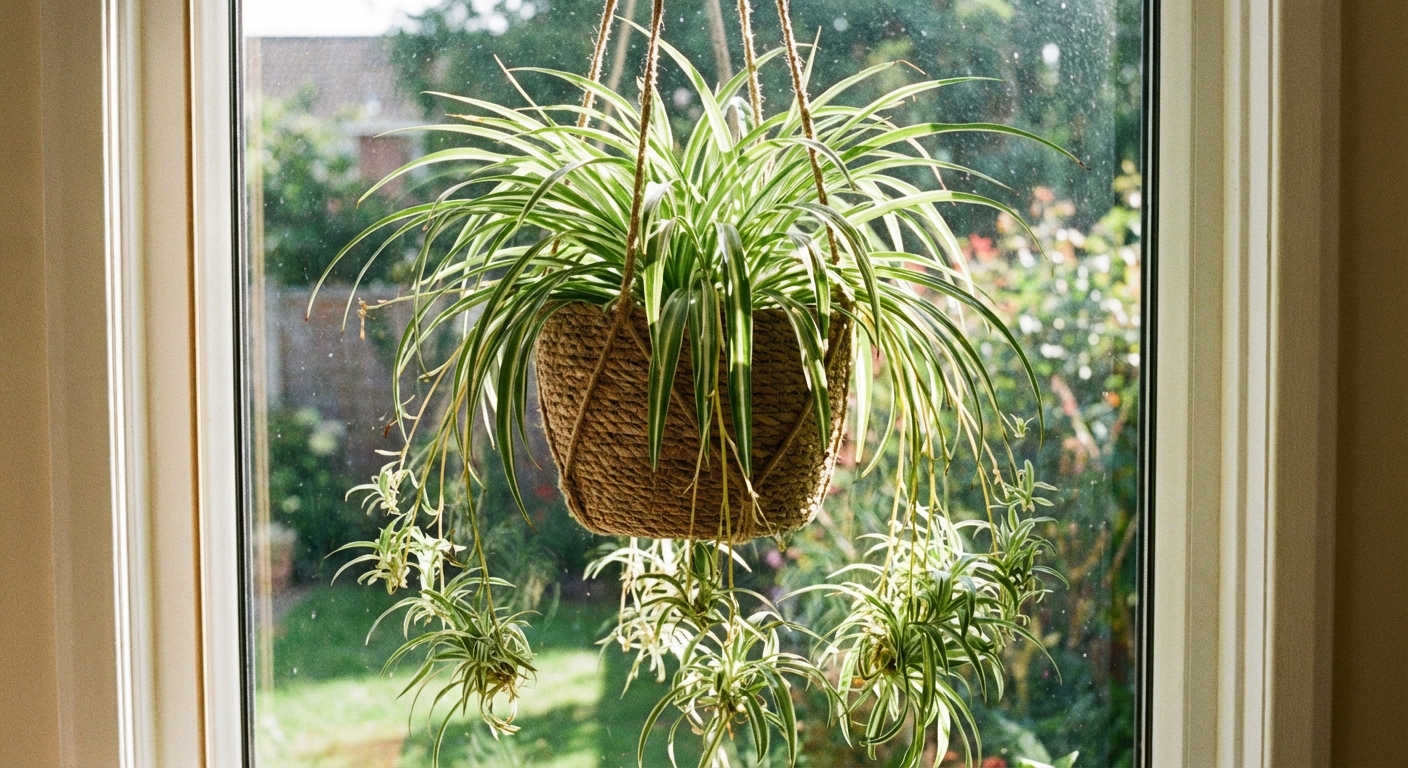
4) Spider plant (Chlorophytum comosum)
Spider plants were made for hanging baskets. The arching leaves look like a fountain, and then come the baby plantlets, dangling like little green fireworks. Also, they are tough as nails.
- Light: Bright indirect is ideal, tolerates lower light (slower growth).
- Water: Water when the top inch dries. They like even moisture but hate sitting in water.
- Pruning tip: Snip off plantlets if you want the mother plant to focus on leaf growth, or root the babies for gifts.
- Hard-to-reach hack: Spider plants are pretty readable. Limping leaves often mean it is time to check moisture, but also rule out hot sun, pests, or a rootbound pot.
5) String of hearts (Ceropegia woodii)
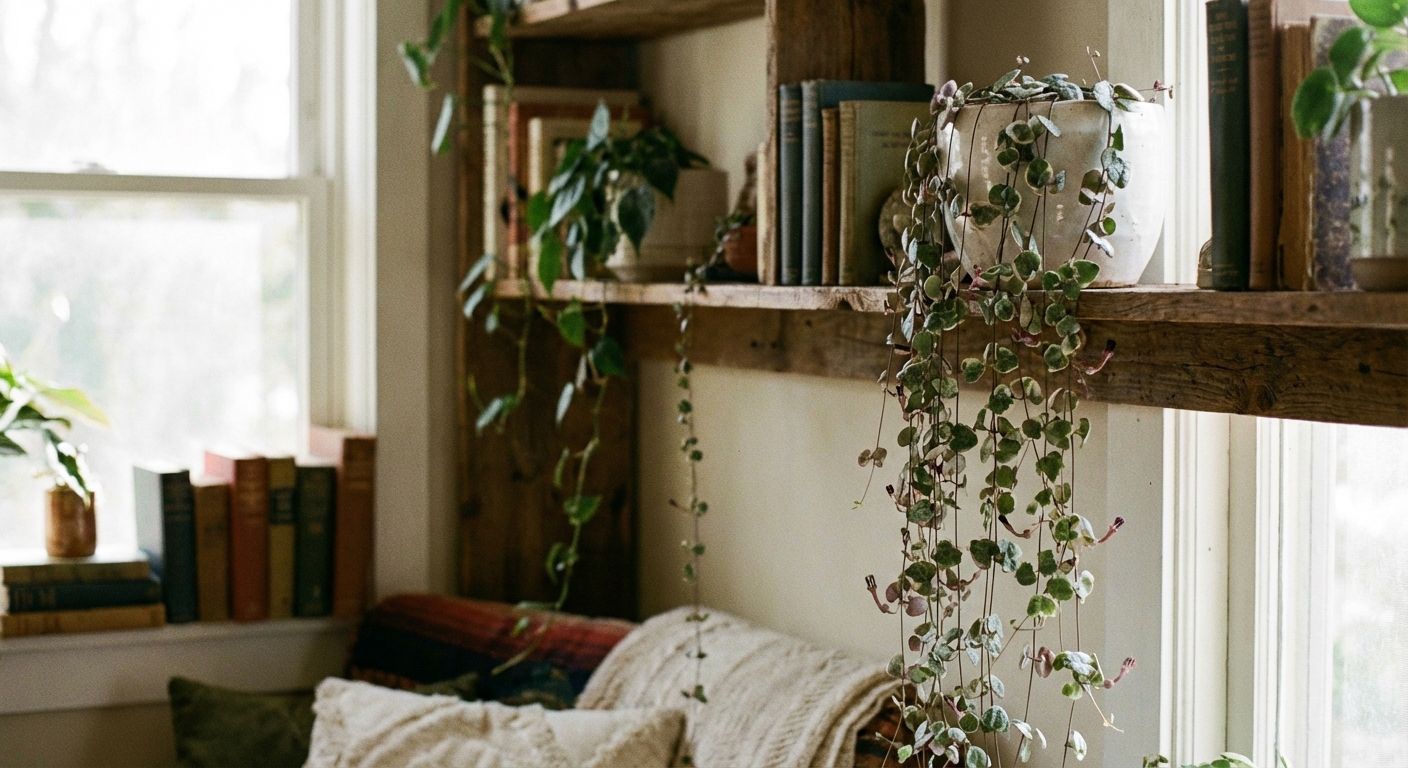
This is the plant I recommend when you want something delicate and charming without signing up for constant fussing. The heart-shaped leaves and thin trailing stems look especially pretty from a high shelf.
- Light: Bright indirect to a few hours of gentle sun. More light equals tighter growth and better color.
- Water: Let the pot dry most of the way down, then water well. Think “succulent-ish.”
- Pruning tip: If it gets sparse, trim and lay cuttings on top of the soil to root in place and fill out the pot.
- Potting note: Use a fast-draining mix (cactus mix, or potting mix cut with perlite).
- Pet note: Not a great choice for nibblers. Keep out of reach.
6) String of pearls (Curio rowleyanus)
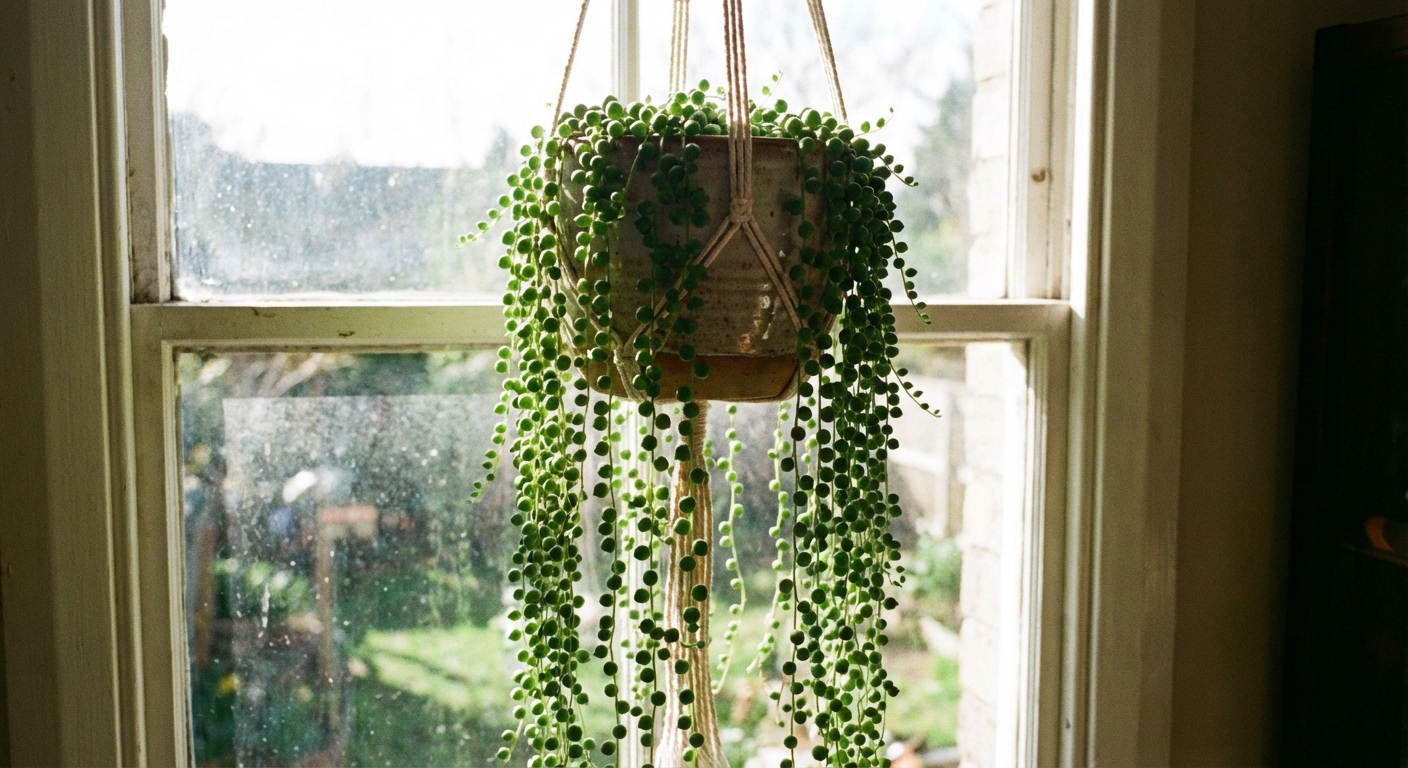
String of pearls is a stunner in hanging baskets because the bead-like leaves drape in thick ropes when conditions are right. It is less forgiving than pothos, but worth it if you have bright light and a light hand with watering. (You may also see it labeled by its older name, Senecio rowleyanus.)
- Light: Bright indirect, plus some direct morning sun if possible.
- Water: Let soil dry well between waterings. Overwatering is the fastest way to lose it.
- Pruning tip: Trim broken or bare strands, then root healthy snippets on the soil surface to thicken the basket.
- Hard-to-reach hack: Water slowly until you see a little drip from the drainage, then stop. Do not “top up” again the next day.
- Pet note: Keep away from pets and kids (potentially toxic/irritating if ingested).
7) Tradescantia zebrina (Wandering dude)
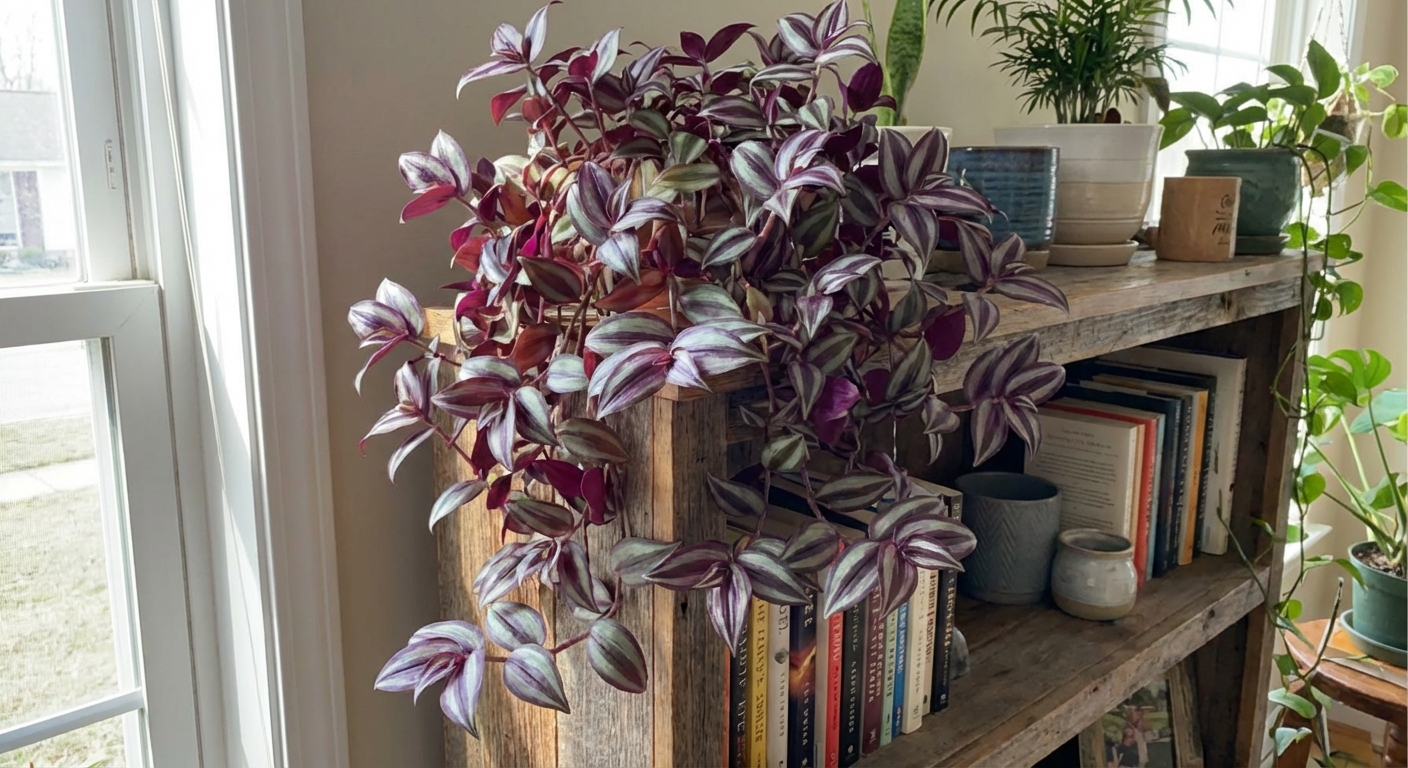
This plant grows like it has somewhere to be. The purple and silver striped leaves catch the light, and a high shelf lets the stems tumble freely. It is also one of the easiest plants to propagate.
- Light: Bright indirect or a bit of sun for best color. Low light makes it greener and leggier.
- Water: Water when the top inch dries. Do not keep it constantly wet.
- Pruning tip: Prune often. Regular snips prevent bare stems and keep it full.
- Propagation tip: Stick cuttings back into the pot to make a thicker, fluffier plant.
- Skin/pet note: Sap can irritate sensitive skin, and it is not a great snack for pets.
8) Hoya carnosa (Wax plant)
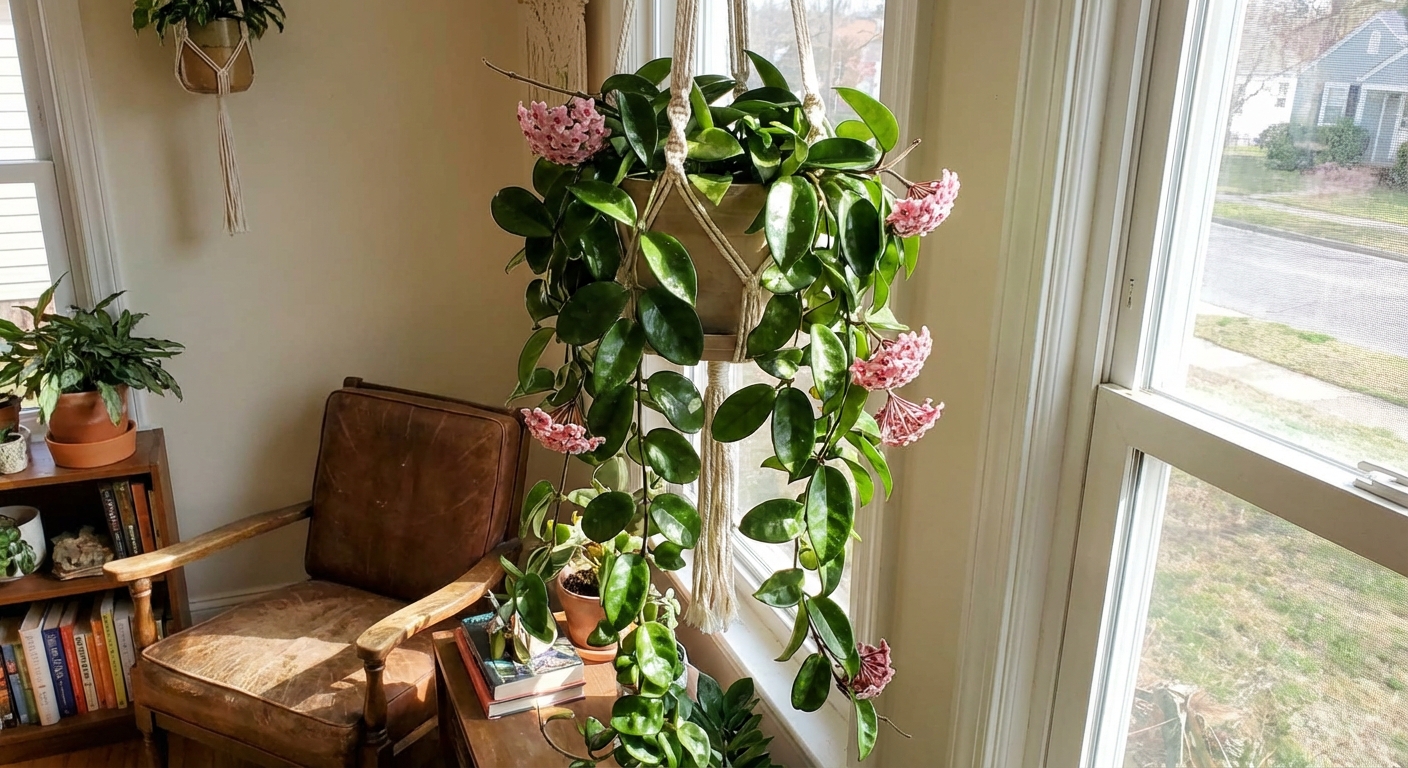
Hoyas are slow to moderate growers at first, then suddenly you notice vines everywhere. They are excellent for high shelves because they tolerate a little dryness, and the leaves stay tidy. Bonus: mature plants can bloom with starry, sweet-smelling clusters.
- Light: Bright indirect, a little gentle sun can help flowering.
- Water: Let the top half of the pot dry, then water. Thick leaves store moisture.
- Pruning tip: Do not cut the short flower spurs (peduncles). Many hoyas rebloom from the same spot.
- Support option: You can let it trail or give it a small hoop trellis and still hang the pot.
9) English ivy (Hedera helix)
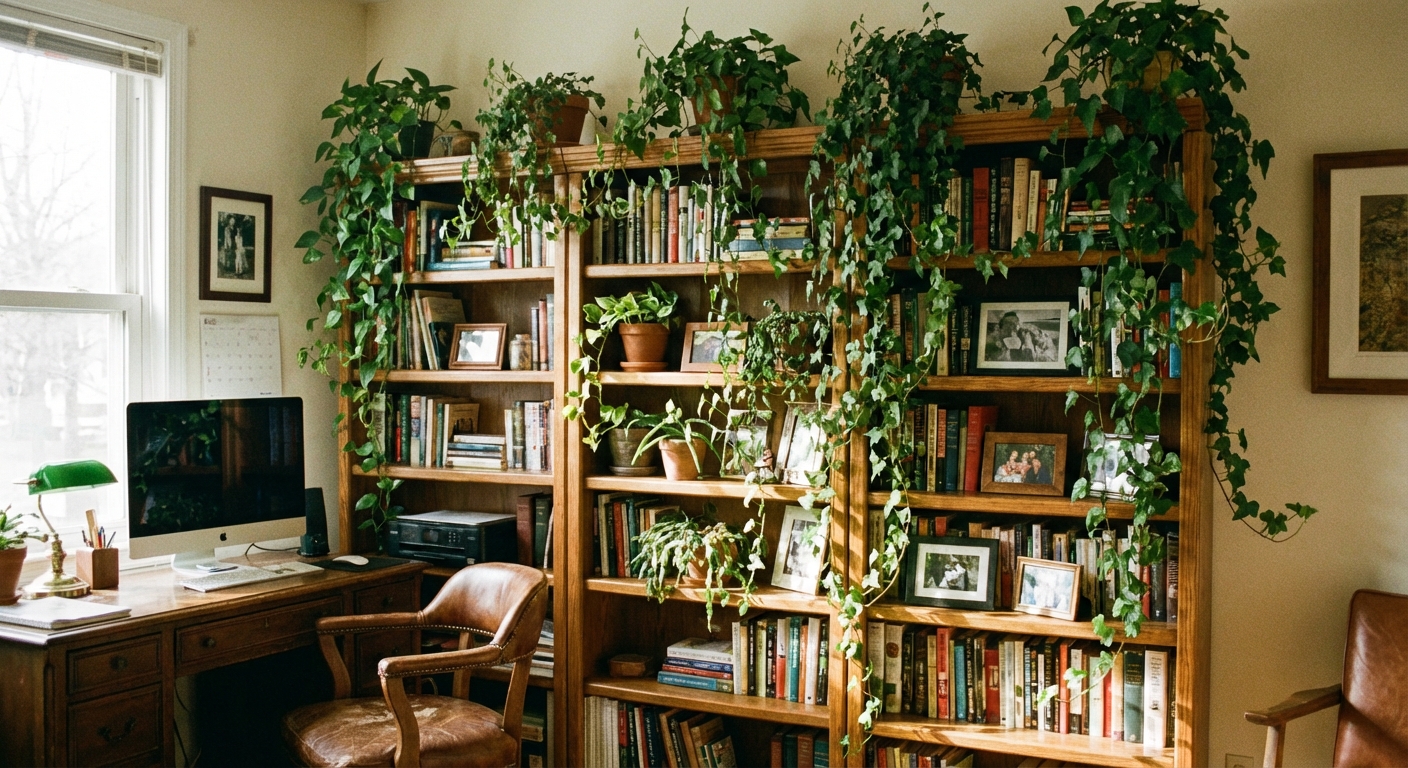
English ivy gives you that classic, draping, old-world look. Indoors, it can be the fussiest plant on this list. It tends to prefer cooler rooms, bright light, and higher humidity than many homes naturally offer. If your home runs hot and dry, consider this one a “try it and see” plant. When it is happy, it is glorious from a high shelf.
- Light: Bright indirect. Variegated ivies need more light.
- Water: Keep slightly moist, not soggy. Do not let it fully dry for long.
- Pruning tip: Pinch tips to encourage branching and reduce legginess.
- Pest watch: Check occasionally for spider mites, especially in dry indoor air.
- Pet note: Not pet-safe if ingested.
Watering tips for hanging planters
I love a dramatic hanging basket. I do not love climbing up to water it every three days. Here are a few tricks that make elevated plant care much less of a circus act.
- Use the “pot weight” test: After watering, lift the pot slightly to feel its heavy, freshly-watered weight. A week later, lift again. You will learn the difference fast.
- Bottom water when you can: If the planter is removable, take it down and set it in a sink or tub for 15 to 30 minutes. Let it soak, then drain well before rehanging.
- Water slowly, twice: For dry potting mix that repels water, pour a small amount first, wait a minute, then water again. This reduces runoff and actually hydrates the root zone.
- Choose a saucer strategy: If your hanger has a built-in drip tray, do not let water sit for hours. Empty it after 15 minutes to prevent root rot.
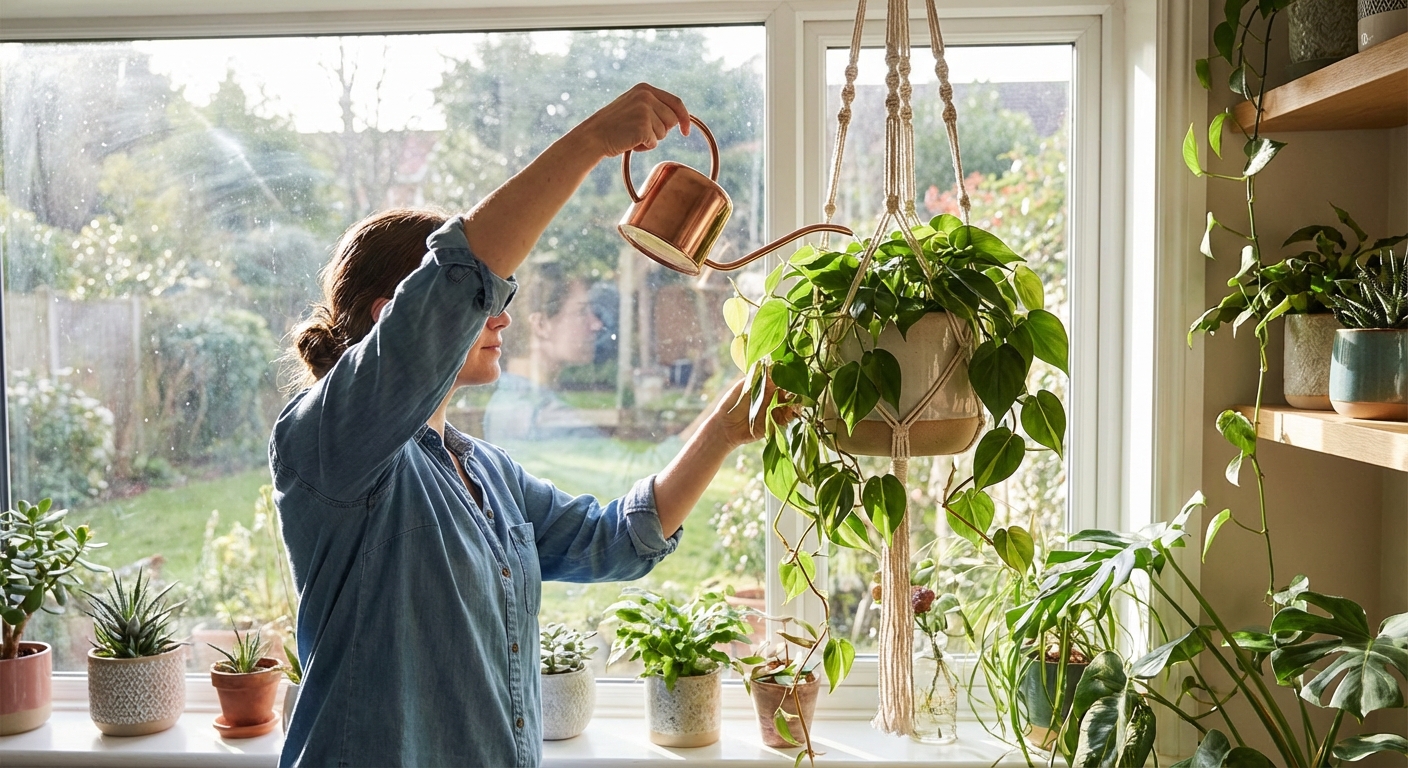
- Consider a long-spout watering can: A narrow spout gives you control, especially over furniture and rugs.
- Safety note: If you are using a chair or step stool, make it a stable one, and do not water while balancing and twisting. Take the pot down if you can.
One more thing that matters: Pot material changes your schedule. Terracotta dries faster. Plastic holds moisture longer. In hard-to-reach spots, that difference is not subtle.
Pruning and shaping vines
Most trailing plants will happily grow a few long “escape vines” if you let them. Pruning is not punishment. It is how you tell the plant, gently and firmly, to branch and thicken.
- Prune above a node: On pothos and philodendron, new growth usually appears at the node just below your cut.
- Pinch tips regularly: A quick pinch every couple of weeks keeps plants like Tradescantia and ivy bushier.
- Root cuttings back into the pot: This is my favorite “instant fullness” trick. Most of these plants root easily in water or directly in soil.
- Rotate the planter: Turn it a quarter turn every week or two so one side does not become the “bald side.”
If you are nervous about pruning, start with a single vine. Snip, set the cutting in water, and watch roots form. It is the quickest way I know to cure black-thumb anxiety.
Setup tips for hanging baskets
- Always use a pot with drainage: If you love a decorative cachepot, keep the plant in a nursery pot inside it.
- Pick the right soil: A chunky, airy mix helps prevent overwatering issues. Add perlite and a bit of orchid bark for aroids like pothos and philodendron.
- Fertilize lightly in spring and summer: A balanced houseplant fertilizer at half strength every 4 to 6 weeks is plenty for most trailers.
- Mind the ceiling heat: The higher the plant, the warmer and drier it usually is. Watch for faster drying and crisping tips.
Pick-your-plant cheat sheet
- Want easiest and fastest? Pothos or Tradescantia.
- Want classic and leafy? Heartleaf philodendron or spider plant.
- Want something dainty and romantic? String of hearts.
- Want a statement succulent trail? String of pearls (bright light, careful watering).
- Want tidy vines with possible blooms? Hoya carnosa.
- Want the classic ivy look? English ivy, but go in knowing it is the least reliable indoors.
Whichever one you choose, remember this: trailing plants are forgiving storytellers. If they are thirsty, they will slow down or soften a bit. If they are overwatered, they will sulk. You will learn their language quickly. And soon enough, you will look up at your shelves and wonder how you ever lived without a little green spilling into your day.