
7 Space-Saving Vertical Gardening Ideas for Vining Vegetables

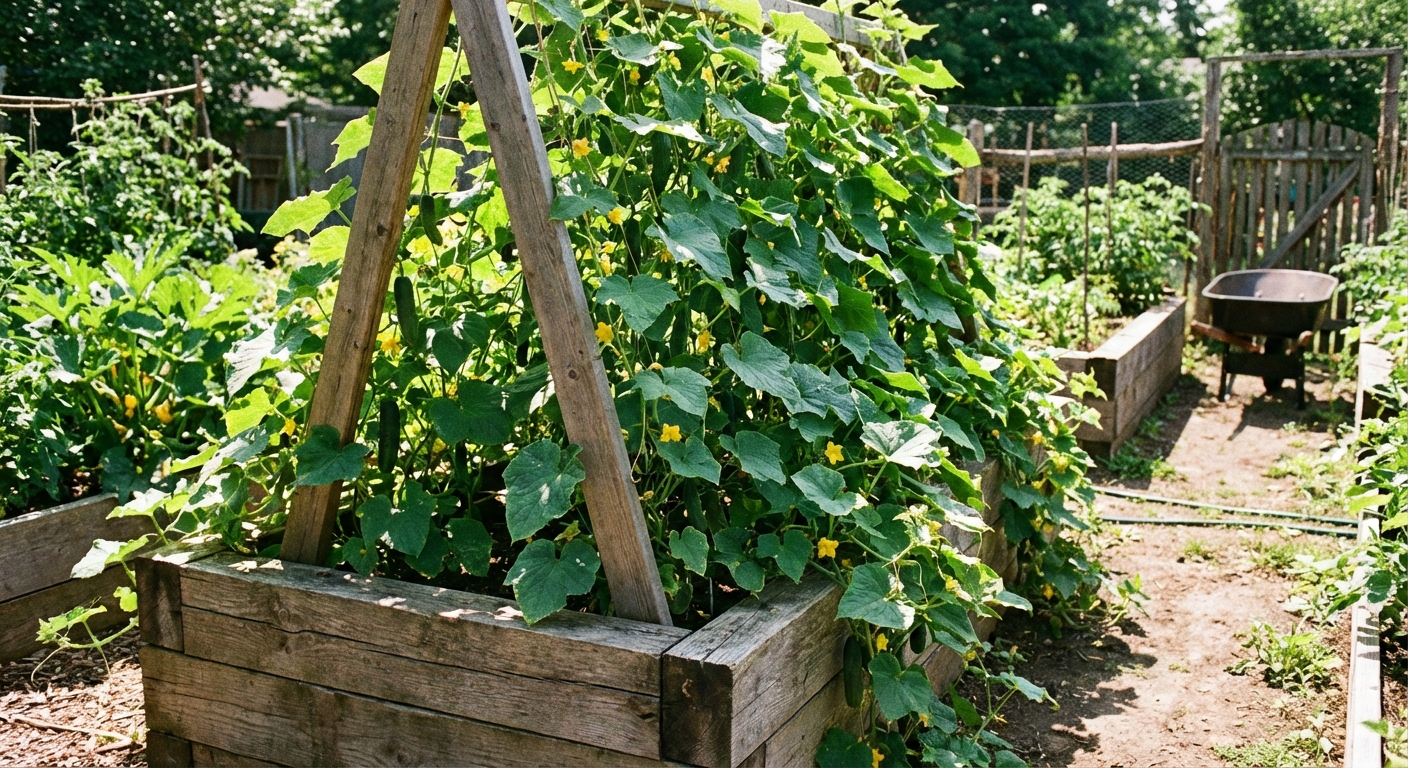
Vining vegetables are sweet, enthusiastic climbers. Give them something sturdy to grab and they will happily move upward, freeing precious bed space for basil, carrots, or that extra tomato you swear you do not have room for. Vertical growing can help foliage dry faster (hello, fewer mildew headaches), makes harvest easier, and turns even a tiny garden into a lush green wall.
Below are seven tried-and-true vertical gardening setups I love for cucumbers, squash, and pole beans. I will keep it practical, beginner-friendly, and sturdy enough to survive a summer thunderstorm that shows up uninvited.
Before you build: a few non-negotiables
Vines are not delicate. Once they hit their stride, they get heavy fast. A good trellis is less about beauty and more about safe, stable support.
- Anchor like you mean it: Sink posts deeply or use strong bed-mounted brackets. In many gardens, a good starting point is 18 to 24 inches buried for in-ground posts, then go deeper for taller trellises, loose soil, or windy sites.
- Match the trellis to the crop: Pole beans are light and twining. Cucumbers are medium weight and grabby. Winter squash can be downright beefy.
- Think about access: Can you reach both sides to harvest? Can you water at the base without gymnastics?
- Choose rot-resistant materials: Cedar, modern pressure-treated lumber rated for ground contact (avoid old treated wood), metal conduit, cattle panel, and UV-stable netting all hold up well outdoors.
- Plan for airflow: Space plants properly and avoid stuffing vines into a solid wall. Good airflow means fewer fungal problems.
- Mind the shade: In the Northern Hemisphere, place taller trellises on the north side of beds when you can, so they do not shade shorter crops. (Flip that if you are in the Southern Hemisphere.)
- Follow spacing first: Your seed packet spacing is the final boss. As a rough guide, many slicing cucumbers do well about 12 inches apart on a trellis, and pole beans are often 4 to 6 inches apart or a few seeds per pole.
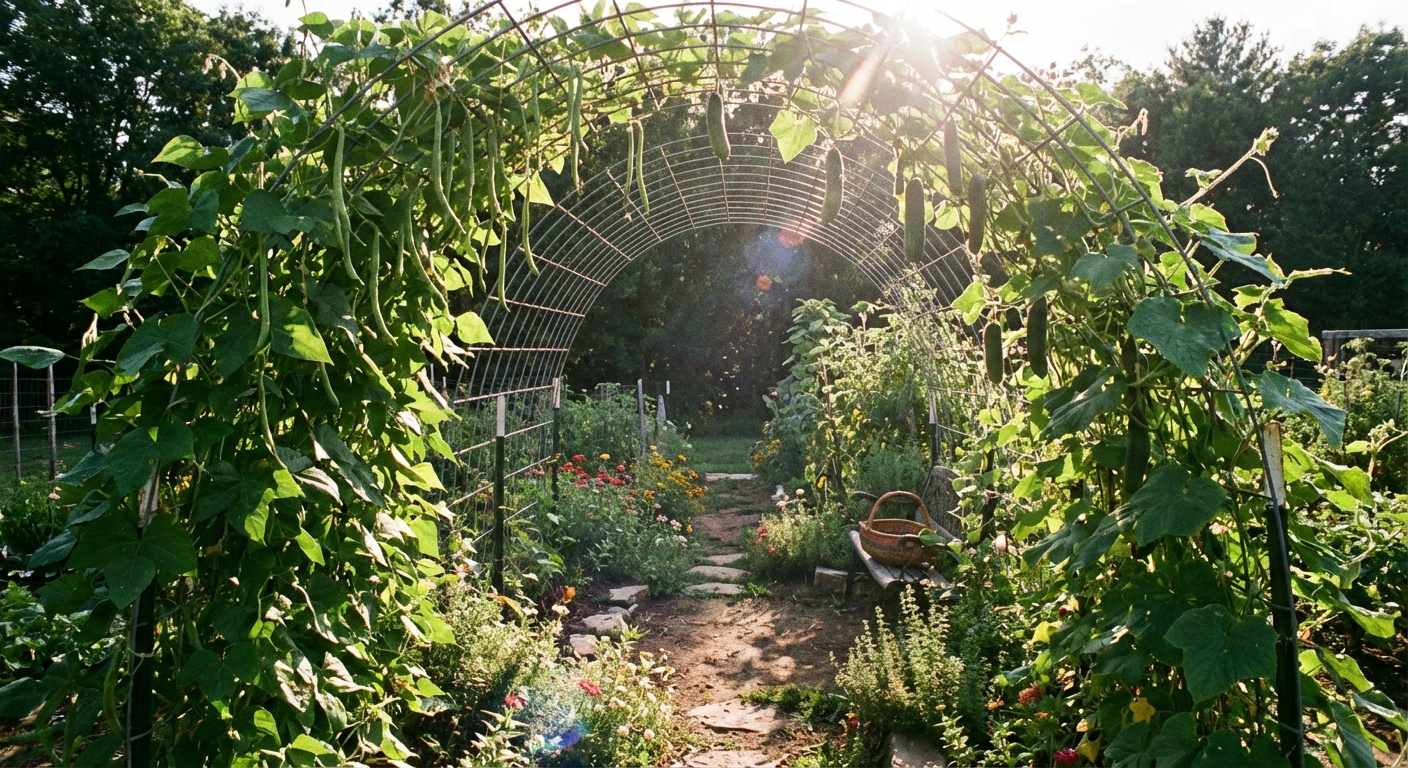
1) Cattle panel archway
If I could recommend one “do-it-once, love-it-for-years” vertical solution, it is the cattle panel arch. A livestock panel is thick welded wire that laughs in the face of wind and vigorous vines. Bend it into an arch between two beds or along a path and you get a living tunnel of vegetables.
Best for
Cucumbers, pole beans, small to medium squash (and honestly, it is dreamy for gourds too). Skip the truly massive pumpkin types unless you have a very heavy-duty structure and a plan for serious support.
What you need
- One cattle panel (commonly 16 feet long by 50 inches wide)
- Two sturdy supports to attach to (T-posts, wooden posts, or bed corners)
- Heavy-duty zip ties or fence clips, plus gloves (eye protection is smart too)
How to set it up
- Install posts or use raised-bed corners as your anchor points.
- Bend the panel into an arch. It can spring back, so go slow, wear gloves, and keep fingers clear.
- Secure both sides tightly using fence clips or heavy zip ties. T-posts plus fence clips are rock-solid.
- Plant vines at the base on one or both sides.
- As vines grow, gently weave them through the panel every few days until they take over.
Clara tip: For heavier squash, train one main vine up the arch and prune excess side shoots early. If fruit gets large, cradle it with old T-shirts or stretchy fabric slings tied to the panel.
2) A-frame trellis with netting or wire
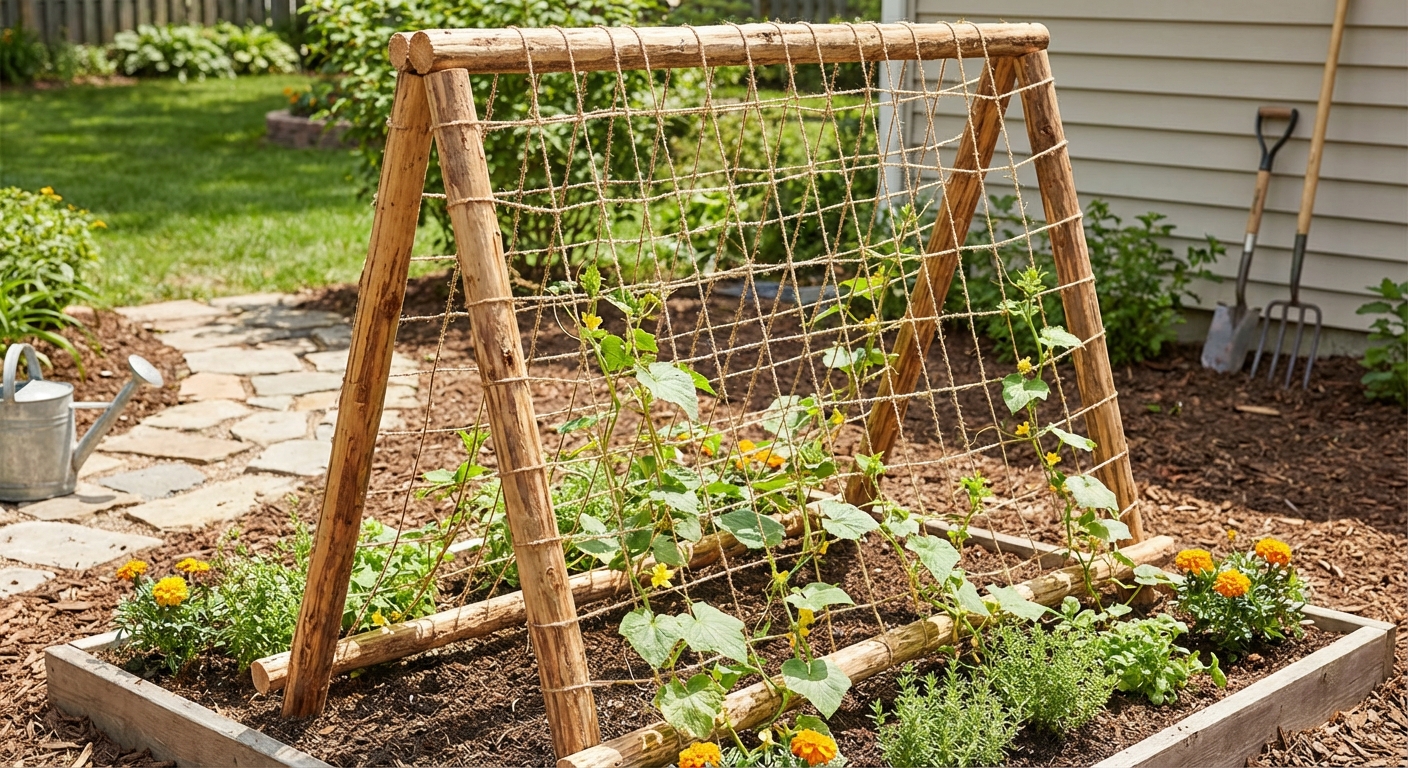
An A-frame is the small-space classic because it is stable, easy to build, and gives you two growing sides. You can make it from wood, bamboo, or metal conduit, then add trellis netting, welded wire, or hog panel as the climbing surface.
Best for
Cucumbers, pole beans, peas, and smaller squash varieties.
Why it saves space
You can plant along both sides of the “A” in one narrow strip, then harvest from the outside edges. It creates a vertical canopy without shading a wide area.
Make it sturdier
- Add a ridgepole across the top (a 2x2 or conduit) to reduce wobble. Fasten it with exterior screws, bolts, or conduit clamps, not just twine.
- Stake the legs into the soil or bolt them to the inside of a raised bed.
- Choose a climbing surface with openings big enough for your hand to harvest through. For cucumbers, 4 to 6 inch openings are friendly. Closer to 4 inches gives thin vines more grab points while still letting you reach in.
3) Teepee trellis from bamboo or branches
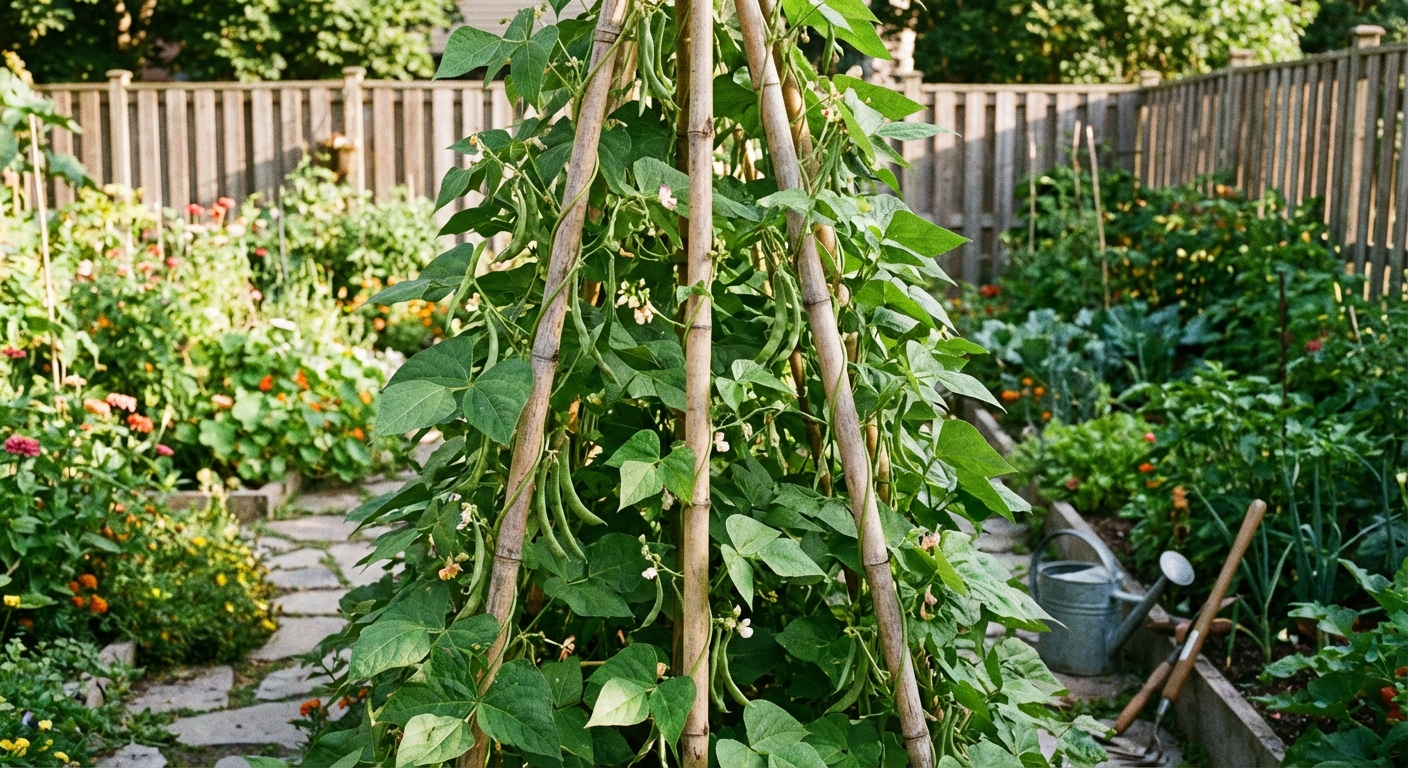
There is something a little magical about a bean teepee. It is simple, low-cost, and perfect for tucking into a corner. If you have straight prunings or can get bamboo poles, you can build this in ten minutes and feel like a garden wizard.
Best for
Pole beans and lightweight cucumbers (especially smaller-fruited types).
How to build it
- Use 5 to 8 poles, 6 to 8 feet tall.
- Push each pole 8 to 12 inches into the soil in a circle.
- Gather the tops and tie tightly with outdoor twine or wire.
- Add a few horizontal ties midway up if your area gets wind.
Clara tip: Plant 2 to 3 bean seeds per pole. Once they sprout, thin to the strongest one or two. Overcrowding is the fastest way to get a tangled, humid mess.
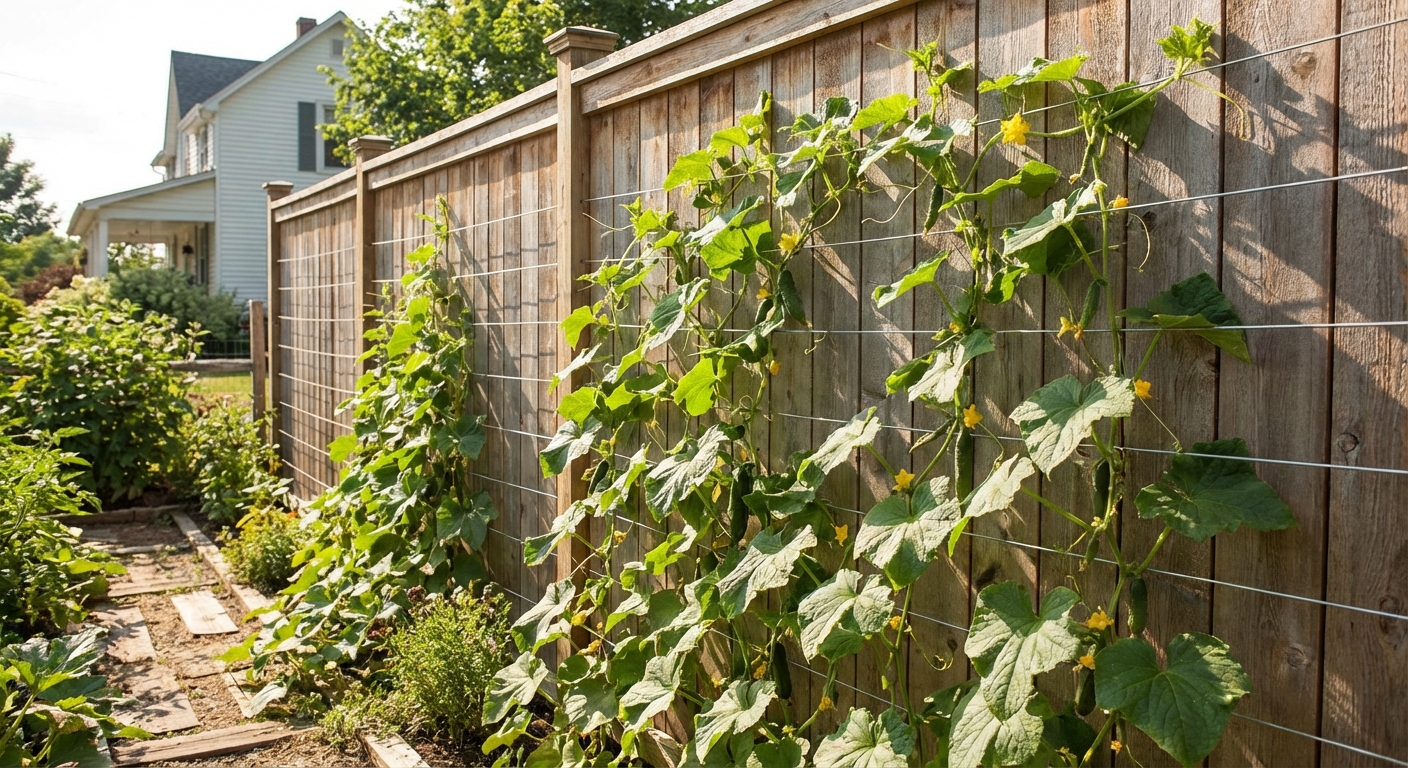
4) Wall or fence trellis with tensioned wires
If you have a sunny fence, shed wall, or sturdy railing, you already own vertical real estate. Tensioned wires turn that flat surface into a climbable plane without eating up ground space.
Best for
Cucumbers and pole beans. For squash, stick with smaller varieties and provide fruit slings.
Materials that work well
- Stainless steel wire or galvanized cable
- Screw eyes or masonry anchors (depending on surface)
- Turnbuckles to keep lines tight
Set it up safely
- Leave a small gap (2 to 4 inches) between wires and the wall for airflow.
- Run multiple horizontal lines 8 to 12 inches apart, or create a grid.
- Keep the base clear for watering and mulching. Vines love a cool, protected root zone.
Clara tip: If the wall gets blazing hot in late summer, mulch heavily and water in the morning. Heat radiating off fences can stress cucumbers quickly.
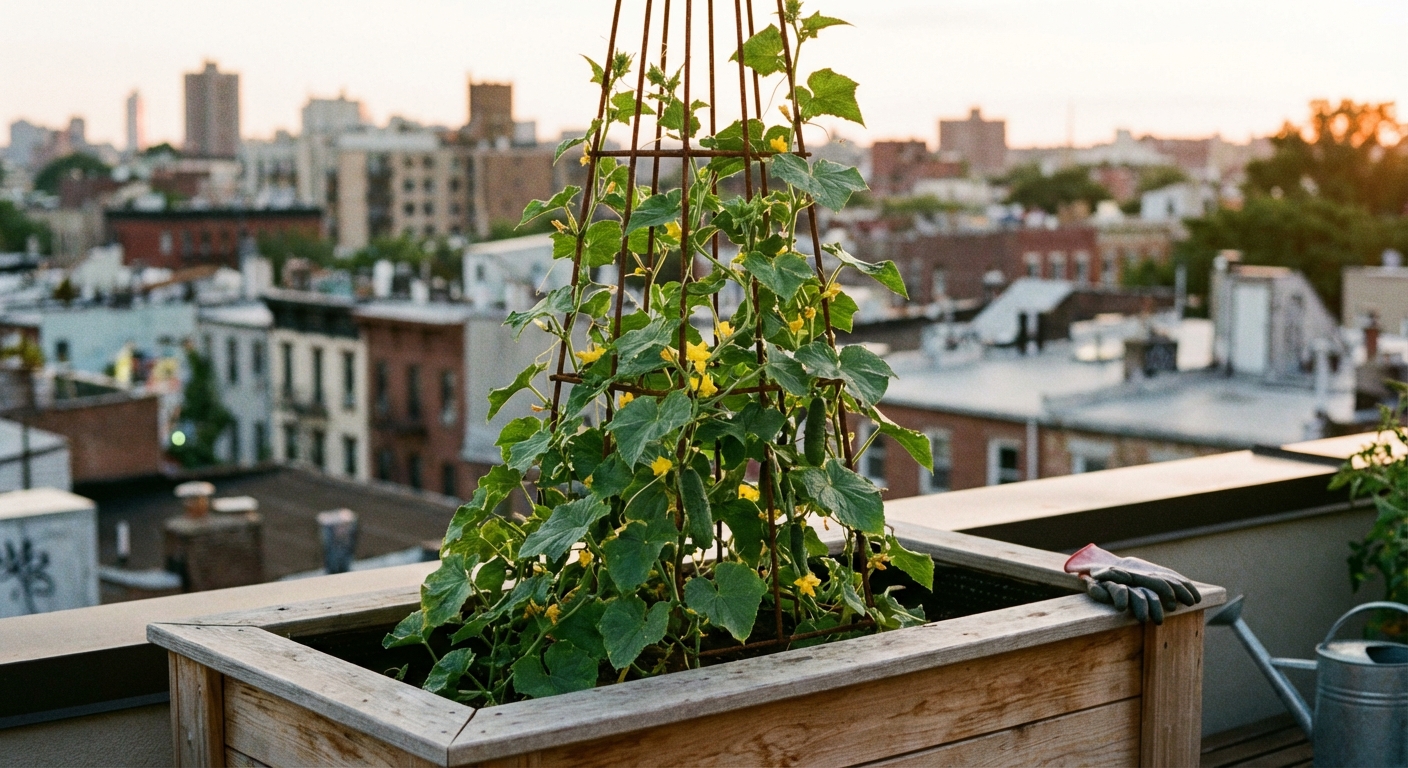
5) Obelisk or tower trellis in a pot
Balcony gardeners, this one is for you. A tall obelisk or tower trellis turns one container into a vertical mini garden. It looks tidy, feels lush, and keeps vines from crawling across your walkway like they pay rent.
Best for
Patio cucumbers, compact pole beans, and smaller squash varieties bred for containers.
Container success checklist
- Use a pot at least 10 to 15 gallons for cucumbers. For beans, aim for that range if you want 2 to 3 plants in one pot, and remember more soil volume means less frantic watering.
- Choose a heavy pot or add weight in the base. Wind can topple tall setups.
- Use a rich, well-draining organic mix and top-dress with compost midseason.
Clara tip: For container cucumbers, pick varieties labeled “patio” or “bush” and still give them height. They stay more manageable but love to climb.
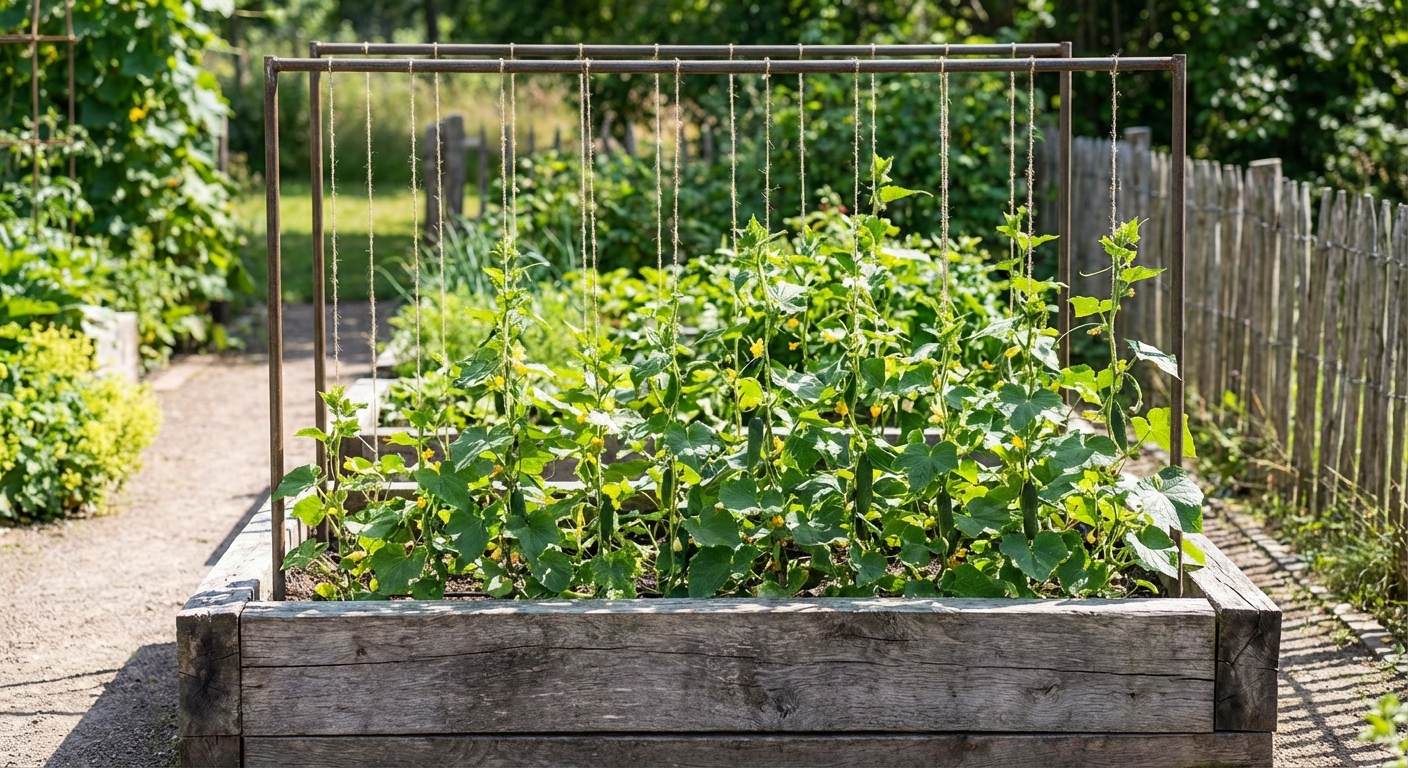
6) String trellis from an overhead bar
This is the greenhouse classic, but it works beautifully outdoors too, especially in raised beds. You run a sturdy bar overhead, then drop individual strings down to each plant. Vines get trained up the strings as they grow, which keeps everything organized and easy to prune.
Best for
Cucumbers and pole beans. It can work for smaller squash if you are attentive with support.
What makes it sturdy
- A solid overhead support: metal conduit, a wooden beam, or a pergola crossbar
- UV-stable trellis twine or tomato twine (avoid flimsy craft string)
- Secure knots at the top and gentle plant clips or loose ties at the vine
Training basics
- When vines are 8 to 12 inches tall, start wrapping them gently around the string.
- Check weekly and keep guiding growth upward.
- For cucumbers, consider pruning to one main stem if your space is tight.
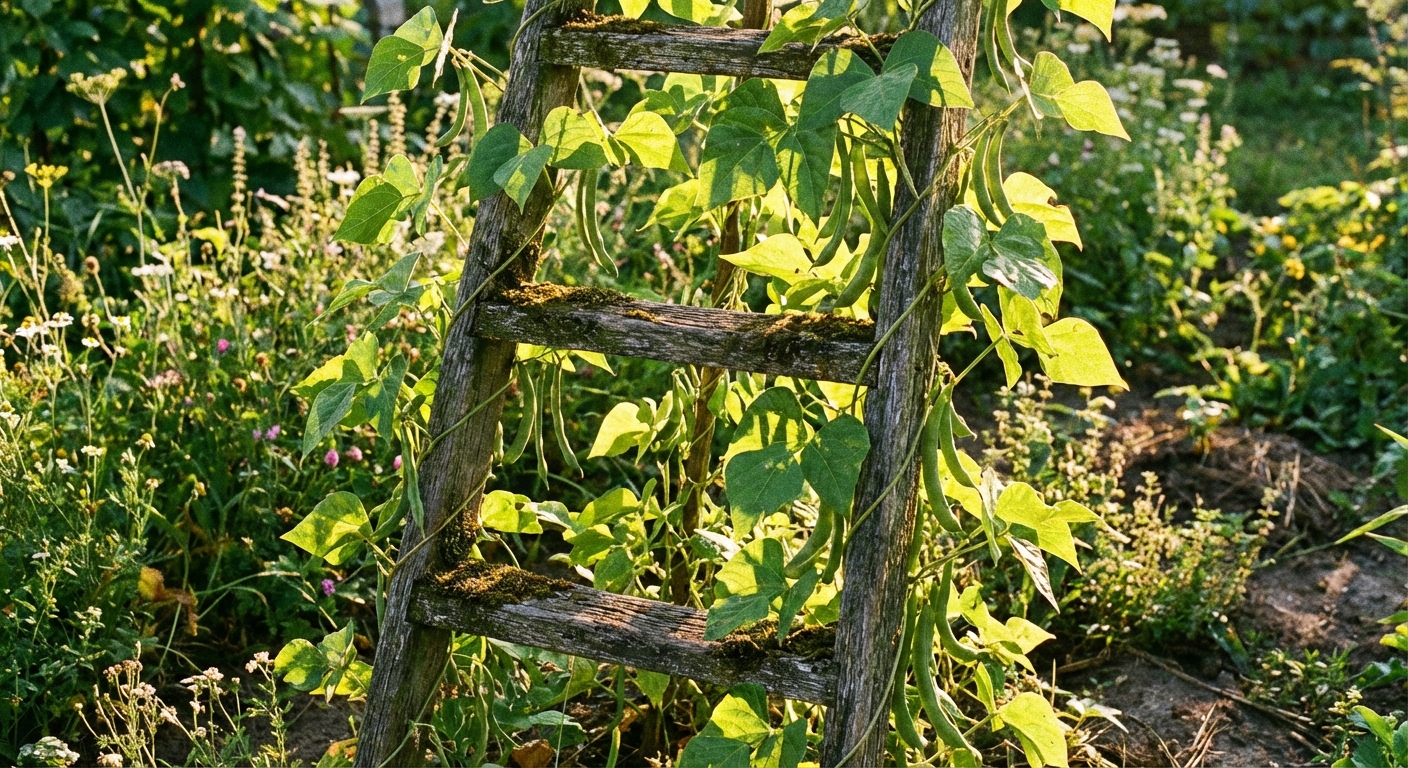
7) Ladder trellis or repurposed gate
My quirky side loves a good garden “rescued object.” An old wooden ladder, a metal bed frame, or a vintage gate can become a gorgeous trellis with very little work. The key is making sure it is stable and safe for edible crops.
Best for
Pole beans and cucumbers. Squash only if the structure is extremely secure and you add fruit slings. If you are growing giant winter squash or pumpkins, choose a heavy-duty, purpose-built trellis instead.
How to do it without regrets
- Anchor it: stake the bottom, wire it to T-posts, or attach it firmly to a fence.
- Check materials: avoid old painted wood that may contain lead paint. If you are not sure, do not use it for edibles.
- Add climbing help if needed: zip-tie a panel of welded wire to the ladder for more grip points.
Clara tip: A ladder trellis is a wonderful way to create shade for tender greens underneath. Just make sure you still have airflow so you do not invite mildew to the party.
Keeping vining veggies happy on a trellis
Water at the base, mulch like you love them
Trellised plants still need consistent moisture at the root zone. Water deeply at soil level and mulch with straw, shredded leaves, or untreated grass clippings to keep roots cool and soil biology thriving.
Feed steadily, not frantically
Mix compost into the planting area, then side-dress midseason. For containers, a gentle organic liquid feed every couple of weeks can prevent that late-summer “why do my leaves look tired?” slump.
Support heavy fruit early
Once a squash starts swelling, gravity becomes very persuasive. Use stretchy fabric slings tied to the trellis to support fruit and protect vines from snapping.
Watch for mildew and act fast
Vertical growing often helps, but cucumbers and squash can still get powdery mildew depending on weather, spacing, and variety. Give them morning sun, room to breathe, and avoid overhead watering late in the day.
Quick trellis picking guide
- Tightest spaces (patios, balconies): Obelisk in a pot, wall wires, ladder trellis
- Most durable for years: Cattle panel arch, A-frame with welded wire
- Fastest and cheapest: Bean teepee, string trellis (if you already have an overhead bar)
- Best for heavier vines: Cattle panel arch, strong A-frame, wall trellis with solid anchors plus fruit slings (and skip giant pumpkin types unless your structure is built for them)
If you are feeling stuck, start with the strongest option you can afford and install. Plants are forgiving, but gravity is not. Once your vines are climbing, you will wonder why you ever let cucumbers sprawl across your precious planting space.