
15 Fast-Growing Privacy Plants for Backyard Borders

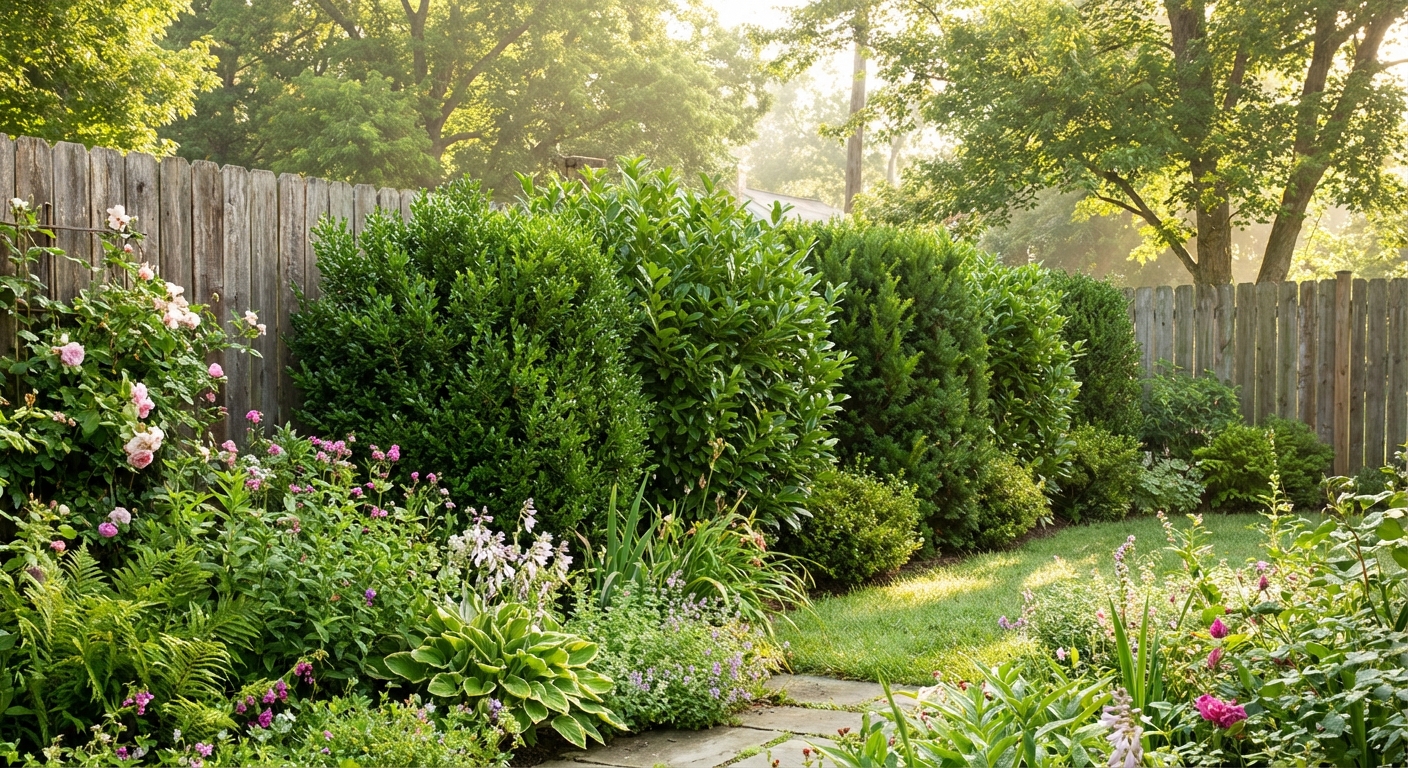
Privacy is one of those garden needs that sneaks up on you. One day you're sipping iced tea, the next you're making eye contact with your neighbor while you're in mismatched socks and holding a watering can like a shield.
The good news is you can grow privacy, and you can grow it quickly, with the right plants and a little planning. Below are 15 fast-growing favorites for natural backyard borders, plus the practical details that actually make them fill in: spacing, light, soil, USDA zones, and what to expect in the first few years.
Quick note: Plant suitability (and invasiveness) can be very regional. Always double-check your local extension office or invasive plant list before you buy a truckload of anything.
Before you plant: 4 things that make a screen work
1) Pick the right kind of privacy
- Year-round screening: evergreen trees and shrubs.
- Seasonal screening: deciduous shrubs and trees that leaf out dense in spring and summer.
- Soft, natural look: mixed border with varied textures and bloom times.
- Fastest wall effect: clumping bamboo or tall, tight hedges.
2) Measure your space and the mature width
Fast-growing plants are enthusiastic. Give them room or commit to pruning. Always check mature width and keep plantings away from property lines, fences, septic fields, and overhead wires.
3) Improve the soil once, then let it do the heavy lifting
For most screens, you'll get faster, healthier growth by loosening soil and mixing in compost than by pouring on fertilizer. A 2 to 3 inch layer of compost on planting day and a 2 to 4 inch mulch layer afterward is my simple, reliable combo.
4) Use triangle spacing for a thicker wall
Instead of one straight row, stagger plants in two rows like a zipper. A simple way to do it: set the second row so each plant sits about halfway between two plants in the first row. This closes gaps faster and looks more natural.
Fast-growing evergreen trees for privacy
These are your year-round workhorses. They're best when you need height, consistent screening, and a greener winter view.
1) Green Giant arborvitae (Thuja × 'Green Giant')
Why I love it: It grows fast, stays dense, and handles a range of conditions once it's established. It's the classic “I need privacy” tree for a reason.
- Zones: 5 to 8 (sometimes 9 in milder spots)
- Growth rate: typically about 3 feet per year; up to 3 to 5 feet per year in ideal conditions
- Mature size: roughly 30 to 50+ feet tall, 12 to 18 feet wide
- Light: full sun to part shade (densest in sun)
- Soil: adaptable, prefers well-drained; avoid soggy sites
- Spacing (hedge): about 5 to 8 feet apart; wider for individual specimens
- Watch for: deer browsing can be a real issue. Protect young trees if deer are common.
- First few years: year 1 is roots; year 2 gets noticeably taller; by year 3 it often starts to feel like a screen (depending on starting size and spacing).
2) Emerald Green arborvitae (Thuja occidentalis 'Smaragd')
Why it earns a spot: Narrow, tidy, and naturally conical. It's slower than Green Giant but still a solid choice for tighter yards.
- Zones: 3 to 8
- Growth rate: about 0.5 to 1 foot per year (occasionally more with great care)
- Mature size: around 12 to 15 feet tall, 3 to 4 feet wide
- Light: full sun to part shade
- Soil: well-drained, evenly moist is ideal
- Spacing (hedge): about 2.5 to 3.5 feet apart for a tight screen; wider if you want distinct columns
- Watch for: winter burn in exposed, windy spots. Mulch and water well into fall. Deer also love arborvitae.
- First few years: great “upright” coverage early, but expect a slower close-in than Green Giant.
3) Leyland cypress (Cuprocyparis leylandii)
Why it's popular: Very fast growth and a tall, feathery evergreen wall. It can be gorgeous, but it needs airflow and responsible spacing.
- Zones: 6 to 10 (best in 6 to 9)
- Growth rate: often 3 to 4 feet per year
- Mature size: 40 to 60+ feet tall, 12 to 20 feet wide
- Light: full sun (tolerates light shade)
- Soil: well-drained; avoid waterlogged clay
- Spacing (screen): about 8 to 12 feet apart; don't plant it like a picket fence
- Watch for: can struggle with disease in humid areas if crowded. Good airflow is not optional.
- First few years: quick height, quick coverage, but only if it stays healthy.
4) Eastern red cedar (Juniperus virginiana)
Why it's underrated: Tough, drought tolerant once established, and great for wildlife. It brings a more natural, meadow-edge feel than arborvitae.
- Zones: 2 to 9
- Growth rate: moderate to fast, often 1 to 2 feet per year
- Mature size: 30 to 50 feet tall, 8 to 20 feet wide
- Light: full sun (best density), tolerates part shade
- Soil: adaptable, including poorer soils; avoid constantly wet sites
- Spacing (screen): about 8 to 12 feet apart for a natural screen
- Design tip: Looks amazing mixed with flowering shrubs in front.
- First few years: not always instant “wall,” but it becomes a sturdy, low-fuss screen over time.
5) Wax myrtle (Morella cerifera)
Why it's a favorite in warmer regions: Fast, fragrant foliage, evergreen to semi-evergreen depending on climate, and it tolerates poor soils surprisingly well.
- Zones: 7 to 10 (sometimes 6 in protected spots)
- Growth rate: fast, often 2 to 4 feet per year in warm, moist sites
- Mature size: 10 to 20 feet tall and wide
- Light: full sun to part shade
- Soil: adaptable; tolerates sandy and coastal soils, prefers decent drainage
- Spacing (hedge): about 4 to 6 feet apart for a thick, informal screen
- Bonus: Berries feed birds.
- First few years: one of the quickest “leafy mass” makers if your climate suits it.
Fast-growing tall shrubs and hedge plants
If you want privacy at eye level and you want it sooner, shrubs are often the sweet spot. They fill in quickly, take pruning well, and can be layered for a lush look.
6) Privet (Ligustrum spp.)
Why it works: Privet makes a thick, classic hedge quickly and tolerates hard pruning. Choose non-invasive options where possible, and always check local guidance since some privets are invasive in parts of the US.
- Zones: varies by species, often 5 to 8
- Growth rate: fast, often 2 to 3 feet per year
- Mature size: varies widely, often 8 to 15 feet
- Light: full sun to part shade
- Soil: adaptable; better growth in average, well-drained soil
- Spacing (hedge): about 2 to 4 feet apart depending on variety and how fast you want it to knit
- Care tip: Prune lightly a few times a season to encourage dense branching.
- First few years: fills gaps fast if watered well the first season.
7) Cherry laurel (Prunus laurocerasus)
Why it's so effective: Big, glossy leaves give immediate coverage, and it responds beautifully to pruning into a dense wall.
- Zones: 6 to 9
- Growth rate: fast, often 1 to 2+ feet per year
- Mature size: commonly 10 to 20 feet tall
- Light: part shade to full sun (often happiest with some afternoon shade in hot areas)
- Soil: fertile, well-drained; tolerates clay if drainage is decent
- Spacing (hedge): about 4 to 6 feet apart
- Important: Highly toxic to pets and people if ingested. Skip it if chewing is a concern with kids, dogs, or cats.
- Local note: Can be invasive or problematic in some regions. Check local guidance before planting.
- First few years: gives an “instant screen” feel early because the leaves are so large.
8) Photinia (Red Tip photinia, Photinia × fraseri)
Why people plant it: Bright red new growth in spring is a showstopper, and it can form a tall, thick hedge.
- Zones: 7 to 9 (sometimes 6 in protected sites)
- Growth rate: fast, about 1 to 2+ feet per year
- Mature size: often 10 to 15 feet tall
- Light: full sun to part shade (more sun, better color)
- Soil: well-drained, average fertility
- Spacing (hedge): about 4 to 6 feet apart (wider in humid climates for airflow)
- Watch for: leaf spot can be an issue in humid areas. Space for airflow and avoid wetting foliage. In some regions it can be a headache plant, so local-check it.
- First few years: quick bulk, especially if you prune to encourage branching.
9) Viburnum (sweet viburnum and other fast types, Viburnum spp.)
Why I recommend viburnums often: Many varieties grow quickly, bloom nicely, and create a thick screen without looking stiff. Sweet viburnum is a common fast choice in warmer climates.
- Zones: varies by species, often 2 to 9
- Growth rate: moderate to fast, often 1 to 2 feet per year
- Mature size: depends on species, commonly 8 to 20 feet
- Light: full sun to part shade
- Soil: average to rich, well-drained; many tolerate clay if not soggy
- Spacing (screen): about 4 to 8 feet apart depending on mature width
- Design tip: Pair with evergreens for year-round structure.
- First few years: usually a steady, reliable thickener, not a dramatic overnight hedge.
10) Forsythia (Forsythia spp.)
Why it's a joy: It explodes into yellow blooms in early spring and grows fast enough to make a seasonal screen quickly.
- Zones: 5 to 8 (some varieties to 4)
- Growth rate: fast, often 2 feet per year
- Mature size: 8 to 10 feet tall and wide
- Light: full sun for best bloom (tolerates part shade)
- Soil: average, well-drained
- Spacing (hedge): about 4 to 6 feet apart for an informal screen
- Pruning tip: Prune right after flowering, not in fall, or you'll snip off next year's blooms.
- First few years: quick twiggy growth, then it really puffs out once it's established.
11) Lilac (Syringa vulgaris and hybrids)
Why it's worth the wait: Not the fastest on the list, but many lilacs grow steadily and become dense, fragrant privacy shrubs with time.
- Zones: 3 to 7 (some hybrids wider)
- Growth rate: moderate, often about 1 foot per year
- Mature size: typically 8 to 15 feet tall
- Light: full sun
- Soil: well-drained; avoids constantly wet soil
- Spacing (hedge): about 5 to 7 feet apart
- Best practice: Full sun and good airflow help prevent powdery mildew.
- First few years: year 1 to 2 is establishment; by year 3 to 5, it starts to feel like a real, leafy backdrop.
12) Rose of Sharon (Hibiscus syriacus)
Why it shines: Upright growth and late-summer flowers when the rest of the garden is getting sleepy. Great for seasonal screening and pollinators.
- Zones: 5 to 9
- Growth rate: moderate to fast, often 1 to 2 feet per year
- Mature size: about 8 to 12 feet tall, 4 to 6 feet wide
- Light: full sun to part shade
- Soil: average, well-drained; fairly adaptable once established
- Spacing (hedge): about 3 to 5 feet apart
- Note: Some varieties self-seed. Choose sterile cultivars if that's a concern in your area.
- First few years: you get upright privacy sooner than you get fullness. Pruning can encourage bushiness.
Fast-growing grasses and bamboo for quick screening
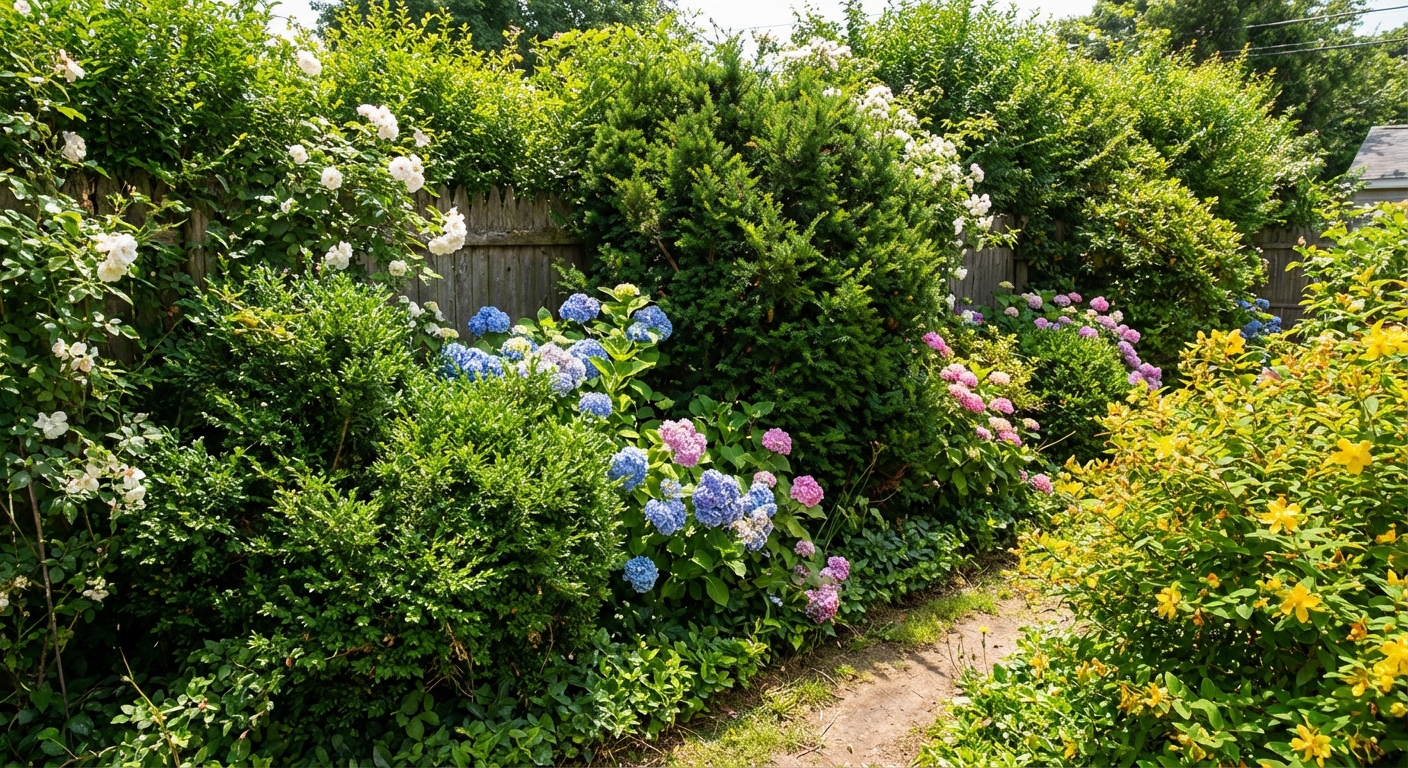
If you want privacy fast without committing to trees, tall grasses and bamboo can give you a beautiful, rustling green curtain. I talk to my ferns, and yes, I also thank my grasses for doing the most with so little fuss.
13) Clumping bamboo (Bambusa, Fargesia, and other clumpers)
Why it's a privacy cheat code: It can create a tall screen quickly. The key is choosing clumping bamboo, not running bamboo, unless you're installing serious root barriers and you love long-term containment projects.
- Zones: depends on type; many Bambusa are 8 to 10, many Fargesia are 5 to 9
- Growth rate: fast once established
- Mature size: varies widely, often 8 to 30+ feet
- Light: varies; many prefer part shade to sun (especially Fargesia in hotter areas)
- Soil: evenly moist, well-drained for best growth
- Spacing (screen): about 3 to 6 feet apart depending on species and pot size
- Must-do: Verify the species is truly clumping for your region.
- First few years: year 1 it settles; year 2 it starts to bulk up; year 3 is where many people start saying, “Oh wow.”
14) Giant miscanthus (Miscanthus × giganteus)
Why it's so useful: Tall, graceful, and thick in summer. It dies back in winter, so think of it as a seasonal privacy screen with bonus movement and sound.
- Zones: 5 to 9
- Growth rate: fast in full sun with decent moisture
- Height: often 8 to 12 feet
- Light: full sun
- Soil: average to rich, well-drained; appreciates moisture while establishing
- Spacing: about 3 to 5 feet apart
- Maintenance: Cut back to a few inches in late winter before new growth starts.
- Local note: This hybrid is generally considered sterile, but it's still smart to check local guidance since some miscanthus types can be invasive regionally.
15) Switchgrass (Panicum virgatum)
Why it deserves more attention: Native to much of North America, tough, drought tolerant once established, and beautiful in a modern or natural design. It won't be as tall as miscanthus, but it's dependable and wildlife friendly.
- Zones: 3 to 9 (varies by cultivar)
- Growth rate: moderate to fast
- Height: usually 3 to 6 feet depending on cultivar
- Light: full sun (best), tolerates part shade
- Soil: adaptable; handles clay better than many ornamentals once established
- Spacing: about 2 to 3 feet apart (closer if you want it to read as a solid mass)
- Design tip: Plant in drifts for a fuller wall effect.
How to plant a privacy border that fills in fast
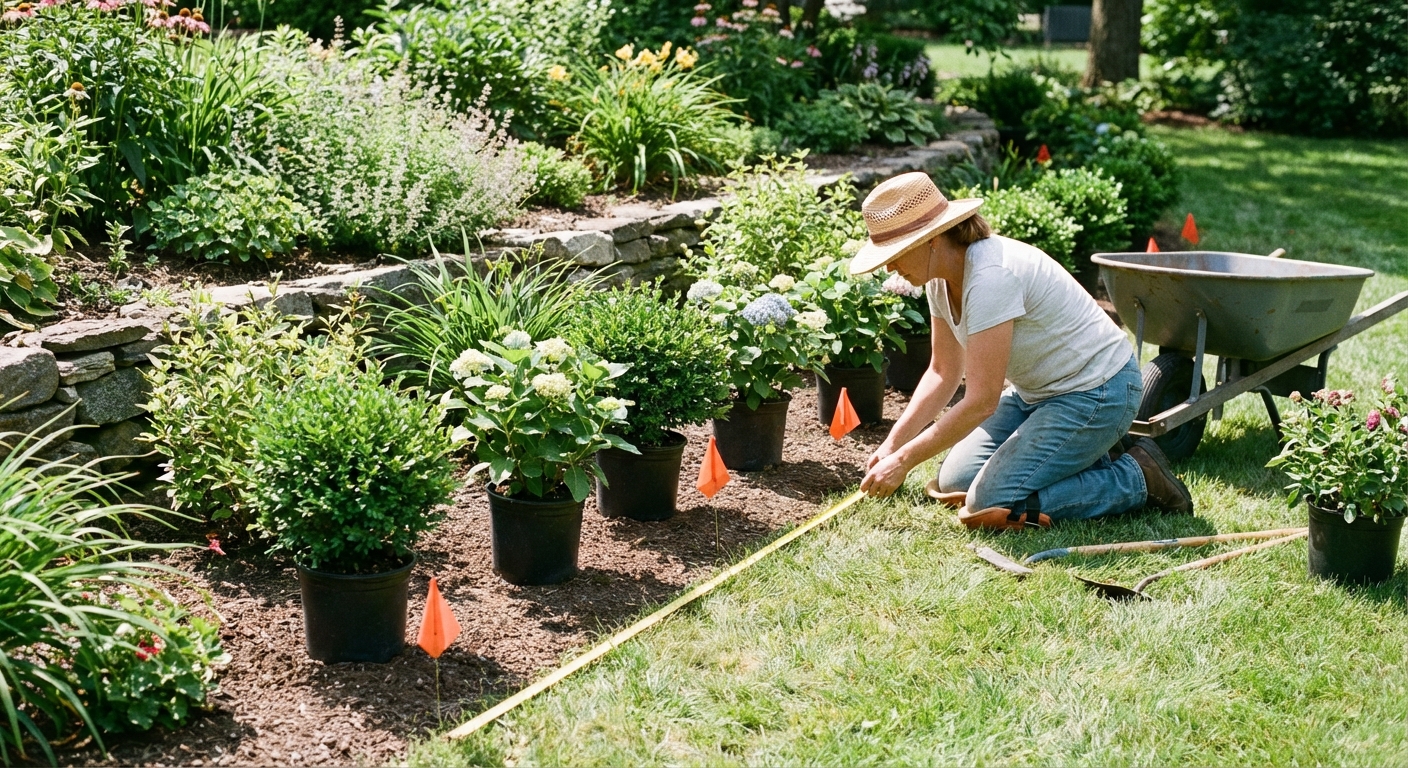
Step 1: Lay out the line
Use a garden hose or string line to sketch the border, then stand back and look from the spots you actually sit: patio chair, kitchen sink window, firepit.
Step 2: Single row or staggered
- Single row: simplest, best for narrow strips.
- Staggered double row: fastest fill and best screening. Plan for more width.
Step 3: Dig wide, not deep
Dig the hole about 2 to 3 times as wide as the root ball and only as deep as the root ball. Planting too deep is the quietest way to stress a new screen.
Step 4: Water like you mean it (first season)
Deep watering beats frequent sprinkles. A good rule of thumb: water deeply at planting, then aim for a deep soak 1 to 2 times per week for the first 8 to 12 weeks (more in heat, less with steady rain). After that, water weekly during the first growing season if rainfall is lacking.
Container vs B&B: container plants dry out faster at first, while balled-and-burlapped trees can take longer to root out. Either way, consistent moisture early on is what buys you speed.
Step 5: Mulch, then keep mulch off the trunk
Mulch is moisture insurance. Keep it a few inches away from trunks and stems to prevent rot and pests.
Quick picking guide
- I need year-round privacy: Green Giant arborvitae, Emerald Green arborvitae, cherry laurel (if pets aren't a concern), eastern red cedar.
- I need the fastest tall screen: Green Giant arborvitae, Leyland cypress (where it stays healthy), wax myrtle (warm climates), clumping bamboo (right species for your zone).
- I want flowers and privacy: viburnum, lilac, forsythia, Rose of Sharon.
- I want a softer, modern look: switchgrass and miscanthus layered in front of evergreens.
If you tell me your USDA hardiness zone, how much sun the border gets, whether deer are a regular visitor, and roughly how tall you want the screen, I can help you narrow this list to the best 3 to 5 choices for your exact yard.