
10 Low-Maintenance Front Yard Landscaping Ideas

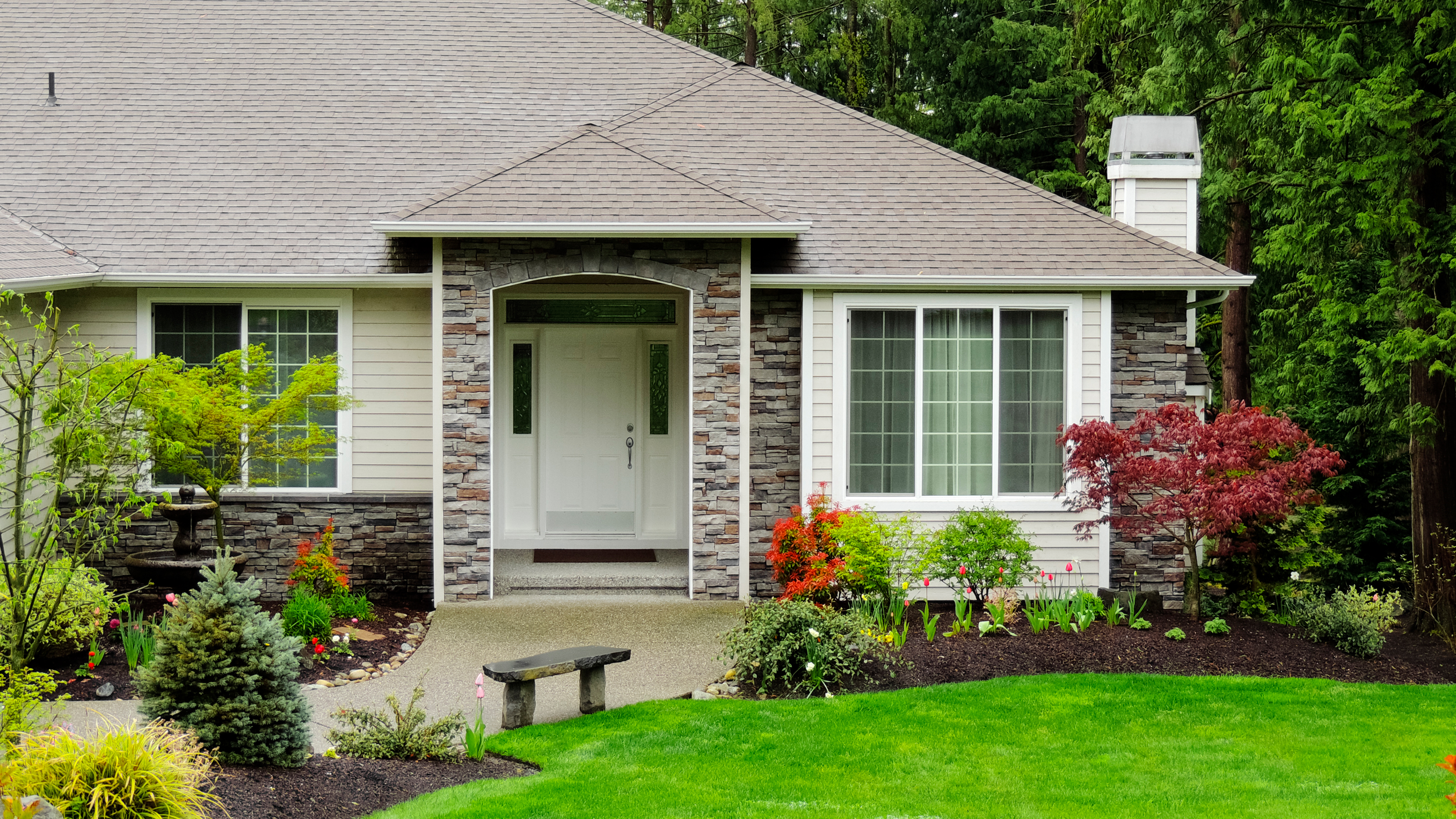
If the words front yard make you picture weekend after weekend of weeding and trimming, take a deep breath. A low-maintenance landscape is not a boring landscape. It is simply a yard designed to stay tidy and attractive with fewer inputs: less water, fewer fussy plants, and fewer awkward little corners where weeds throw a party.
I like to think of curb appeal as “good bones plus a few showstoppers.” Clean lines. Healthy soil. Reliable plants. And one or two features that make people slow down as they walk by.
Before you start: 3 choices that help
1) Shrink the lawn on purpose
Turf is often the highest-maintenance plant most of us grow. If you keep grass, keep it where it makes sense: an open rectangle that is easy to mow. Trade awkward strips and steep slopes for planting beds or groundcover.
2) Build bigger beds with clean edging
Weeds tend to love skinny beds and wiggly borders. Wide, simple shapes are easier to mulch, easier to water, and faster to maintain. Crisp edging also makes a “young” landscape look instantly mature.
3) Choose plants for your reality
Match plants to your light, soil, and climate. The most “low-maintenance” plant in the wrong spot becomes a drama queen. If you only remember one rule, make it this: right plant, right place.
Beginner shortcut: look up your USDA Hardiness Zone and shop plants rated for that zone (or lower). It is the easiest way to avoid heartbreak after the first real winter.
10 low-maintenance front yard ideas
You do not need to do all ten. Pick two or three ideas that fit your yard, then repeat them for a calm, finished look.
Quick note: Plant performance and availability vary by region. Always confirm mature size, sun needs, and whether a plant is considered invasive where you live. Your local extension office and native plant society are gold mines.
1) Layered evergreen foundation planting
This is the backbone of a tidy front yard. Evergreens keep structure year-round, hide the “bare legs” of the house, and reduce the need for constant seasonal replanting.
- How to do it: Place taller shrubs at the back (near the house), medium shrubs in the middle, and low mounding plants at the front edge.
- Low-maintenance favorites: Boxwood alternatives like inkberry holly (Ilex glabra), dwarf arborvitae, compact junipers, yews, and dwarf pines.
- Clara tip: Give shrubs their adult spacing. Overcrowding is the number one reason people end up pruning every month.
- Safety note: Yews are tough, but they are highly toxic if eaten. If you have curious kids or pets, choose a different evergreen.
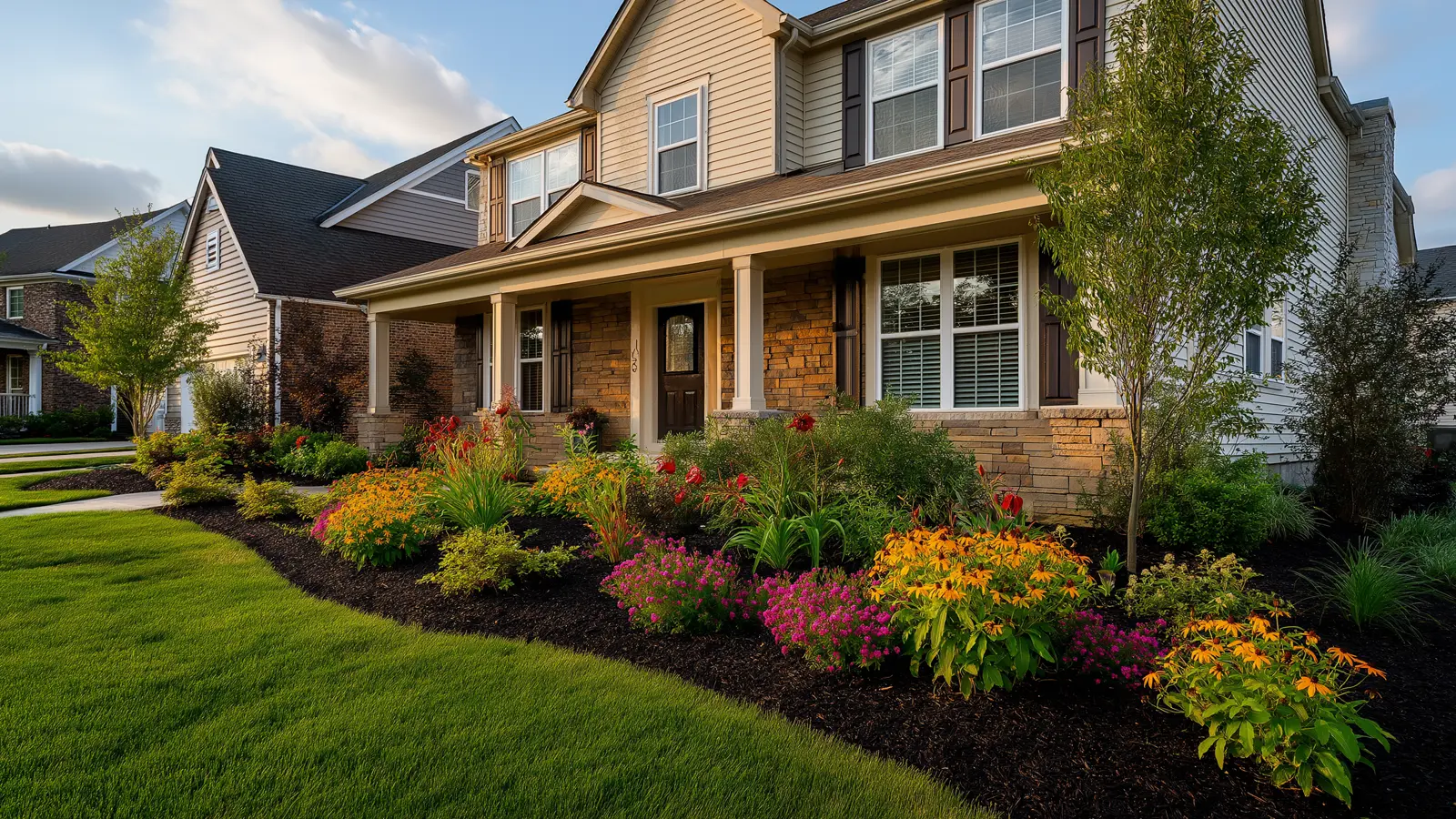
2) A simple mulch island around a tree
If you have a front-yard tree, make it a feature instead of a mowing obstacle. A clean mulch ring keeps mowers away from the trunk, reduces turf competition, and looks intentionally designed.
- How to do it: Create a wide circle or soft oval bed and edge it cleanly. Keep mulch 2 to 3 inches deep and pull it back a few inches from the trunk.
- Plant it or keep it open: You can leave it as mulch for maximum ease, or add a few tough perennials around the outer edge.
- Good understory plants: Hostas (shade), hellebores (part shade), catmint (sun), sedum (sun), hardy geranium (sun to part shade).
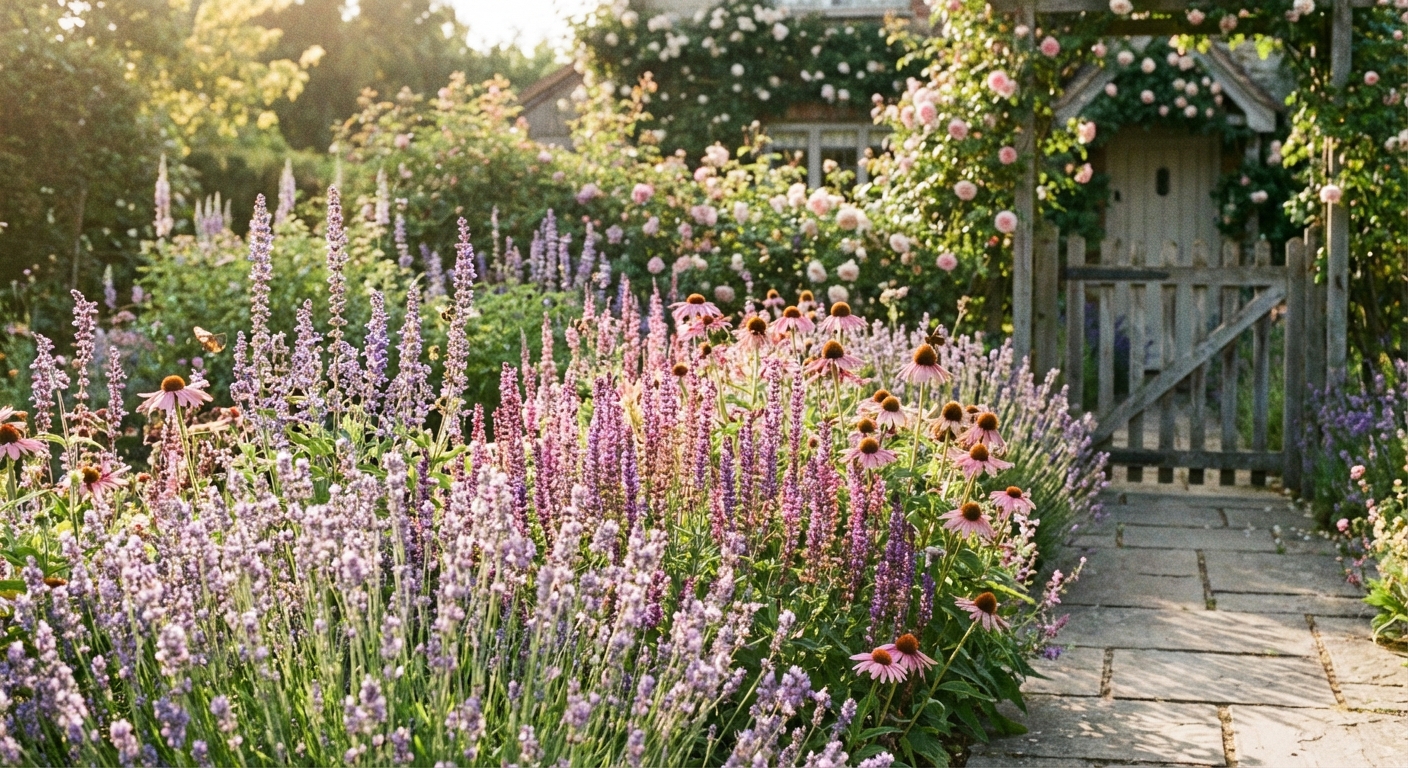
3) Drought-tolerant perennial border
Perennials that thrive on “benign neglect” are pure curb appeal magic. Choose a small palette and repeat it for a calm, cohesive look.
- How to do it: Pick 3 to 5 perennial varieties and plant in drifts of 3, 5, or 7. Repeat those drifts down the bed.
- Sun lovers: Lavender, salvia, coneflower (Echinacea), black-eyed Susan, catmint, yarrow.
- Part shade: Astilbe, coral bells (Heuchera), hellebores, ferns, brunnera.
- Maintenance shortcut: Choose plants that look good when they are done blooming, so you are not deadheading every other day.
4) Groundcover instead of weedy mulch
Mulch is wonderful, but mulch alone can turn into a weed nursery over time. The low-maintenance upgrade is a living groundcover that shades the soil and fills gaps.
- How to do it: Plant groundcover 12 to 18 inches apart, mulch lightly between plants for the first season, then let them knit together.
- Reliable options: Creeping thyme (sun), sedum (sun), bearberry (sun), sweet woodruff (shade), pachysandra (shade), wild ginger (shade), ajuga (part shade).
- Clara tip: Some groundcovers can spread aggressively depending on region and conditions (pachysandra, ajuga, and sweet woodruff are common culprits). Check local guidance and give them boundaries if you want a “set it and smile” bed.
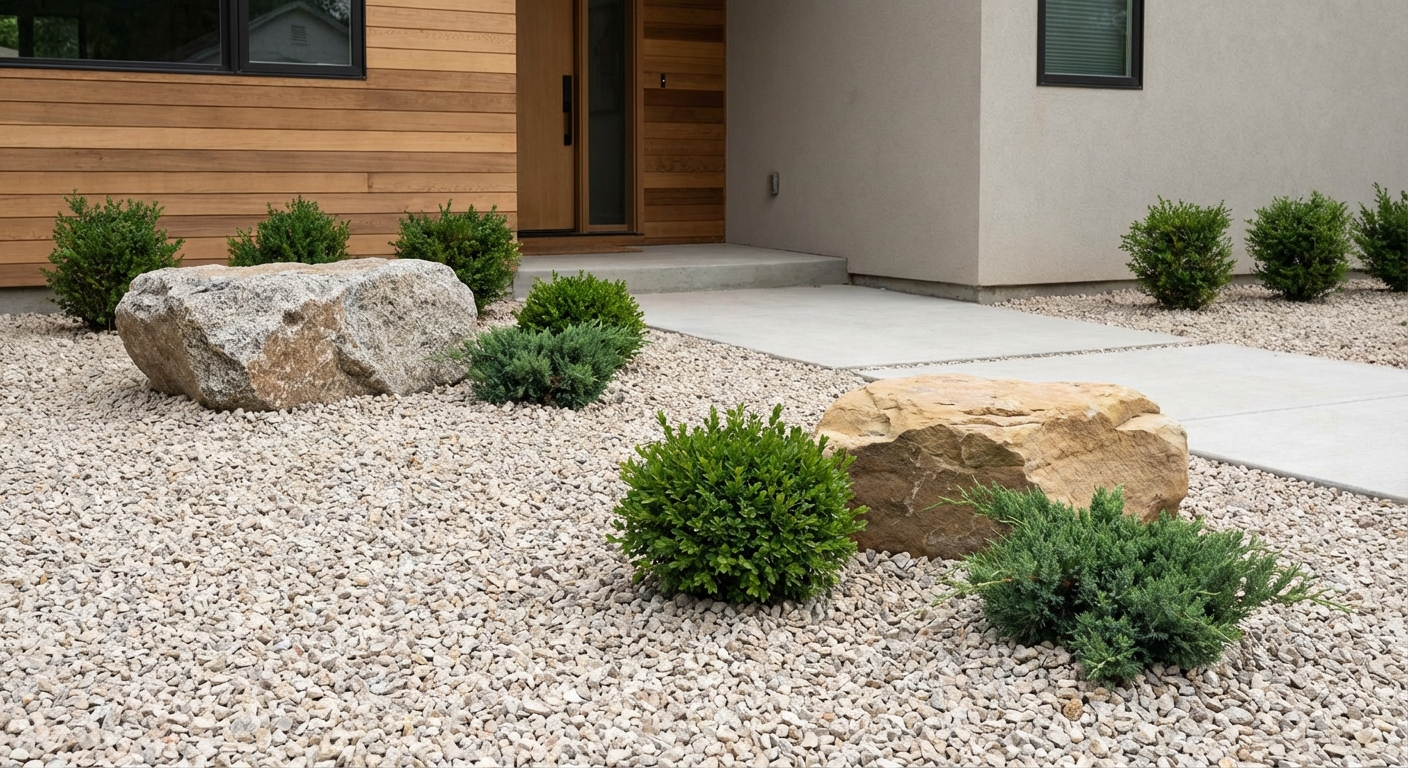
5) Decorative gravel with shrubs and boulders
Gravel landscapes can be beautifully low-maintenance when they are built correctly. The key is proper base prep and plant spacing so the design looks intentional, not sparse.
- How to do it: Remove weeds, install durable edging, and lay gravel over a well-prepped, compacted base so it stays put. In high-traffic areas, consider a stabilizing grid under the gravel.
- Plant choices: Dwarf junipers, rosemary (best in mild climates and warmer USDA zones), potentilla, spirea, santolina, yucca, ornamental grasses.
- Maintenance note: Expect occasional leaf-blowing and the rare weed. Think “low,” not “zero.”
6) A wide walkway with simple planting
Paths do a lot of visual heavy lifting. A clean walkway makes the whole front yard look more polished, even if the planting is modest.
- How to do it: Widen the path if possible, then flank it with symmetrical, easy-care plants.
- Easy combos: Boxwood-like shrubs plus seasonal bulbs, ornamental grasses plus coneflowers, or low evergreens plus hardy perennials.
- Clara tip: Leave a little shoulder of mulch or gravel between plants and the path edge. It reduces trimming and keeps leaves from smothering plants.
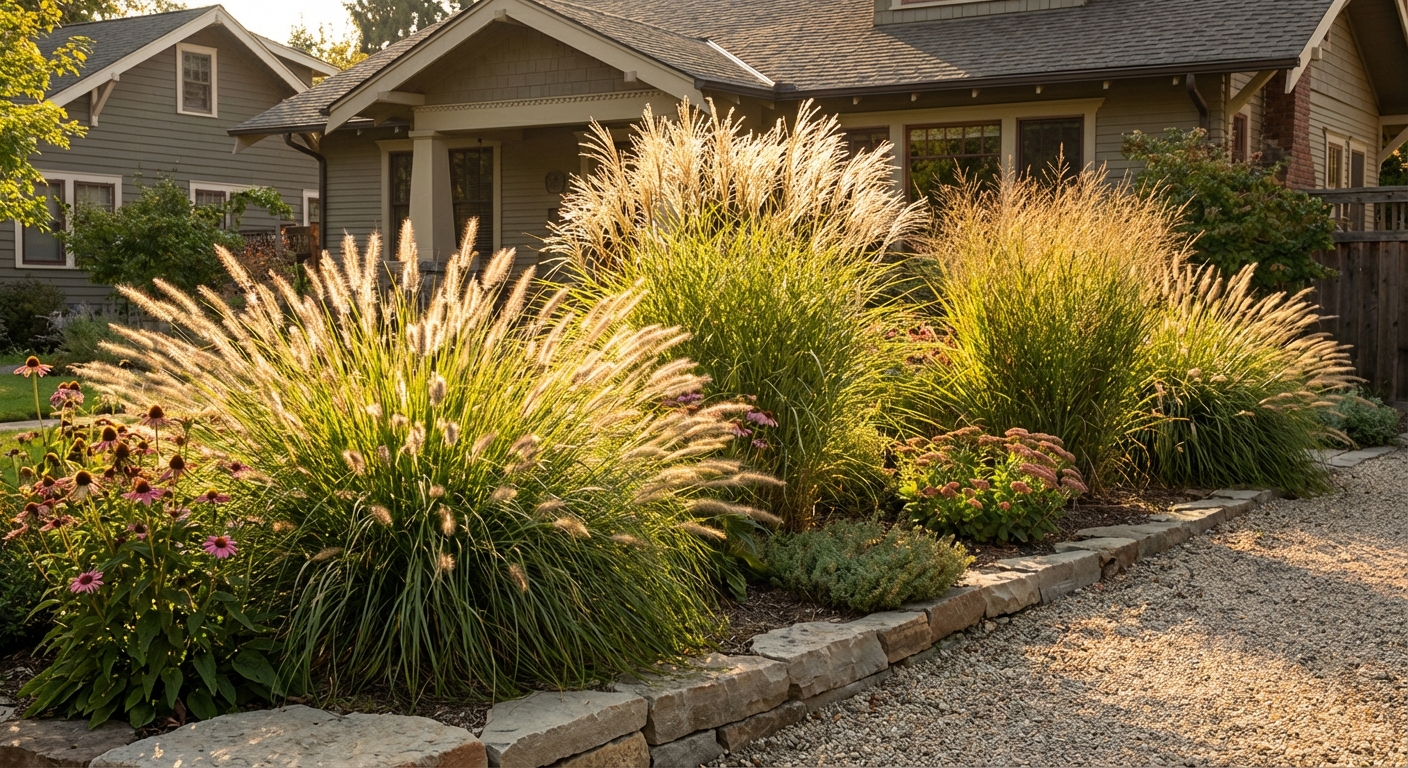
7) Ornamental grasses for movement
I talk to my ferns, yes, but I also whisper thank you to ornamental grasses. They fill space fast, they sway beautifully in the breeze, and they rarely need babying.
- How to do it: Use grasses as repeating “rhythm plants” throughout the bed. They make everything feel designed.
- Great picks: Little bluestem, switchgrass, feather reed grass, and (where it is not invasive) fountain grass.
- Clara tip: Fountain grass can be invasive in some warm climates (often the concern is Pennisetum setaceum). If in doubt, go native: switchgrass and little bluestem are beautiful, tough alternatives in many regions.
- Maintenance: Cut back once a year in late winter or early spring.
8) A small raised planter near the entry
Raised planters concentrate your effort where it matters most: right by the front door. They also help with drainage and keep plants from getting trampled.
- How to do it: Build one or two low planters with stone or rot-resistant wood. Fill with quality soil and compost.
- Planting idea: One evergreen centerpiece (like a dwarf conifer) plus trailing plants at the edge and a few perennials for bloom.
- Watering shortcut: Add a simple drip line or soaker hose.
9) One color planting for calm
If you want maximum curb appeal with minimal decision fatigue, choose one bloom color and repeat it. It looks cohesive and high-end, even with budget plants.
- How to do it: Pick a color that complements your house. Then repeat that color in 2 or 3 plant types across the yard.
- Easy palettes: White (panicle hydrangea Hydrangea paniculata, alyssum, white coneflower), purple (lavender, salvia, allium), yellow (coreopsis, black-eyed Susan).
- Clara tip: Let foliage do the rest. Silvery leaves, deep green evergreens, and soft grasses make flowers pop without extra work.
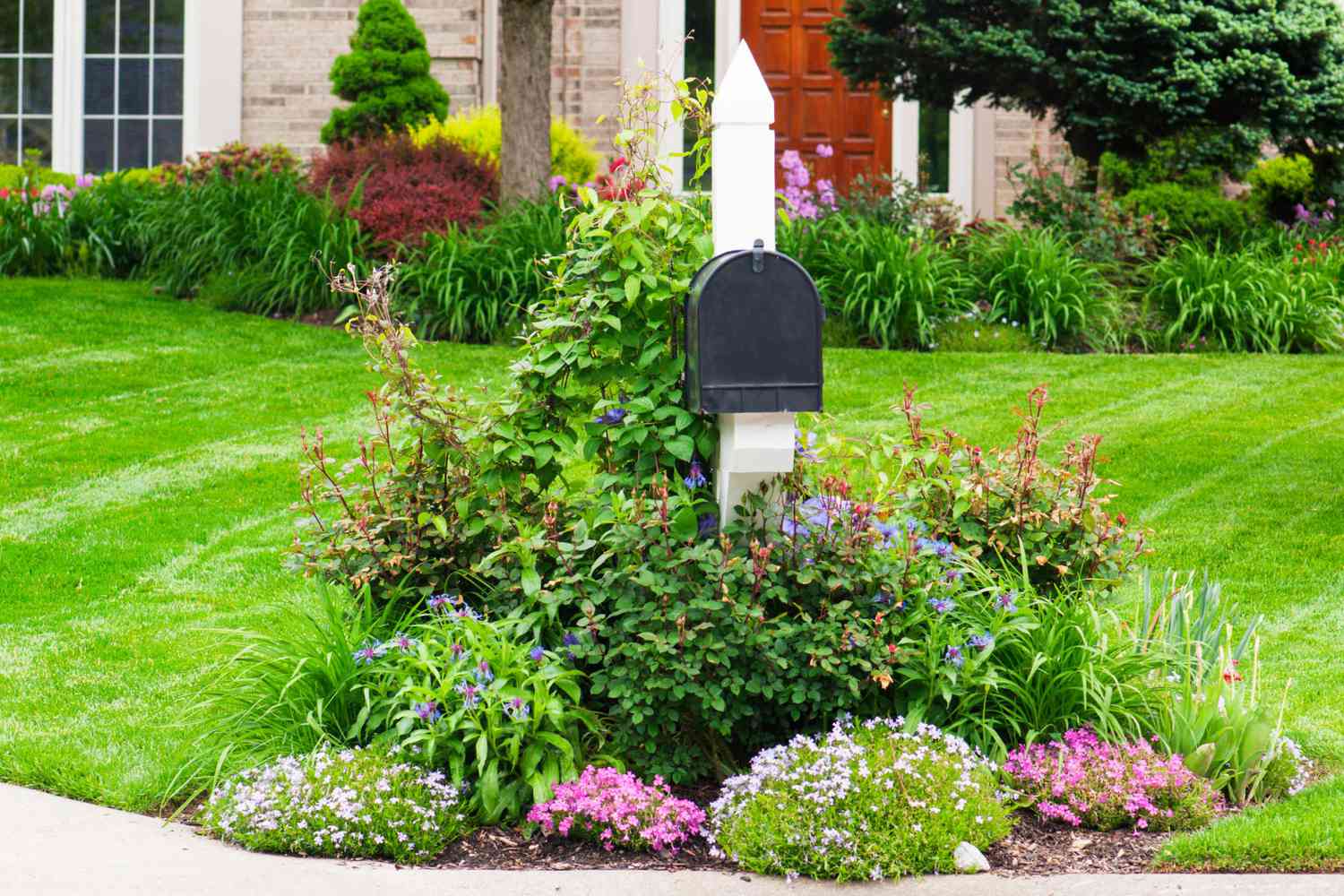
10) A tidy mailbox bed
The mailbox area is prime curb-appeal territory because it sits right at eye level. A small, neat bed here makes the whole street-facing view feel cared for.
- How to do it: Create a modest bed around the post, edge it cleanly, and plant a few tough, compact plants that will not flop into the road.
- Plant ideas: Dwarf spirea, catmint, sedum, daylilies, creeping thyme, compact evergreens.
- Maintenance note: Avoid plants that need constant staking or deadheading. This is a “set it and smile” zone.
- Safety note: Keep sightlines clear near driveways and streets, and call before you dig if you are expanding beds near utilities.
The secret sauce: soil and watering
Mulch like you mean it
A 2 to 3 inch layer of organic mulch (shredded bark, leaf mold, or wood chips) moderates moisture and blocks weed seeds from germinating. Keep it a few inches away from stems and trunks.
Water deeply, less often
Frequent shallow watering creates shallow roots and needy plants. For new plantings, water deeply and consistently in the first season, then taper once established. How often depends on your soil type, heat, wind, and rainfall. Sandy soil dries quickly, clay holds water longer, and containers dry fastest of all.
Consider drip irrigation
If you want a true “easy button,” drip lines under mulch are a game changer. They reduce evaporation, keep foliage dry, and deliver water exactly where it is needed.
A simple layout to copy
If you are staring at your front yard wondering where to begin, try this beginner-friendly formula:
- Back layer: 3 to 5 evergreen shrubs spaced for mature size
- Middle layer: repeating clumps of ornamental grass or medium perennials
- Front edge: low groundcover or a neat strip of mulch with crisp edging
- One focal point: a boulder, a decorative pot, or a small specimen shrub
It is simple, but it reads as thoughtful and finished.
Quick maintenance checklist
- Walk the beds and pull small weeds before they root deeply
- Check mulch depth and top up thin spots
- Snip one or two stray stems that interrupt clean lines
- Water new plants if rainfall is low
- Edge once in a while for that “fresh haircut” look
Most weeks, this is a quick reset. Some seasons will ask for a little more, like spring growth spurts or fall leaves.
Your goal is not perfection. Your goal is a front yard that greets you gently when you come home, without demanding your whole weekend in return.