
10 Low-Light Houseplants for Windowless Bathrooms and Offices

If your bathroom has no window or your office lighting feels like a soft sigh, you aren't doomed to fake plants. A handful of houseplants are surprisingly chill about low light, and a few do especially well with the cozy, humid vibe of a bathroom.
One gentle truth before we plant-shop: “low light” doesn't mean “no light.” Most plants can tolerate dim conditions, but they'll grow slower and sip water more slowly. That's a win for busy humans, as long as we adjust watering and expectations.
Quick safety note: several plants on this list are toxic if chewed (especially for cats and dogs). If you've got pets or tiny humans who taste-test houseplants, skip the risky picks or place them well out of reach.
What counts as low light indoors?
For windowless bathrooms and interior offices, light usually comes from overhead fixtures. That can work for tough plants, especially if the lights are on 8 to 12 hours a day. Intensity matters too, and many offices are dimmer than we think.
- Low light: you can read comfortably, but there's no direct sun and shadows are soft or faint (roughly 100 to 500 lux, or about 10 to 50 foot-candles).
- Very low light: you can walk around safely, but reading feels dim and shadows are minimal (roughly 50 to 100 lux, or about 5 to 10 foot-candles).
If your space is very low light (or the bathroom light is only on in quick bursts), choose the most tolerant options below and consider a small LED grow light bulb in a lamp. Even a little boost can turn “surviving” into “looking consistently good.”
10 low-light houseplants
Small reality check from your friendly plant nerd: in truly dim rooms, “thriving” usually looks like stable, slow growth. That's still a success. You're aiming for healthy leaves, not a growth spurt.
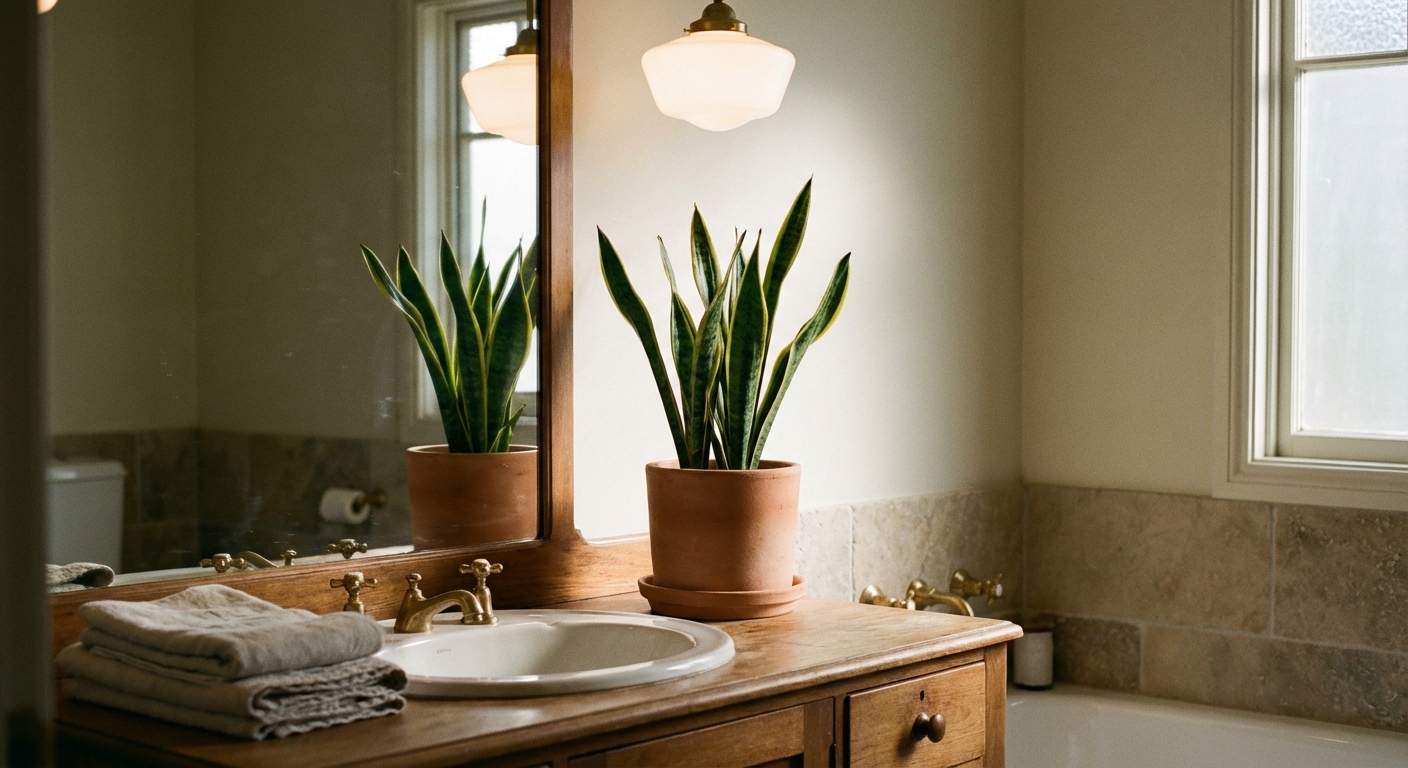
1) Snake Plant (Dracaena trifasciata)
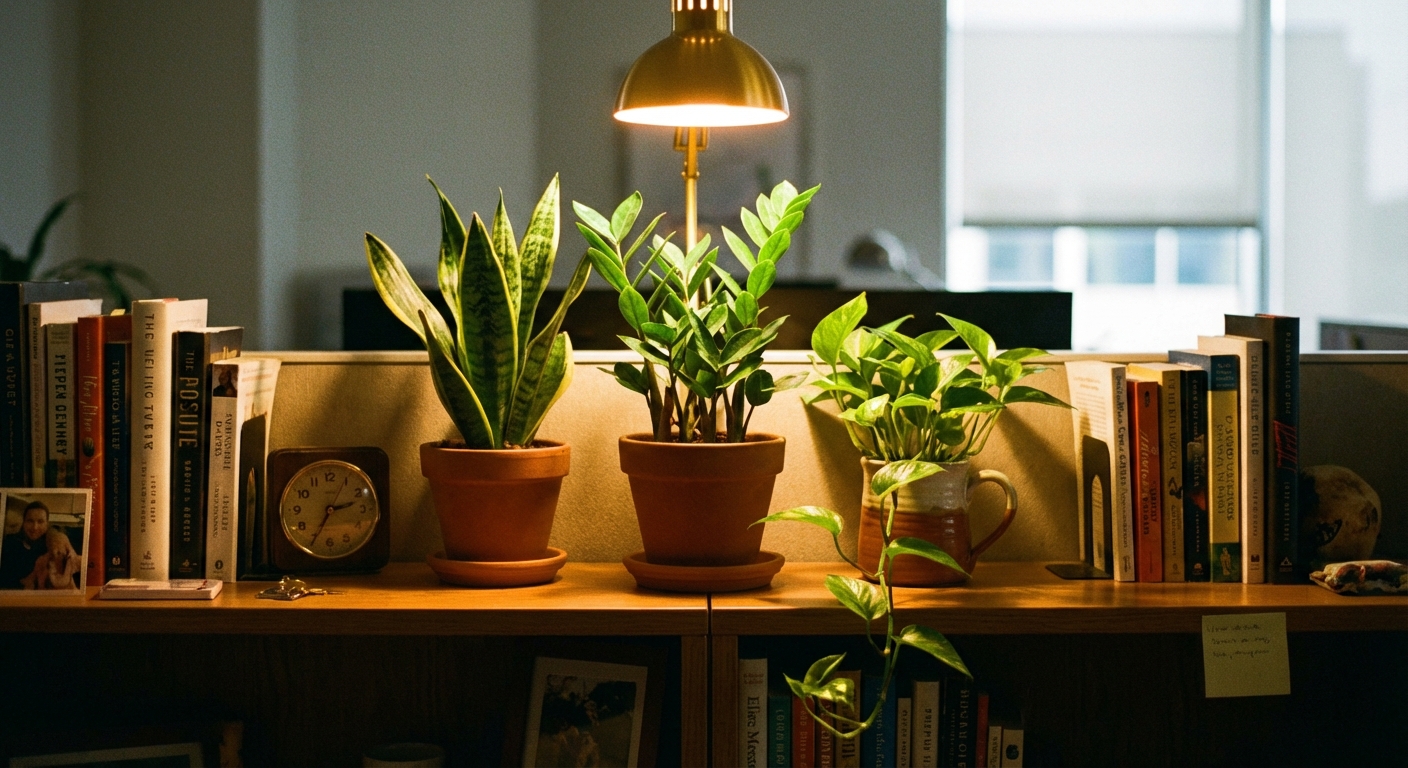
If I had to choose one plant for a dim office corner, it's the snake plant. It stands upright, looks clean and architectural, and forgives missed waterings like it's part of its job description.
- Why it works: excellent low-light tolerance, drought-tough.
- Water: let soil dry out most of the way, then water thoroughly. In low light, that often means every 2 to 4 weeks.
- Best spot: on the floor near a wall, or on a shelf under steady office lighting.
- Clara tip: the fastest way to kill a snake plant is kindness. Overwatering is the big danger.
- Pet note: toxic if chewed.
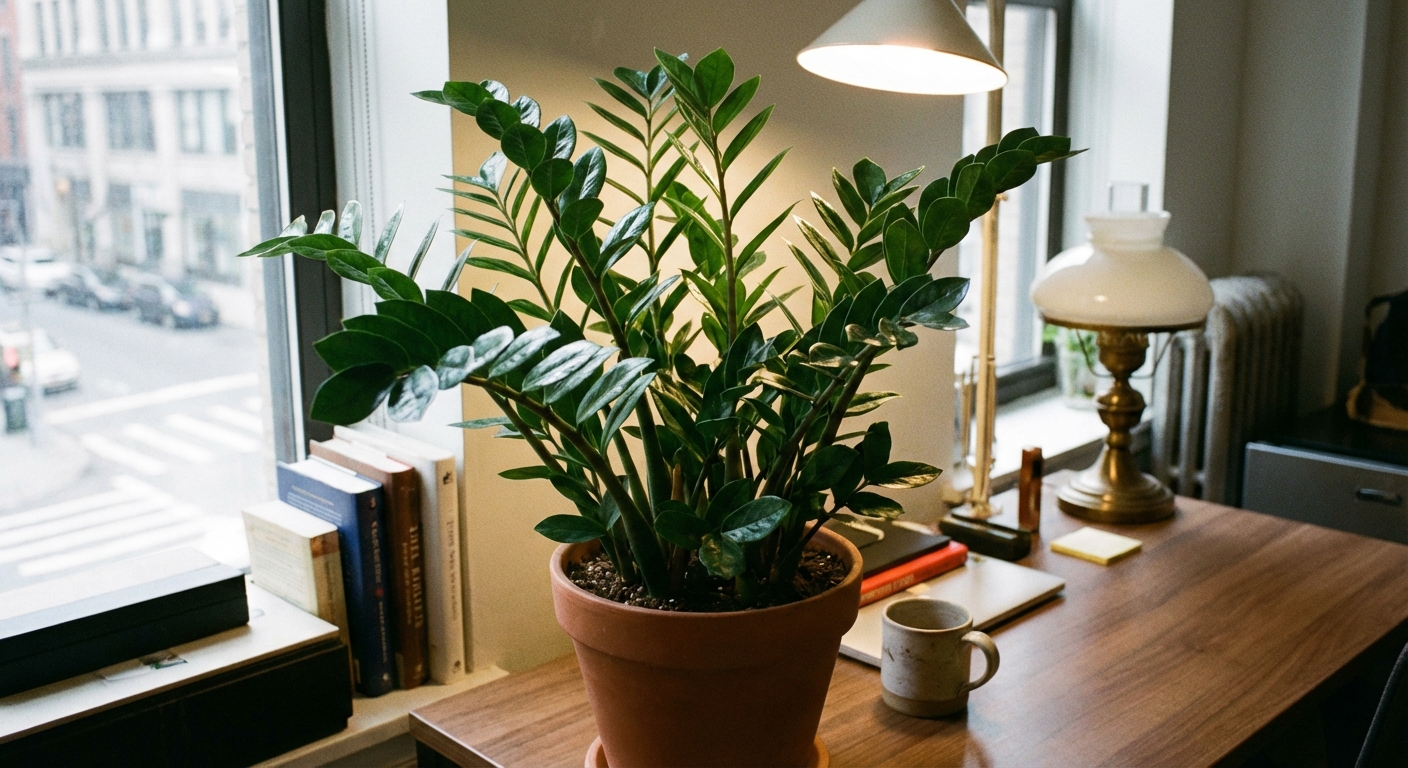
2) ZZ Plant (Zamioculcas zamiifolia)
The ZZ plant has glossy leaves that look freshly polished even when it's been quietly minding its business in low light for months. It stores water in thick rhizomes, so it's built for forgetful watering schedules.
- Why it works: strong low-light tolerance and handles dry indoor air.
- Water: only when the potting mix is mostly dry. Err on the dry side.
- Best spot: interior office areas, reception desks, or a bathroom shelf away from splashes.
- Clara tip: rotate the pot every month so it grows evenly under overhead lights.
- Pet note: toxic if chewed.
3) Cast Iron Plant (Aspidistra elatior)
This plant earned its common name. Cast iron plant tolerates low light, inconsistent watering, and the general chaos of real life. The leaves are broad, deep green, and wonderfully unfussy.
- Why it works: one of the toughest true low-light plants.
- Water: when the top few inches of soil are dry.
- Best spot: floor pot in an office, or a dim hallway outside a bathroom.
- Clara tip: wipe leaves occasionally. Dust reduces the light it can use.
4) Pothos (Epipremnum aureum)
Pothos is the friendly vine that makes people feel like plant geniuses. In low light, it'll grow more slowly and may have less variegation, but it keeps going and looks lush with minimal effort.
- Why it works: adaptable, easy to propagate, tolerant of office conditions.
- Water: when the top 1 to 2 inches of soil are dry.
- Best spot: hanging planter in an office, or on top of a cabinet where vines can trail.
- Clara tip: if leaves get smaller and spacing between leaves stretches, it wants more light. A small grow bulb can help.
- Pet note: toxic if chewed.
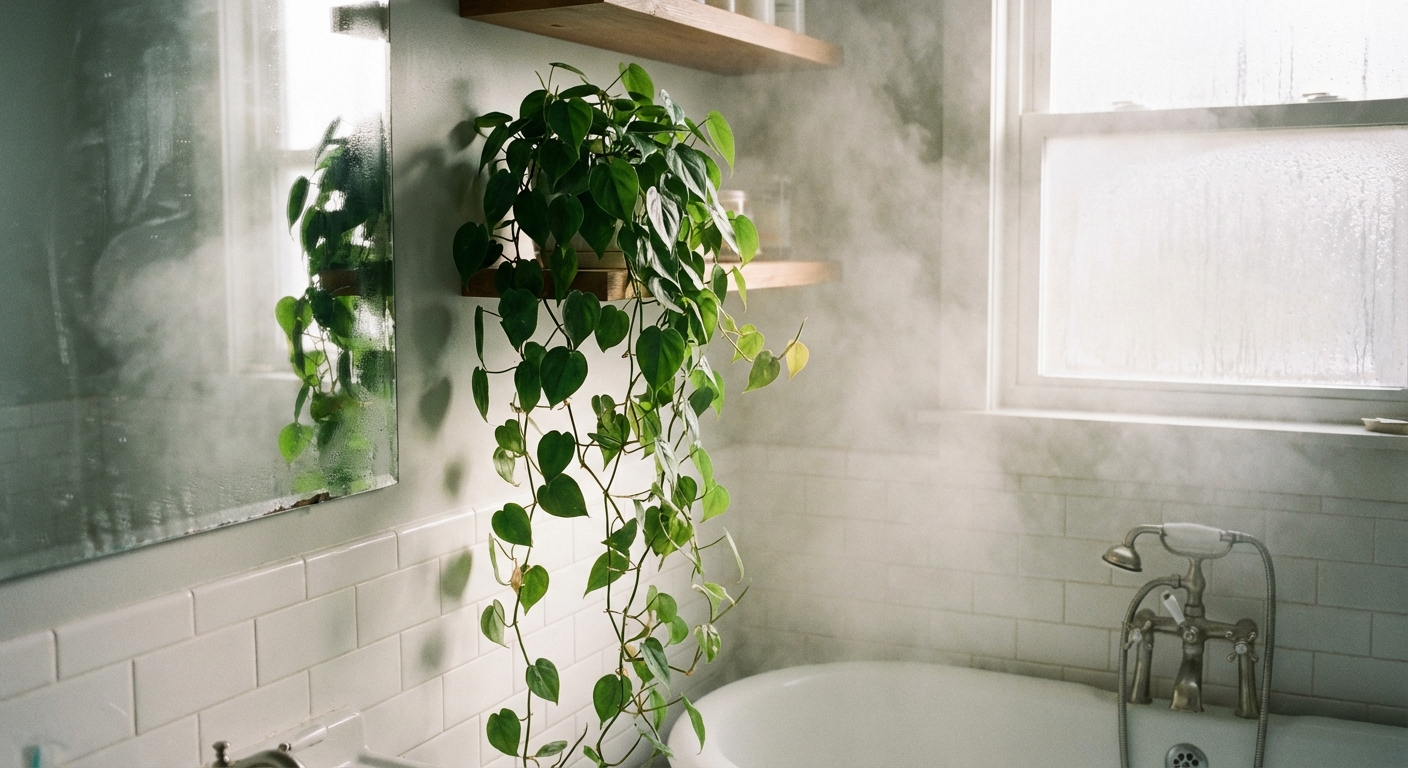
5) Heartleaf Philodendron (Philodendron hederaceum)
Like pothos, heartleaf philodendron is a graceful trailer, but with softer, heart-shaped leaves. It handles low light beautifully and appreciates a little extra humidity, so bathrooms can be a sweet spot.
- Why it works: tolerant of low light and variable humidity.
- Water: when the top inch or two dries out.
- Best spot: a bathroom shelf near the shower, or a bookcase in an office.
- Clara tip: pinch the growing tips to encourage bushier growth instead of long, sparse vines.
- Pet note: toxic if chewed.
6) Chinese Evergreen (Aglaonema)
Aglaonema is the plant I recommend when someone wants color in low light. Many varieties have silver, pink, or red tones, and they can still look great under typical office lighting.
- Why it works: strong low-light performance, attractive foliage.
- Water: when the top 2 inches of soil are dry.
- Best spot: desk, credenza, or bathroom counter that stays fairly warm.
- Clara tip: avoid cold drafts from exterior doors or aggressive AC vents.
- Pet note: toxic if chewed.
7) Peace Lily (Spathiphyllum)
Peace lilies are famous for their elegant white blooms, but in low light they're mostly a gorgeous leaf plant that occasionally flowers. The best part is that they're dramatic in a useful way: they droop when thirsty, then perk up after watering.
- Why it works: tolerates low light and loves higher humidity.
- Water: when the top inch is dry or when the plant begins to droop slightly.
- Best spot: a bathroom that stays warm and gets long stretches of light from overhead fixtures (or a grow bulb). If the light's only on briefly each day, it won't be happy for long.
- Clara tip: use filtered or dechlorinated water if leaf tips brown easily.
- Pet note: toxic if chewed.
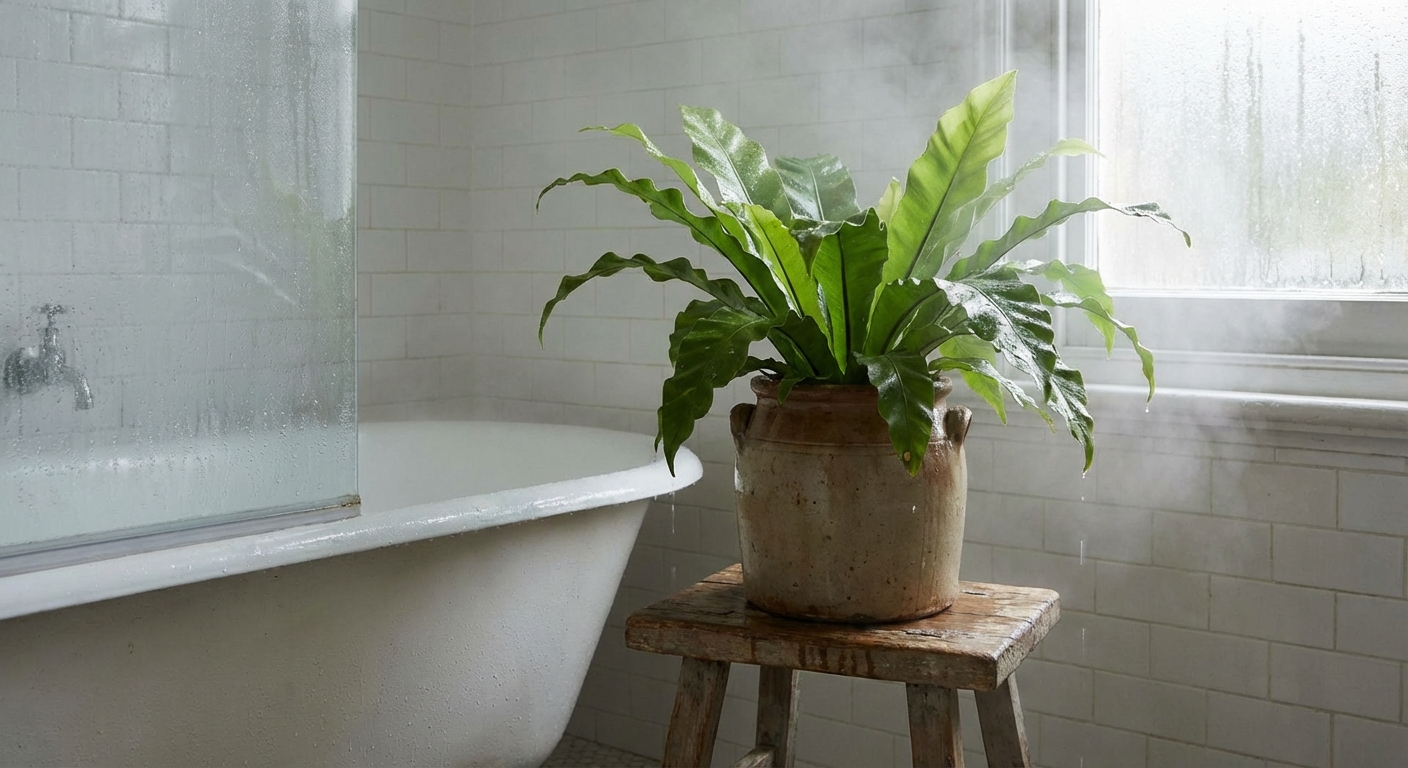
8) Bird’s Nest Fern (Asplenium nidus)
Yes, I talk to my ferns. They seem to appreciate it. Bird’s nest fern has glossy, rippled fronds and loves consistent moisture and humidity, making it a natural pick for bathrooms. Just know it'll look its best with medium, indirect light, even if it can tolerate less.
- Why it works: enjoys humidity and does well in medium to low indirect light.
- Water: keep soil lightly moist, not soggy. Water around the soil, not directly into the center crown.
- Best spot: bathroom shelf or stool near the shower, away from direct blast of hot air.
- Clara tip: if fronds crisp at the edges, it often wants more humidity or less drying airflow. If it's truly dim, add a small grow bulb.
9) Spider Plant (Chlorophytum comosum)
Spider plants are cheerful and generous, sending out little “pups” that you can root in water and share. They can handle lower light than many people expect, especially the greener varieties, but they'll grow faster and fuller with a bit more brightness.
- Why it works: adaptable, fast to recover, great for beginners.
- Water: when the top 1 to 2 inches of soil are dry.
- Best spot: hanging basket in an office, or a bathroom with consistent lighting.
- Clara tip: brown tips are common. Flush the pot with water occasionally to reduce mineral buildup. In very low light, consider a grow bulb to keep it looking perky.
10) Lucky Bamboo (Dracaena sanderiana)
Lucky bamboo isn't a true bamboo, but it's a tidy, low-light-friendly Dracaena that can grow in water. That makes it handy for desks and bathrooms where you want minimal mess.
- Why it works: tolerates low light and can live in water with clean pebbles.
- Water: if grown in water, keep roots submerged and change water every 2 to 4 weeks. Use filtered water if possible.
- Best spot: desk or bathroom counter away from direct heat sources and direct sun.
- Clara tip: pale or yellowing leaves can be a light issue (too dim or too much direct sun), water quality (chlorine or fluoride), cold stress, or too much fertilizer. Move it to bright-ish indirect light, keep it warm, and refresh the water.
Care tips for dark rooms
Water less than you think
In low light, plants photosynthesize less, so they use less water. Check soil with your finger or a wooden skewer. If it comes out damp, wait a few more days.
Use pots and soil that drain
- Use drainage holes whenever possible. Root rot is the most common low-light problem.
- Go a little chunkier with your mix for low-light spaces. Adding perlite or orchid bark helps soil breathe.
Make the light consistent
If the room lights are only on for short bursts, plants struggle. Aim for 8 to 12 hours of consistent light. In offices, that often happens naturally. In bathrooms, you may need a timed light schedule or a small grow bulb. Regular household bulbs can be too weak unless they're quite bright and fairly close to the plant.
Humidity is great, airflow helps
Bathrooms can be a dream for peace lilies and ferns, but stagnant air can invite fungus gnats and mildew. Run the fan after showers, avoid keeping pots sitting in puddles, and try not to leave foliage wet for long stretches.
Keep leaves clean
Dust is basically a tiny light blocker. A quick wipe with a damp cloth once in a while helps low-light plants make the most of what they've got.
Quick picking guide
- Most forgiving if you forget to water: snake plant, ZZ plant, cast iron plant
- Best for hanging or trailing: pothos, heartleaf philodendron, spider plant
- Humidity lovers for bathrooms: peace lily, bird’s nest fern
- Neat desk look: Chinese evergreen, lucky bamboo
- Pet caution: ZZ plant, pothos, philodendron, peace lily, Chinese evergreen, and snake plant are toxic if chewed.
Troubleshooting in low light
- Yellowing leaves: often overwatering. Let soil dry more between waterings and make sure the pot drains.
- Leggy, stretched growth: not enough light. Move closer to the brightest part of the room or add a grow bulb.
- Mushy stems or sour-smelling soil: root rot starting. Reduce watering immediately and consider repotting into fresh, airy mix.
- Brown crispy tips: dry air, mineral-heavy water, inconsistent watering, or too little light. Try filtered water and steadier moisture for ferns and peace lilies, and consider a light boost if the room is truly dim.
One gentle reminder
Low light asks for a slower rhythm. Fewer waterings, fewer new leaves, and fewer dramatic changes week to week. That's not failure. It's a plant settling in.
Pick one or two from this list, give them steady overhead light (or a simple grow bulb), and resist the urge to fuss. You might be surprised how much green can thrive in the quiet corners of your home and workday.